
How to Choose the Best LED Lights for Your Business: A Buying Guide
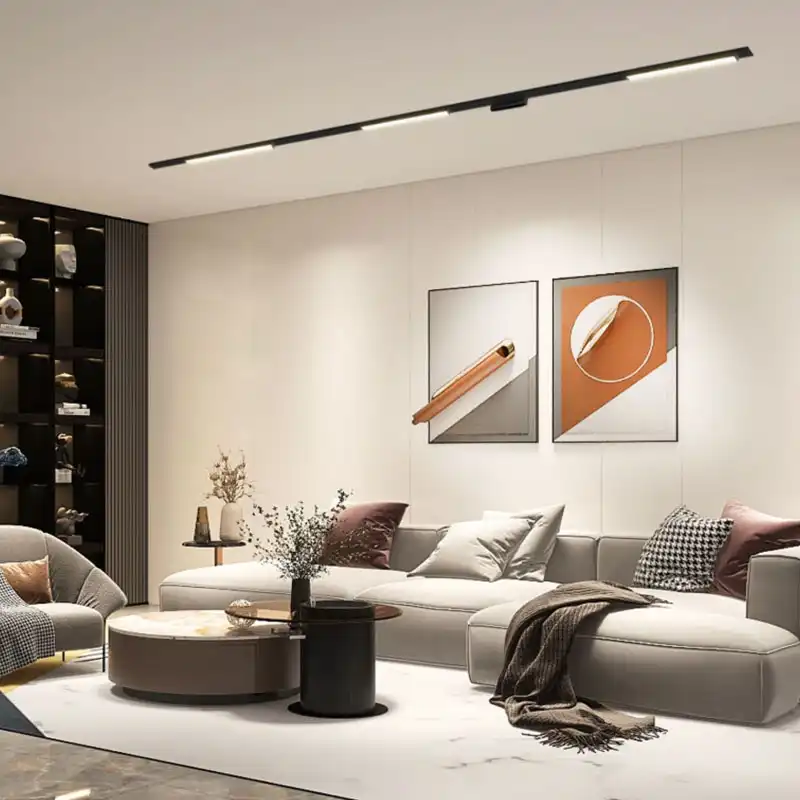
The brightest lamp in a catalog is rarely among the best LED lights for business use. A sound choice balances cost, comfort, presentation, and maintenance. Each site differs. This guide compares downlights, commercial track lighting, linear lights, grille lights, and flood lights.
What Makes an LED Light Suitable for Business Use?
The best LED lights for business use handle long hours without sacrificing comfort, presentation, or maintenance budgets. Check five specifications before style or price.
Lumen Output and Luminous Efficiency
Watts describe power draw; lumens describe visible output. Compare lumens and lumens per watt. General lighting needs broad output, while an accent beam serves a smaller area.
CRI and Accurate Color Rendering
CRI indicates how naturally colors appear. It matters in retail, showrooms, hotels, and art spaces, where fabric, food, finishes, or artwork can look distorted under a poor source. Ask for the exact model’s CRI.
Color Temperature and Workplace Atmosphere
Use 2700K to 3000K in many restaurants, hotels, and lounges; 3500K to 4000K often suits offices and shops. Some warehouses, production areas, and detailed tasks use 5000K or above. Match CCT to the activity and finishes.
Glare, Flicker, and Visual Comfort
Deep-set sources, anti-glare optics, and controlled beams limit bright points and screen reflections. Check dimming and visible flicker in a sample. A small annoyance can become tiring across a full shift.
Driver Quality, Heat Dissipation, and Service Life
Driver configuration, power stability, aluminum heat dissipation, and the installation environment affect reliability. Review commercial LED lighting systems by fixture, rail, power supply, connector, and control compatibility, not appearance alone.
Compare the Main Types of Commercial LED Light Fixtures
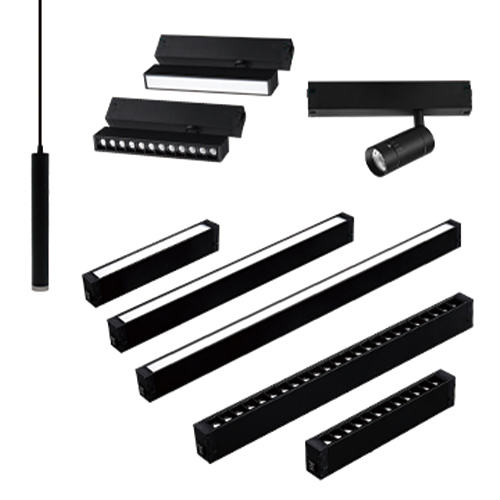
Fixture type should follow the job in each zone. Clean ceilings, movable displays, and inspection benches need different optics and mounting.
|
Fixture Type |
Main Use |
Buying Benefit |
Suitable Spaces |
|
Commercial LED downlights |
General light, clean ceilings |
Even coverage, discreet appearance |
Offices, hotels, corridors |
|
Commercial LED track lighting |
Accent light, changing layouts |
Movable and aimable |
Retail, showrooms, galleries |
|
Grille lights |
Directional task light |
Precise beams, less spill |
Displays, counters, desks |
|
Flood or fill lights |
Wide-area fill |
Fewer dark patches |
Shops, work areas, industrial spaces |
|
Pendant or linear lights |
Functional and decorative light |
Defines zones and adds depth |
Reception, meeting, dining areas |
Energy-efficient downlights handle general light, while commercial LED track lighting gives displays more freedom. Layer two fixture families instead of filling a ceiling with one model.
Choose LED Lights Based on Your Business Type
Start with customer movement, staff tasks, display changes, ceiling conditions, and cleaning access, then choose the fixture family.
Retail Stores and Showrooms
Shop LED lights need background illumination and product emphasis. Combine flood or linear light with grille modules and shop track lighting. High CRI, adjustable beams, and movable fixtures help when displays change. Map shelves and sightlines before fixing LED lights for a shop ceiling.
Offices and Meeting Rooms
Anti-glare commercial downlights provide ambient light; office track lighting can serve reception or presentation zones. Keep strong beams away from screens and glossy tables. Dimmable LED light fixtures support meetings, focused work, and video calls.
Hotels, Restaurants, and Hospitality Spaces
Warm CCT, smooth dimming, and concealed sources support day and evening scenes. Downlights serve circulation and tables; spotlights bring out finishes or displays. Check the fitting finish in the real ceiling.
Warehouses, Workshops, and Industrial Spaces
Industrial areas need even coverage, durable mounting, and service access. Separate storage aisles from inspection points. Industrial track lighting can serve task zones, but check industrial track light fixtures against dust, heat, height, and local safety conditions.
Galleries and Exhibition Spaces
High CRI, adjustable beams, glare control, and movable positions help exhibitions adapt. Test the beam edge and dimming range on the actual artwork before ordering.
How to Plan Brightness, Beam Angle, and Fixture Quantity
Divide the floor plan into ambient, task, and accent zones, then calculate and test each zone separately.
Start with the Function of Each Zone
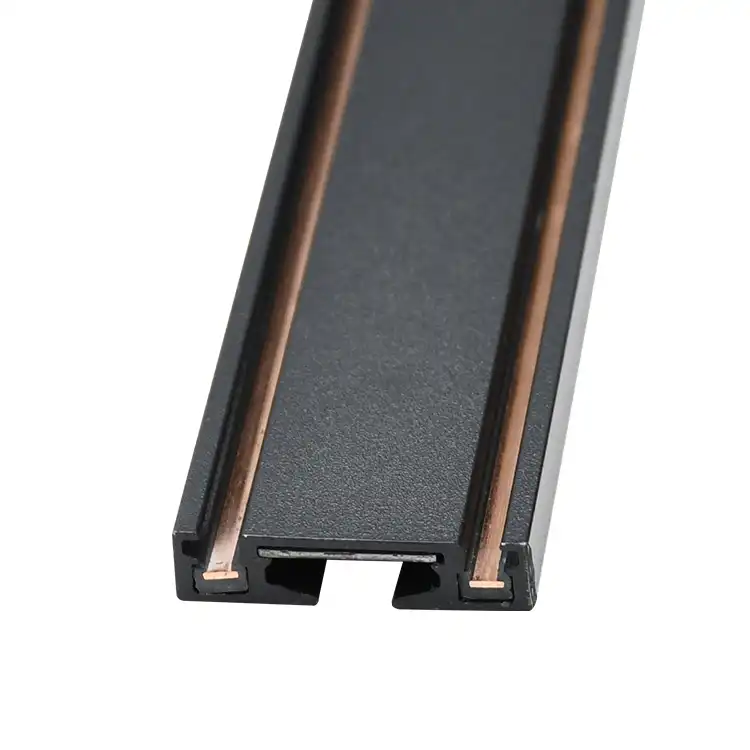
Ambient light supports movement, task light supports work, and accent light directs attention. Mark counters, desks, shelves, routes, and displays. For changing zones, assess adjustable track light systems for commercial spaces.
Consider Ceiling Height and Beam Spread
Higher ceilings may need tighter beams or greater output. Narrow beams suit accents; wide beams help uniform coverage. Check spacing and overlap to avoid bright centers and dark gaps.
Estimate Quantity, Then Verify the Layout
A starting estimate is fixture quantity = area × target illuminance ÷ (effective lumens × utilization factor × maintenance factor). Room surfaces and mounting height affect the inputs. Verify the result with project drawings and a site sample.
Compare Upfront Price with Total Cost of Ownership
The best LED lights for business projects must make financial sense. Add electricity, access equipment, labor, parts, ceiling work, controls, and business interruption to the quoted unit price.
Energy, Maintenance, and Replacement
Compare lumens per watt at the required output, then consider zoning and dimming. Modular lamps, accessible drivers, and available connectors can cut service time.
Renovation and Installation
Recessed fittings need ceiling depth and accurate openings. Surface-mounted systems reduce cutting in many renovations. Price wiring, rail, power supplies, controls, ceiling repair, and downtime before comparing options.
48V vs 220V LED Track Lighting Systems
Voltage affects installation, power matching, compliance, fixture movement, and later expansion. Follow local electrical rules and the project layout.
|
Factor |
48V System |
220V System |
|
Voltage |
Low voltage |
High voltage |
|
Layout |
Often modular and easy to rearrange |
Often better suited to stable plans |
|
Main checks |
Power supply, rail, driver, and module matching |
Wiring, insulation, installer skill, and local compliance |
|
Project fit |
Displays or spaces expected to change |
Fixed electrical layouts with defined conditions |
Test the rail, connector, power supply, driver, and fixture as one system. Confirm local voltage and certification needs.
B2B LED Lighting Supplier Checklist
The quotation, approval sample, production specification, packing plan, and spare-parts list should describe the same product version.
Confirm Specifications by Model
Record lumens, efficacy, CRI, CCT, beam angle, dimming, driver configuration, dimensions, finish, and input voltage by model.
Match Certification to the Exact Version
Ask which document covers the ordered model, voltage, wattage, driver, and dimming option. Check project requirements with the responsible local authority or consultant.
Test Sample and Batch Consistency
Approve a working sample and define tolerances for color, light appearance, finish, fit, and controls. Compare production units with the signed sample.
Review Customization and Project Support
For OEM, ODM, or project orders, confirm colors, lengths, power, packaging, branding, drawings, accessories, instructions, spares, and approval stages. The guide to 48V vs 220V magnetic track lighting adds system-level checks.
Confirm Lead Time, Packaging, and Spares
Ask for production time, inspection timing, rail protection, shipment dimensions, and a spare ratio for drivers, connectors, end caps, and modules.
Sampo Lighting states that it was founded in Foshan in 2014 and provides R&D, OEM, ODM, sales, and after-sales service for LED track lights, lighting tracks, downlights, housings, accessories, spotlights, and related parts. Its official profile lists an industrial zone of about 29,800 square meters and more than 200 experienced technicians. The company supplies commercial and residential lighting systems. Its website groups products into 48V, 220V, semi-flexible, ultra-thin, and ultra-narrow magnetic track systems, with rails and fixture modules intended to work as coordinated families. For project purchasing, these capabilities matter when drawings, custom configurations, samples, production units, replacement modules, and later orders must stay aligned. Buyers should confirm every model, document, tolerance, delivery promise, and spare-parts commitment in writing.
Common Mistakes When Buying LED Lights for a Business
Review these points while the rail plan, wiring, and product specification can still be changed.
- Selecting by watts instead of lumens and distribution
- Using one CCT or beam angle throughout every zone
- Comparing unit price without installation and maintenance
- Ignoring rail, fixture, power, driver, and control compatibility
- Adding brightness without checking glare
- Skipping sample and batch-consistency checks
- Ordering before confirming local voltage and approval documents
Quick Decision Matrix
Use this matrix to narrow the fixture family, then confirm output, optics, mounting, controls, and compliance. The best LED lights for business use match each zone.
|
Project Need |
First Option to Assess |
|
Frequently changing merchandise |
Magnetic commercial track lighting |
|
Clean office ceiling |
Anti-glare commercial LED downlights |
|
Wide, even fill |
Flood or fill lights |
|
Narrow or low ceiling |
Ultra-thin or low-profile fixtures |
|
Art or premium retail display |
High-CRI adjustable spotlights |
|
Renovation with limited ceiling cutting |
Surface-mounted lighting systems |
Send the chosen fixture family, floor plan, quantities, target market, installation type, and delivery date when you request a commercial lighting consultation.
FAQ
Q1: What Are the Best LED Lights for Business Retail Spaces?
A: Use broad ambient light, high-CRI adjustable spotlights for merchandise, and controlled fill light for dark areas. Magnetic shop track lighting helps when displays move. Confirm beam angle, glare, color temperature, and sample appearance before choosing the final mix.
Q2: Are Commercial LED Downlights Better Than Track Lights?
A: Commercial LED downlights suit even general illumination and a tidy ceiling. Track lights suit accents and changing layouts. Offices and hotels often use both, while retail and galleries may place more weight on adjustable fixtures.
Q3: How Many LED Lights Does a Business Need?
A: Begin with area, target illuminance, effective lumens, utilization, and maintenance factors. Then account for ceiling height, beam spread, surface reflectance, and spacing. Verify the result with a lighting calculation and site mock-up.
Q4: What Color Temperature Is Best for an Office?
A: Many offices use 3500K to 4000K for a neutral atmosphere. Consider daylight, wall finishes, screen use, and staff tasks. Keep one visual zone consistent, and test a sample beside the furniture and finishes.
Q5: Should a Business Choose 48V or 220V Track Lighting?
A: A 48V system often fits spaces needing modular fixtures and frequent changes. A 220V system may suit a stable electrical plan. Check local rules, installer capability, certification, compatibility, power requirements, maintenance access, and future module supply.


