

Efficiency Meets Aesthetics: How LED Downlights Redefine Interior Lighting
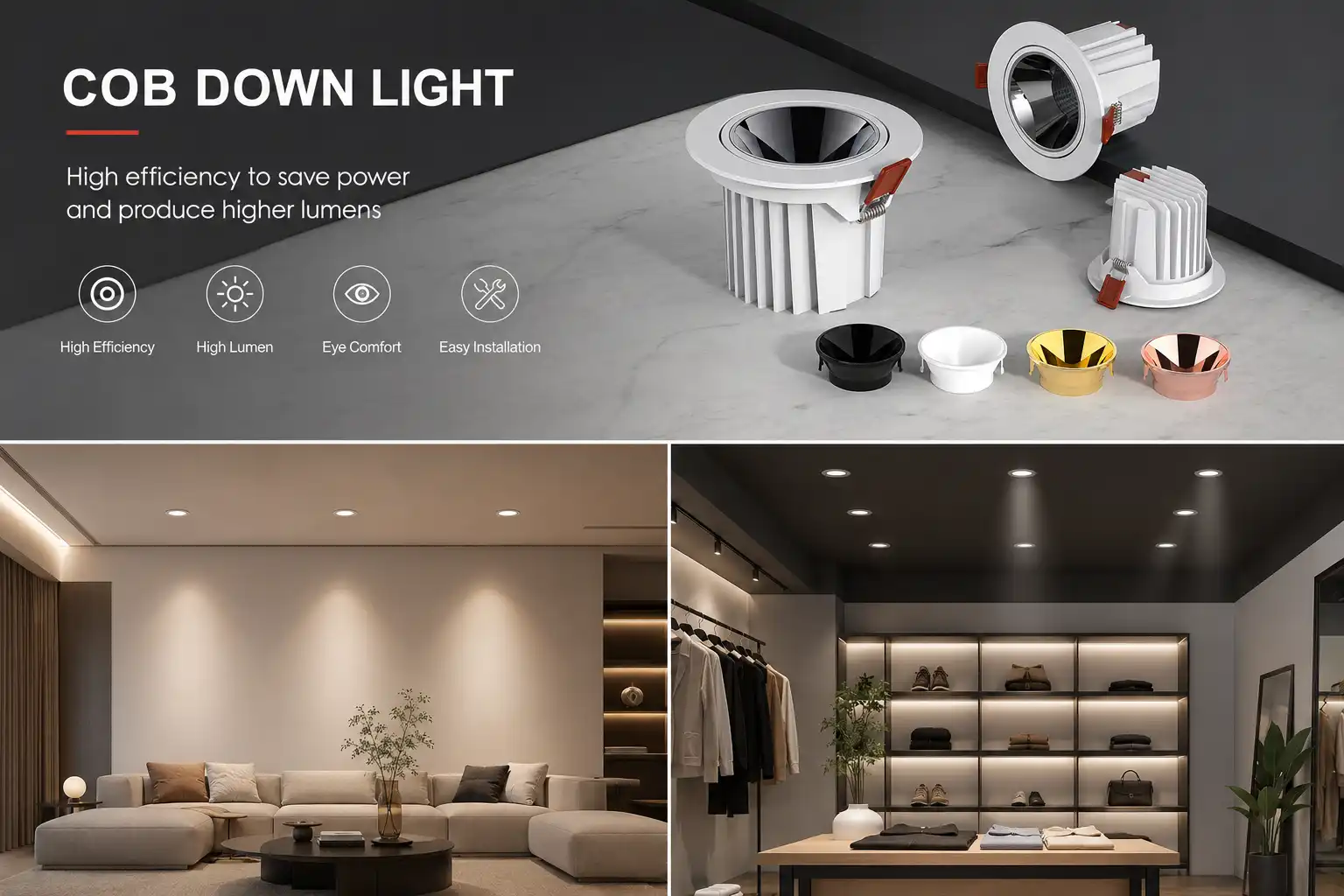
LED downlights have become part of a room’s architecture. Their position affects ceiling continuity, material color, depth, and comfort. Modern LED light fixtures combine low power demand, concealed forms, controlled beams, and adjustable scenes. The result looks quiet, though the planning is exact.
Why LED Downlights Work So Well in Modern Interiors
Interior downlights support the architecture without crowding it, and one compact fixture family can handle several jobs.
Minimal Visual Interruption
Recessed fittings sit close to the ceiling plane, leaving furniture and finishes in control. This suits homes, offices, shops, and hotels where visible fixtures would compete with the interior.
Flexible Roles in Layered Lighting
A downlight can provide ambient light, serve a counter, aim at artwork, or wash a textured wall. Mixed beam widths create layers without adding unrelated fixture styles.
Efficient Light from a Compact Fixture
A COB LED downlight places multiple LED dies close together, creating a compact source for controlled optics. Heat still needs a route out of the housing. Check output, beam angle, housing size, and thermal design together.
Efficiency Without Sacrificing Design Quality
Energy-efficient downlights work properly when their light reaches the intended surface. Wattage, optics, controls, and heat management affect the result.
Luminous Efficiency and Lower Power Demand
LED downlight wattage describes demand, not brightness. Compare lumens, efficacy, distribution, and delivered light. Suitable optics can make a lower-wattage lamp more useful than a poorly aimed one.
Heat Management and Long-Term Appearance
Poor heat control can affect output, color consistency, and service life. Housing material also changes the unlit appearance. Check airflow, insulation clearance, ambient temperature, and round COB LED downlights in modern interiors before selecting a compact design.
Dimming and Zoned Lighting
Dimmable down lights let hospitality and meeting spaces change with use and time. Zone circuits by function so an empty lounge does not run at the level of an active work area.
How Installation Style Shapes Ceiling Aesthetics
Installation decides how much of the fitting remains visible and how much building work is required. Confirm the ceiling first.
Recessed Downlights
A ceiling recessed downlight keeps the surface calm when the void has room for the body, driver, cable, and ventilation. Confirm cutout and installation depth before ceiling work. A few millimeters matter on site.
Surface-Mounted Downlights
Surface-mounted fittings suit concrete, renovations, and shallow structures. Their cylinders remain visible, so height, diameter, finish, and alignment need close attention.
Low-Profile and Slim Downlights
Low-profile fittings help in tight voids. Check heat dissipation, shielding, driver access, and glare before choosing slim LED downlights for a low ceiling.
Shape, Trim, and Finish as Design Elements
Shape and finish control the overhead rhythm. Include each fitting in the reflected ceiling plan, even when it should disappear.
Circular Downlights for Softer Visual Rhythm
A circular downlight relates well to curved furniture, arches, and organic materials. Decorative downlights still need disciplined spacing; random placement makes a ceiling busy.
Square Downlights for Structured Interiors
Square fittings suit ceiling grids, linear desks, shelving, and offices. Align them accurately with linear lights or tracks, since small rotational errors remain visible.
Trim, Trimless, and Deep-Recessed Designs
Standard trims define the opening. Narrow trims reduce the outline; trimless fittings merge with plasterwork but need careful finishing. Deep-recessed anti-glare downlights shield the source.
White, Black, and Metallic Finishes
White fittings recede into pale ceilings, while black creates an edge. Metallic designer downlights can relate to hardware in hotels, boutiques, and residences.
Light Quality Defines How an Interior Feels
Color temperature, CRI, and glare control shape material appearance. Review these qualities on real finish samples as well as specifications.
3000K for Warm and Relaxed Interiors
A downlight at 3000K suits many guest rooms, restaurants, lounges, and bedrooms. Warm white downlights support timber and warm textiles. Keep adjacent fittings consistent unless the plan calls for change.
4000K for Clear and Balanced Spaces
A downlight at 4000K often works in offices, shops, kitchens, and task zones. Compare cool white downlights as samples because the label does not describe tint or color quality.
CRI and Material Appearance
CRI affects timber, fabric, food, clothing, and art. Sampo Lighting’s guide to commercial LED downlights describes Ra90+ options for color-sensitive use. Confirm the ordered model’s CRI and test project materials.
Anti-Glare Design and Visual Comfort
Deep-set sources, shielding, suitable beams, and thoughtful positions reduce direct glare. Keep bright apertures away from sightlines and screen reflections. This is easy to miss on plan and hard to ignore later.
Beam Angle and Adjustable Downlights Create Spatial Layers
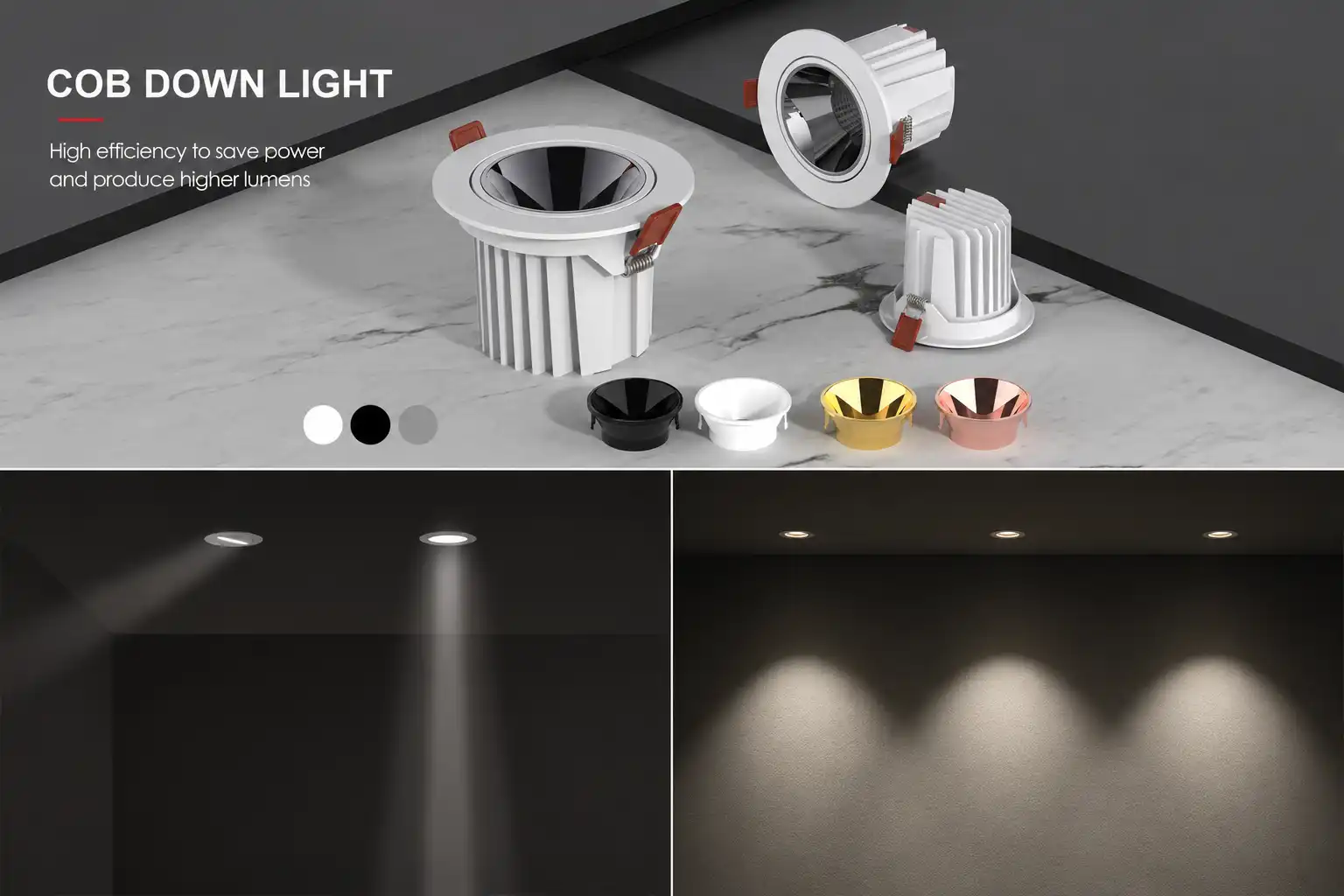
Beam angle shapes the room alongside lumen output. Use furniture plans and elevations to place each cone of light.
Wide Beams for Ambient Lighting
Wide beams suit general illumination. Plan spacing around mounting height and surface reflectance so coverage stays even without unnecessary fittings.
Narrow Beams for Accent Lighting
Narrow beams draw attention to art, merchandise, texture, or walls. Check aiming distance and overlap. Too many tight pools create a patchwork of bright spots.
Adjustable Downlights for Flexible Interiors
An adjustable LED downlight changes direction without moving the opening. This helps in showrooms, retail, hotels, and changing displays. Confirm tilt, rotation, clearance, and source shielding.
Using Downlights in Different Interior Styles
Style changes the preferred trim, finish, CCT, and beam. The same technical specification can look discreet in one room and intrusive in another.
Minimalist Interiors
Choose white, narrow-trim or trimless recessed fittings with good shielding. Use fewer carefully placed apertures, then add wall light or concealed linear light where the architecture needs depth.
Luxury and Hospitality Interiors
Deep-set optics, warm CCT, dimming, and black or metallic finishes suit many hospitality schemes. Scene controls can shift a room from cleaning light to evening service without adding another visible fixture family.
Modern Offices
Many offices use 4000K, good color rendering, and low-glare optics. Position fittings around desks and monitors rather than a decorative grid. Long hours make glare and flicker more than a drawing-room detail.
Retail and Showroom Interiors
Use broad downlights for background illumination and adjustable accents for products. High CRI and controlled narrow beams can reveal material detail where displays need stronger focus.
Sampo Lighting states that it was founded in Foshan in 2014 and works in R&D, OEM, ODM, sales, and after-sales service for LED track lights, lighting tracks, downlights, and related lighting parts and accessories. Its official profile lists an industrial zone of about 29,800 square meters, an engineering team, and more than 200 experienced technicians. Its guidance on ultra-thin lighting systems for clean ceilings can also help projects with limited ceiling depth. The company supplies systems for commercial and residential applications, allowing buyers to coordinate downlights with track-based accent lighting. Project teams should request model-level data for wattage, lumens, CRI, CCT, beam angle, cutout, driver, dimming, finish, and approvals. Review samples against the ceiling and material palette before production.
A Practical LED Downlight Selection Checklist
The best LED downlights fit the ceiling, the visual task, and the maintenance plan. Use this table before approving samples or placing an order.
|
Parameter |
Question to Confirm |
|
Installation |
Recessed or surface-mounted? |
|
Ceiling depth |
Is there room for the fixture and driver? |
|
Wattage and lumens |
How much useful light reaches the target? |
|
Beam and CCT |
Ambient, task, accent, 3000K, 4000K, or tunable? |
|
CRI and glare |
Will materials look accurate and the source stay shielded? |
|
Dimming |
Which control method must the driver support? |
|
Shape and finish |
Round, square, white, black, or metallic? |
|
IP rating |
Will moisture reach the fitting? |
|
Maintenance |
Can technicians access the driver and fixture? |
Common Interior Downlight Design Mistakes
A neat reflected ceiling plan can still produce poor light. Check furniture, use, and materials before locking the geometry.
- Arranging fittings by symmetry instead of room function
- Using one color temperature in every room
- Placing fittings too close to or far from walls
- Overusing narrow beams and creating bright spots
- Crowding the ceiling with unnecessary apertures
- Choosing a slim body without checking heat and glare
- Skipping a light test on actual finish samples
FAQ
Q1: What Are the Best LED Downlights for Modern Interiors?
A: Choose by ceiling construction, required lumens, beam angle, glare control, CCT, CRI, dimming, and maintenance access. Recessed low-glare fittings suit many clean ceilings, while surface-mounted options work where depth is limited. Test the shortlisted model in the finished material palette.
Q2: Are Recessed or Surface-Mounted Downlights Better?
A: Recessed fittings keep the ceiling visually quiet but need a suitable void, accurate cutouts, and driver access. Surface-mounted fittings suit concrete or renovations. To compare both for a specific site, discuss your interior lighting project with the ceiling section and control requirements.
Q3: Is 3000K or 4000K Better for Interior Downlights?
A: Use 3000K for many hospitality, lounge, bedroom, and dining settings where a warmer mood suits the materials. Use 4000K in many offices, kitchens, retail spaces, and task zones. Judge both beside the real finishes and available daylight.
Q4: How Do Anti-Glare Downlights Improve Visual Comfort?
A: Anti-glare designs recess or shield the bright source so occupants see less direct luminance. Beam control and fixture position also matter. A shielded fitting can still cause discomfort if it sits in a common sightline or reflects in a screen.
Q5: Why Do Downlights Flicker?
A: Flicker can come from an incompatible driver and dimmer, unstable supply, loose wiring, an unsuitable control setting, heat stress, or a failing component. Check whether the exact driver supports the selected dimming method and load range. Have a qualified electrician inspect wiring and supply conditions. If several fittings share the fault, review the control system before replacing every lamp. If one fitting flickers, compare it with an approved working sample and follow the supplier’s test procedure.


