

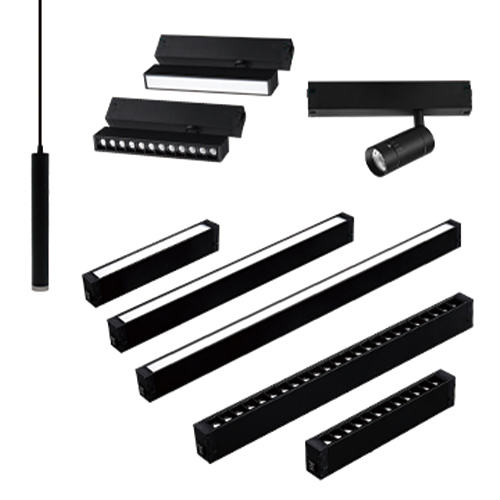
How to Upgrade Retail Lighting with 220V Magnetic Tracks (Without Major Rewiring)
Executing a commercial renovation inside an active retail store, franchise chain, or showroom involves managing a delicate balance between visual aesthetics and project downtime. Traditional overhead lighting updates typically demand intensive structural alterations, often forcing businesses to close their doors during the construction phase. For procurement managers and electrical contractors, the labor expenses associated with pulling new cables through concrete or patching drywall can quickly eclipse the cost of the hardware itself. Adopting a retail lighting retrofit that bypasses these structural hurdles is becoming the preferred strategy for fast-tracked commercial assignments. By utilizing a high-voltage system that interfaces directly with existing wiring infrastructure, project managers can achieve a premium architectural appearance while mitigating the risks of extensive building modifications.
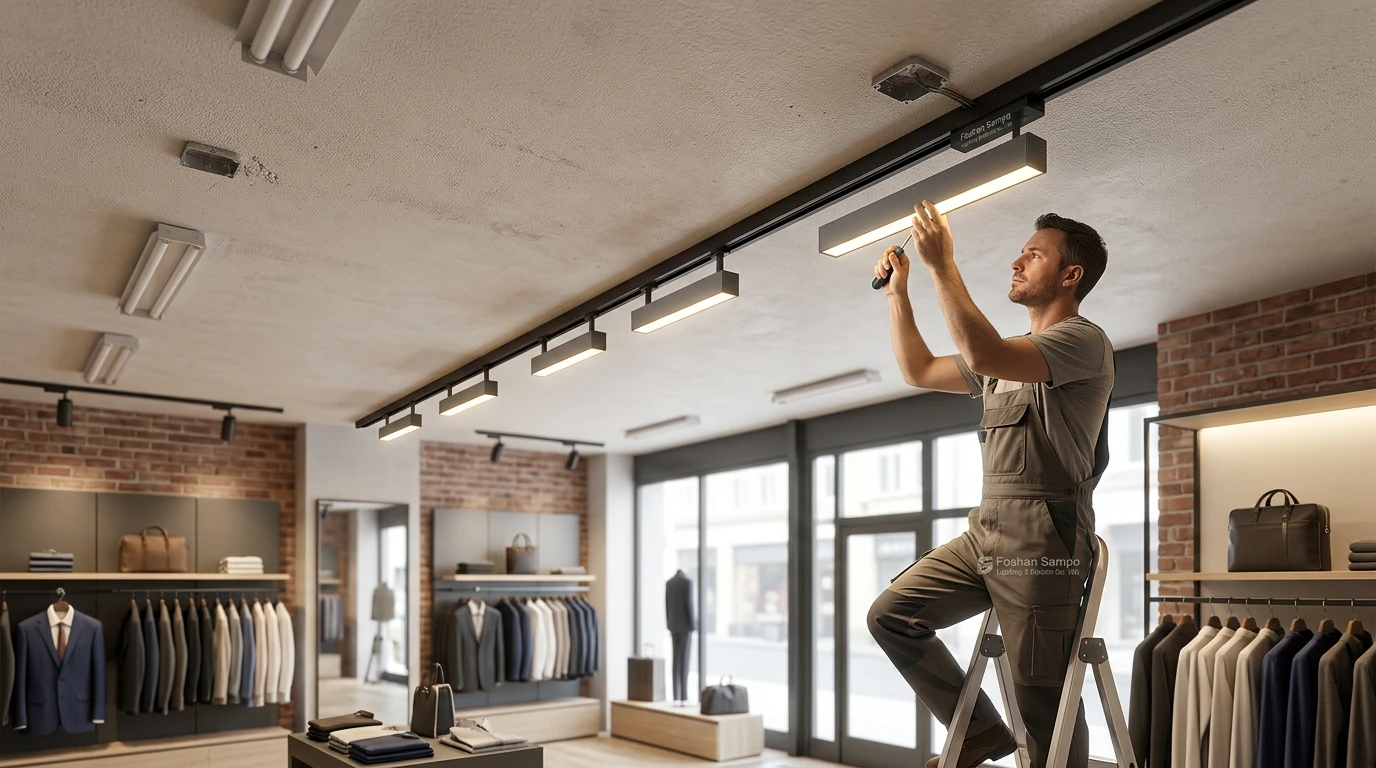
The Hidden Costs of Traditional Lighting Renovation
When franchise operators plan a shop interior upgrade, they frequently underestimate the collateral expenses of structural rewriting. A conventional low-voltage system upgrade introduces significant installation friction because it requires hidden power supplies throughout the ceiling grid. Finding adequate, code-compliant structural locations for heavy step-down transformers means cutting access panels into finished drywall, leading to lengthy cleanups and extended operational downtime. Every day a boutique or automotive showroom remains dark for electrical work represents a direct hit to gross revenue, turning a standard lighting refresh into an expensive logistical bottleneck.
Beyond immediate construction delays, the technical realities of low-voltage frameworks restrict layout flexibility over long distances. Contractors working on expansive commercial lighting renovation projects face strict limitations regarding maximum cable lengths due to line resistance. Trying to power an extensive run of spotlights from a centralized power hub results in severe voltage drops, where the fixtures furthest from the power source appear visibly dimmer. Resolving this issue after the ceiling is closed requires opening up additional access points, pulling thicker gauge supply lines, and running additional dedicated sub-circuits, which spikes both labor costs and material budgets.
Why 220V Magnetic Track Systems are the Ultimate Retrofit Solution
Transitioning to a high-voltage track layout addresses these commercial installation challenges at the engineering level. Because a 220v magnetic track light system operates directly on standard line voltage, the track rails carry regular grid power across the entire continuous run without requiring an external step-down transformer. This fundamental difference means installation crews can simply mount the new track rails directly over the footprints of outdated, traditional track fixtures or older linear fluorescent boxes. The existing junction boxes and power lines feed the track directly, preserving the integrity of the building’s current electrical distribution layout.
From a long-term maintenance perspective, a driverless magnetic light setup shifts the power conversion burden away from hidden ceiling cavities and places it directly into the movable fixtures. Each individual spotlight or linear accent light contains its own miniaturized, integrated driver within its magnetic mounting adapter. If a component encounters an electrical issue after years of continuous retail service, a floor manager can simply pull down the single affected head and snap a replacement into place within seconds. This localized approach eliminates the need to hire an outside electrician to diagnose a hidden, burned-out transformer behind a finished ceiling.
220V vs. 48V Layout Comparison for Commercial Renovations
Evaluating the practical constraints of available electrical configurations is vital before signing off on a major multi-site retail upgrade. The table below outlines the core operational differences between low-voltage and line-voltage track systems specifically within the context of a commercial building retrofit.
|
Renovation Performance Factor |
Low-Voltage 48V Track Infrastructure |
High-Voltage 220V Track Infrastructure |
|
Primary Structural Requirement |
Drywall cutting for remote transformer housings |
Direct connection to existing standard mains outlets |
|
Maximum Run Capacity |
Limited to 15 meters before requiring a new feed |
Up to 100 meters on a single continuous power line |
|
Downtime and Labor Intensity |
High; requires multi-day drywall repair and painting |
Minimal; fast mounting with standard electrical tools |
|
Fixture Flexibility Options |
Restricted by the total wattage of the remote power supply |
Unrestricted; determined solely by the main circuit breaker |
Seamless Integration with Existing Power Lines
The primary mechanical objective during a rapid facility remodel is achieving a clean, modern aesthetic with zero structural impact. Utilizing a versatile 220v surface-mounted rail allow project managers to anchor track profiles directly onto finished concrete ceilings or existing timber beams without routing deep recesses. For properties where a flush finish is mandatory but full ceiling demolition is out of the question, low-profile recessed rail setups can utilize old linear lighting slot cutouts. This adaptability allows older retail spaces to transition to a high-end architectural look without requiring major structural building shifts.
The electrical layout is further simplified by the high load tolerance of a direct line-voltage circuit. A standard commercial lighting circuit can easily support a continuous loop of track running up to 100 meters from a single electrical feed point. This capacity allows designers to route illumination lines deep into large-format spaces, down long structural corridors, or across extensive warehouse-style retail layouts without installing supplementary distribution boxes. Sourcing these components from a specialized Foshan track light manufacturer ensures the structural integrity of the extruded aluminum rails, providing stable, long-term conductivity across expansive commercial interior footprints.
Engineering teams at specialized production facilities, such as Foshan Sampo Lighting & Electric Co., Ltd., focus heavily on ensuring these high-voltage rails match rigorous global commercial standards. By incorporating heavy-gauge copper conductors housed within co-extruded, flame-retardant PVC insulation profiles, the rails provide continuous, stable power delivery while protecting users from accidental contact during layout adjustments. This advanced level of structural protection allows commercial entities to deploy flexible magnetic track technology across high-traffic retail environments with total peace of mind.
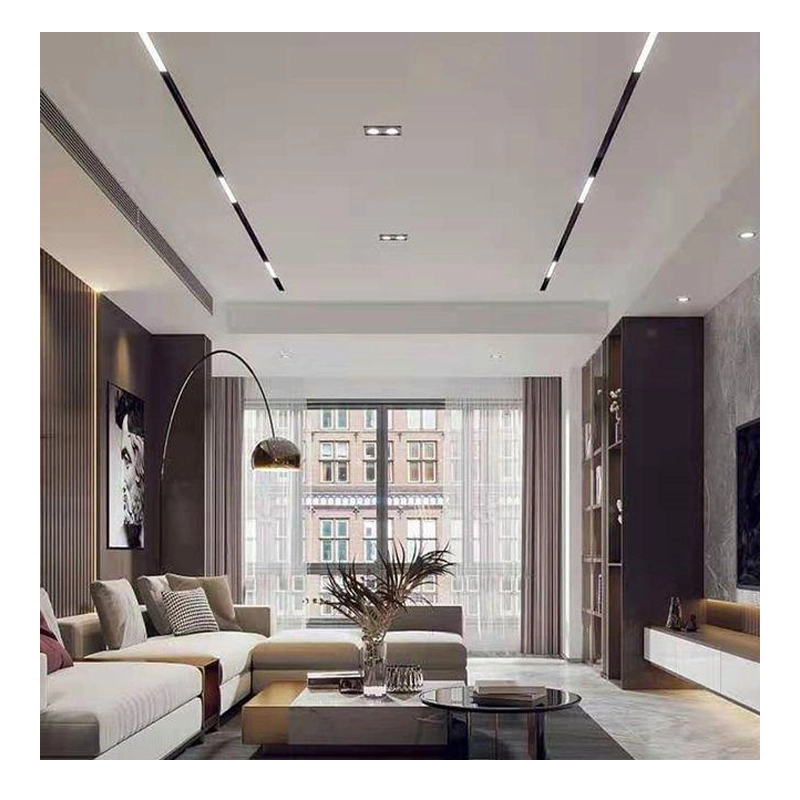
Maximizing Store Appeal with Versatile 220V Floodlights
Visual merchandising strategies rely heavily on adaptive accentuation to drive customer engagement and highlight changing stock layouts. A major drawback of older static lighting setups is that once the fixtures are wired in place, changing the focal point of the store requires significant physical intervention. Incorporating a modern high-voltage magnetic track system alters this dynamic completely, offering retail operators an adaptable canvas where light sources can be repositioned, swapped, or grouped by hand as seasonal displays evolve.
Integrating a powerful 220v floodlight module alongside sharp-cutoff accent spotlights allows visual merchandising teams to establish balanced layers of ambient and task illumination. Linear flood modules handle the general base lighting of wide aisles, while adjustable track spots focus intense, high-color-rendering beam spreads onto premium products or feature walls. Because each individual lamp contains an advanced, built-in EMC driver, the entire array remains completely stable, eliminating visible camera flicker during digital recording or mobile smartphone scanning, which is a critical consideration for modern, social-media-friendly retail spaces.
Sourcing these modular light heads through a reliable partner with an established OEM factory gives commercial buyers access to specialized internal component options, including premium color rendering index choices above 90 CRI and specific beam angle lenses. This tailored procurement method ensures that whether a space is displaying fine jewelry, high-end apparel, or automotive surfaces, the color accuracy and texture definition are maximized to drive consumer purchasing decisions. The combination of tool-free magnetic repositioning and robust individual power regulation makes the system a highly effective, long-term tool for fast-paced retail operations.
Conclusion
Upgrading a commercial facility’s visual atmosphere does not have to involve extensive structural teardowns or expensive electrical overhauls. Transitioning to a high-voltage magnetic track setup allows project managers to bypass the common limitations of low-voltage installations, completely eliminating the need for hidden step-down transformers and preventing problematic voltage drops across long runs. With options for direct surface mounting and seamless adaptation to existing circuit configurations, this hardware provides a highly reliable, low-maintenance pathway toward modernizing high-traffic retail environments while keeping total project downtime to an absolute minimum.
People Also Ask
Q1: How can a store switch to magnetic track lights if the existing ceilings cannot be cut?
A: A store can easily transition by selecting a surface-mounted high-voltage track option rather than a recessed style. These specialized track profiles bolt directly onto the existing ceiling surface, utilizing the exact electrical wiring points left behind by old fluorescent or traditional track setups, completely avoiding the need to cut into drywall or concrete.
Q2: Do high voltage track light setups cause electrical interference with retail point of sale systems?
A: Premium high-voltage magnetic track fixtures utilize high-quality internal power adapters featuring integrated electromagnetic compatibility filtering. These specialized components suppress electrical noise, ensuring the lighting grid operates cleanly alongside sensitive retail electronics like wireless checkout terminals, inventory scanners, and security networks.
Q3: Can old wiring handles the total power load of a new magnetic track light array?
A: Yes, modern LED magnetic track fixtures draw significantly less electricity than older halogen or fluorescent systems. Because a standard line-voltage circuit can easily manage thousands of watts, installing highly efficient LED track modules actually reduces the overall electrical load on the building’s original wiring infrastructure.
Q4: What is the fastest way to minimize building shifts during a commercial lighting remodel?
A: The most effective approach is selecting a driverless line-voltage track layout that accepts direct grid input. This technical choice eliminates the structural modifications required to frame out transformer access hatches, allowing installation crews to focus purely on mounting the rails and snapping in the light modules without altering the building’s underlying framework.


