

Which Type of LED Lights Are Best for a Bedroom?
The best LED lights for a bedroom combine warm ambient light, focused task light, and optional accents. Room size, activities, fixture positions, and controls determine the mix.
The room plan sets the sequence. Give each fixture one job, then review its specifications.
Quick Answer: The Best LED Lights for Bedroom Use
Most bedrooms benefit from warm white ambient lighting with a dimmer. Add a wall light or track spotlight for reading and dressing.
LED strips can add low-level light around a headboard, cove, shelf, or bed frame. Smart controls can store morning and evening settings.
| LED Type | Bedroom Use | Useful Feature | Specification to Check |
|---|---|---|---|
| Dimmable ceiling light or downlight | General illumination | Wide, even light distribution | Lumens, color temperature, dimmer compatibility |
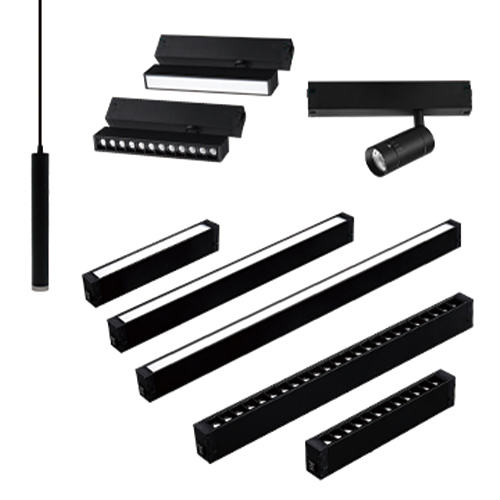
| Magnetic track light | Reading, artwork, wardrobe, or flexible task zones | Movable and adjustable modules | Track voltage, beam angle, driver, control system |
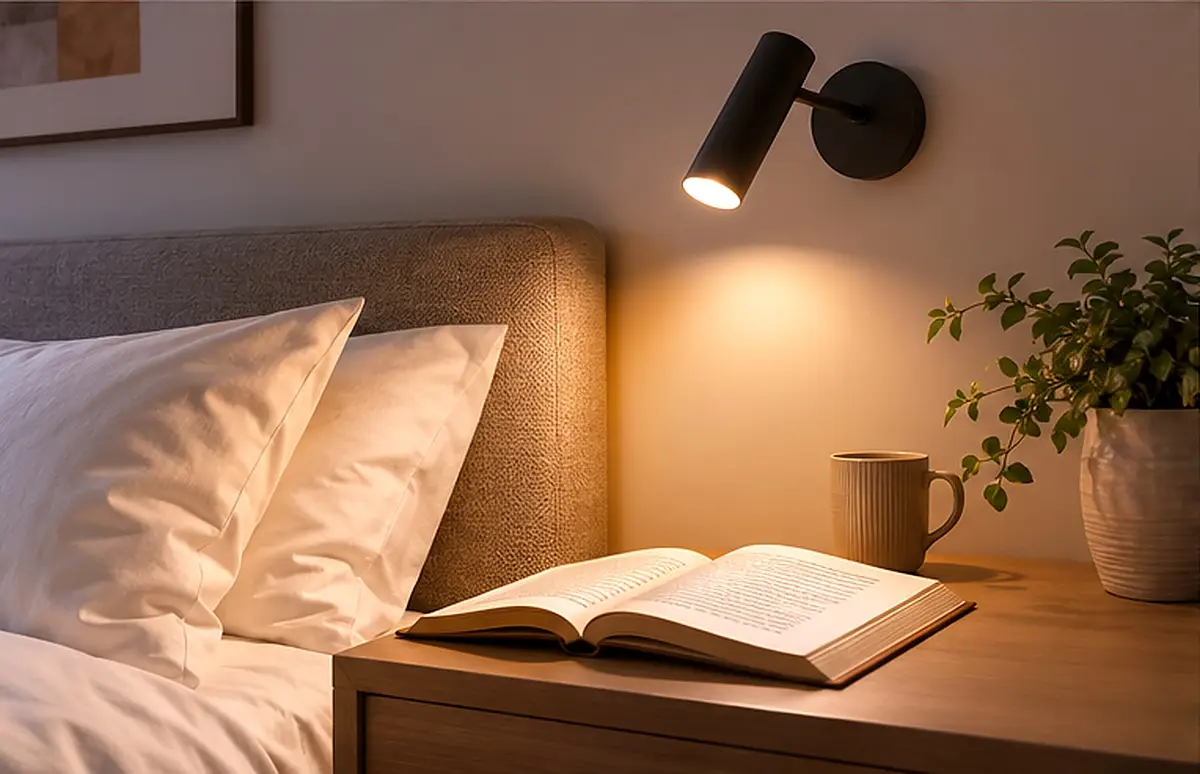
| Wall or bedside light | Reading and local task light | Light positioned close to the activity | Output, switch position, glare control |
| LED strip light | Headboard, cove, shelf, or under-bed accent | Continuous linear light | Voltage, driver, cut length, mounting method |
| Smart or RGB LED light | Scenes and decorative color | App, voice, schedule, or scene control | Platform, controller, standby behavior |
How Should You Layer LED Lights in a Bedroom?
A layered plan assigns each fixture a job. Ceiling light supports movement and cleaning. Task fixtures cover a book, desk, wardrobe, or mirror. Accent fixtures provide a lower evening light level.
Ambient LED Lights for General Illumination
Ceiling fixtures, bedroom downlights, and diffused linear lights can form the ambient layer. Position them across walking paths and storage areas. A dimmable driver supplies separate levels for cleaning, dressing, and evening use.
Spacing and beam distribution shape coverage. Narrow beams can create bright circles and dark gaps. Dark walls and high ceilings affect the lumen plan.
Task LED Lights for Reading and Dressing
Bedside reading needs a beam aimed at the page and clear of the adjacent pillow. Adjustable wall fixtures and 48 V magnetic track modules support this placement. Separate lighting zones give each side of the bed independent control.
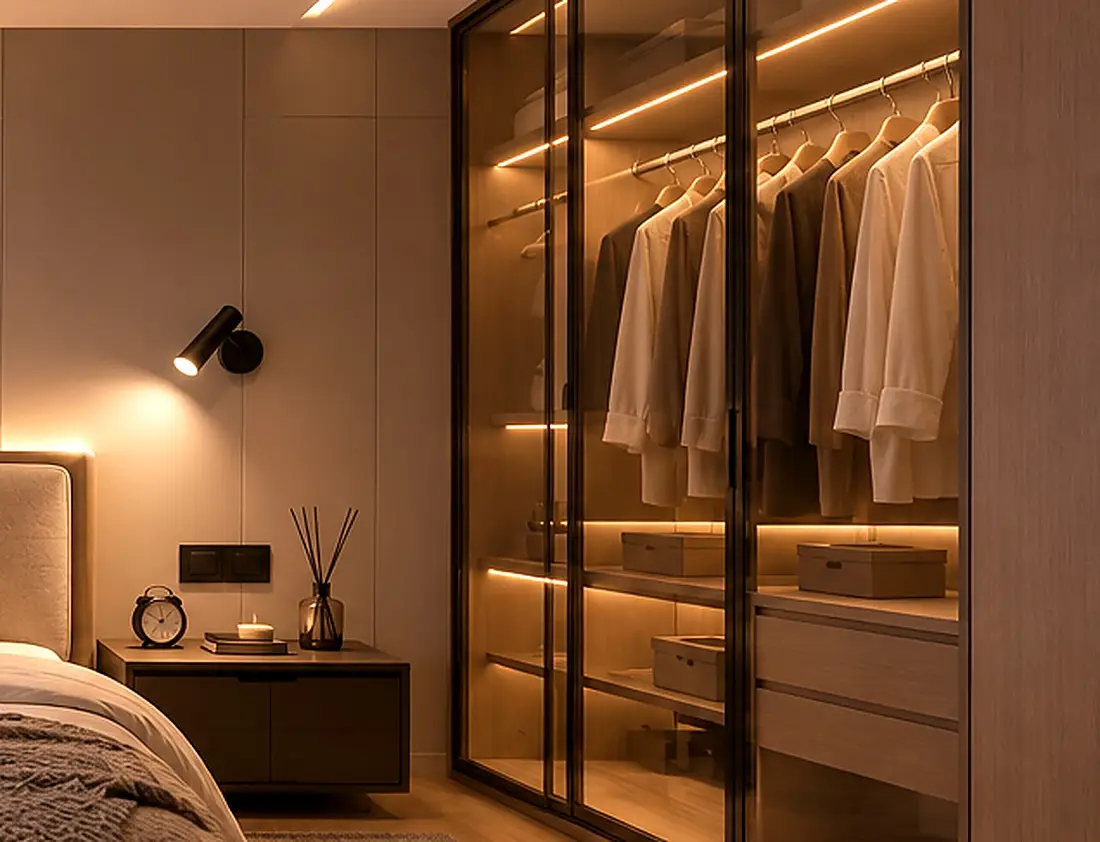
Wardrobes and dressing areas need light aimed toward clothing and faces. Ra90+ indicates a color rendering index of at least 90. Yinzhao’s M26 and selected magnetic track families list Ra90+ and movable modules. Review the chosen model’s output and beam angle.
Accent LED Lights for Headboards, Coves, and Shelves
LED strip lights fit coves, headboards, shelving, and under-bed locations. A diffuser softens visible LED points. Yinzhao lists surface-mounted, embedded, and self-adhesive formats. The selected strip and profile determine the mounting method.
Yinzhao lists 12 V, 24 V, and 36 V low-voltage strips. Its material also covers 110 V and 220 V formats. Product families include single-color, two-color, RGB, neon, and smart options from 2700-6500 K. Specify voltage, driver, controller, run length, and mounting surface together.
Which Color Temperature Is Best for Bedroom LED Lights?
Warm white is a practical starting point for evening bedroom lighting. A 2024 United States Department of Energy job aid lists 2,200-3,000 K for bedrooms and living areas. Lower values appear amber; 3,000 K appears clean and warm. Furniture, wall colors, and personal preference influence the result.
Tunable-white LED lights can serve dressing, desk work, and evening use. Yinzhao’s M26 ultra-thin magnetic track system describes color-temperature adjustment. The series also lists brightness adjustment. Match the CCT range and controller to the fixture.
What Features Matter When Choosing LED Lights?
Use the fixture label, driver data, and control documentation to compare brightness, distribution, dimming, color rendering, flicker, glare, voltage, and installation.
Brightness and Light Distribution
The same Department of Energy job aid lists 10-20 lumens per square foot for bedrooms and living areas. A 150-square-foot bedroom therefore starts at 1,500-3,000 ambient lumens under that benchmark. Dark finishes, high ceilings, narrow beams, and detailed tasks can change the requirement.
Lumens describe total output; beam angle and placement determine coverage. Request a photometric file or lighting layout for track and downlight plans with defined target surfaces.
Dimming, Smart Controls, and Color Adjustment
Dimmable LED lights require a matched fixture, driver, and wall control. Smart systems may use an app, voice assistant, or panel switch. Yinzhao’s FAQ also lists DALI, 0-10 V, 1-10 V, RF, and infrared controls for applicable products. Confirm the protocol before ordering.
Separate zones can operate ambient lights, bedside fixtures, and accent strips. Yinzhao lists app and voice control for applicable magnetic track systems.
CRI, Flicker, and Glare
CRI describes color rendering against a reference source. Ra90+ supports applications where color appearance matters. Flicker-free descriptions address modulation under the stated driver configuration. Anti-glare optics control bright light at common viewing angles.
Yinzhao lists Ra90+ and flicker-free sources for the M26, the ultra-narrow magnetic track system, and related magnetic families. The broader magnetic track series also lists an anti-glare design. Request the current model and driver specifications.
Which LED Fixture Fits Each Bedroom Area?
-
Ceiling: Use dimmable downlights, a diffused fixture, or a magnetic track system.
-
Bedside: Aim adjustable LED wall lights or reading modules at the page.
-
Wardrobe or dressing area: Direct Ra90+ task light toward clothing, drawers, and the mirror zone.
-
Headboard or cove: Use LED strips with a compatible driver and diffuser profile.
-
Under the bed: Choose a low-level strip with secure mounting and accessible control.
A Bedroom LED Lights Buying Checklist
-
Record the room dimensions, ceiling height, surface colors, and furniture layout.
-
Mark the activities and fixture positions for ambient, task, and accent light.
-
Define the target color temperature and brightness range for each zone.
-
Match the fixture voltage, driver, dimmer, controller, and wiring method.
-
Choose recessed, surface-mounted, wall-mounted, or magnetic installation.
-
Review lumens, beam angle, CRI, flicker, and glare control.
-
Confirm model-specific certification, warranty, installation drawings, and destination-market requirements.
Conclusion: Choosing the Best LED Lights for Your Bedroom
The best bedroom plan gives LED lights defined roles. Warm, dimmable fixtures provide ambient light; wall or track fixtures support tasks; strip lights add accents. Select color temperature, output, optics, driver, and controls as one system, then confirm each value against the model specification.
About Yinzhao Lighting
Yinzhao Lighting supplies LED track lights, tracks, downlights, parts, and accessories for residential and commercial systems. Its profile covers R&D, OEM, ODM, sales, and after-sales service. Selected 48 V magnetic track families list Ra90+, flicker-free sources, movable modules, dimming, color adjustment, and recessed or surface-mounted installation.
Contact the lighting team with room dimensions, fixture positions, installation method, target CCT, controls, voltage, destination market, and certification requirements. These details support model selection and sample planning.
FAQ
Q1: Are warm white or daylight LED lights better for a bedroom?
A: Warm white is the documented choice in the available guidance. A 2024 United States Department of Energy job aid lists 2,200-3,000 K for bedrooms and living areas. For a tunable fixture, confirm its actual CCT range before ordering.
Q2: How bright should LED lights be in a bedroom?
A: Use 10-20 lumens per square foot as the planning range stated in the same 2024 Department of Energy job aid. That gives 1,500-3,000 lumens for a 150-square-foot room. Request model-level output and a lighting layout before final selection.
Q3: Are LED strip lights suitable as the main bedroom light?
A: Treat LED strip lights as an accent choice unless the selected model has enough documented output for the full room. Yinzhao’s material lists strip voltages, colors, controls, and mounting methods; it does not provide a universal full-room lumen value. Request the exact strip output, driver, profile, and layout before assigning it as the main light.
Q4: Can dimmable and smart LED lights use the same wall control?
A: A shared wall control works only when the fixture, driver, protocol, and control device are compatible. Identify the fixture model and driver. With those components set, match the protocol, such as DALI, 0-10 V, 1-10 V, RF, or infrared. Put the confirmed combination on the quotation and wiring plan.
Q5: Which type of LED lights are best for a bedroom ceiling?
A: The source material supports LED downlights and magnetic track systems as ceiling candidates. Magnetic families include movable modules, dimming, color adjustment, and recessed or surface-mounted options. Confirm lumen output, beam angle, driver, and installation drawing for the selected model.


