

How to Choose the Best LED Kitchen Lighting
The best LED kitchen lighting starts with the work performed in each zone. Map the ceiling, counter, island, sink, cabinet, and accent areas. Then match each one with a fixture, beam direction, color setting, control method, and installation condition.
Treat the fixtures as one electrical and visual system. Voltage, driver, dimmer, controller, and mounting method must work together.
Quick Answer: Which LED Kitchen Lighting Works Best?
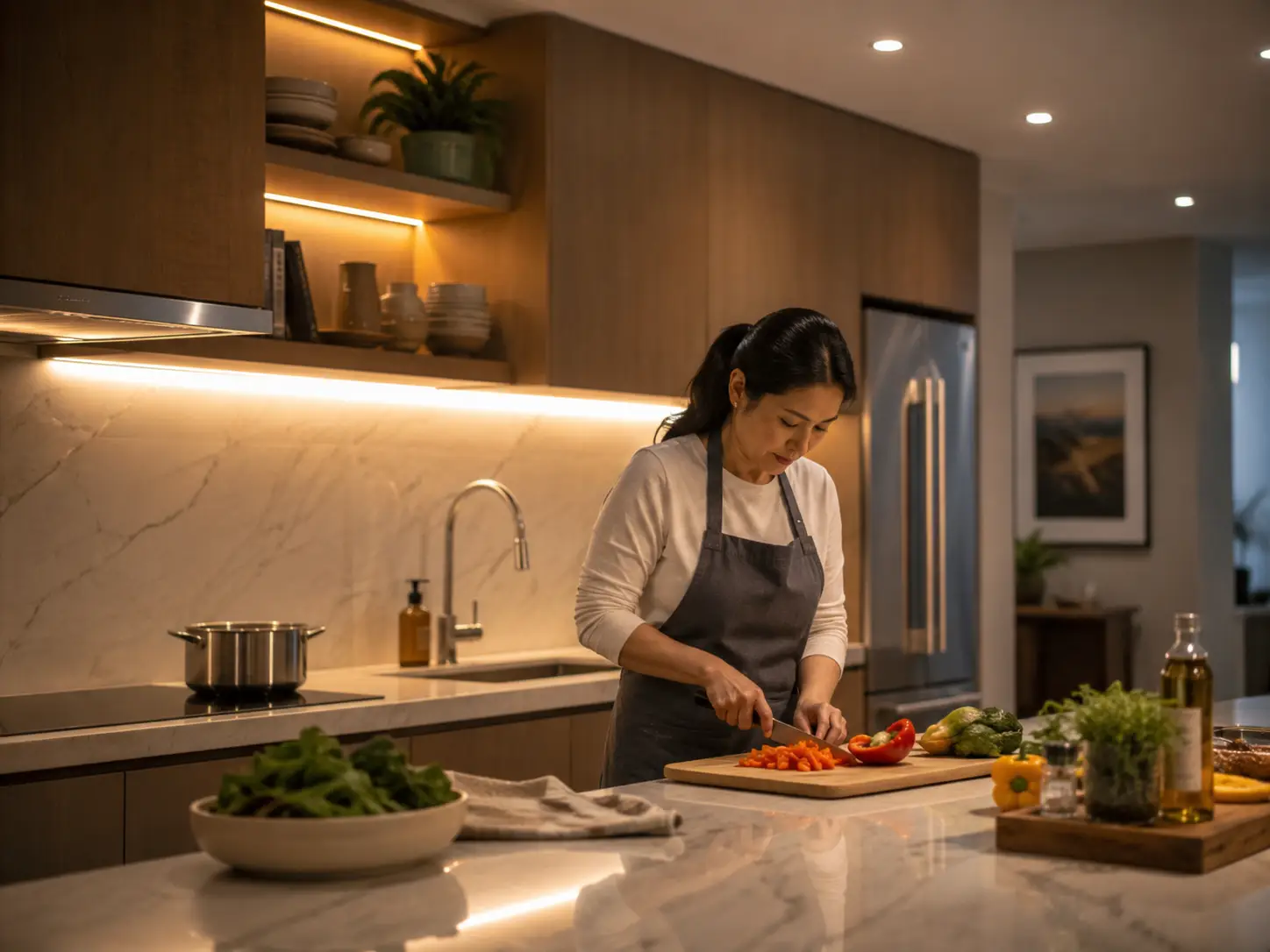
Use downlights or track modules for ceiling coverage, focused modules or under-cabinet strips for work surfaces, and strips for linear accents. The target surface and control method guide the choice.
| Kitchen Zone | Lighting Job | Suitable LED Type | Specification to Confirm |
|---|---|---|---|
| Ceiling and circulation area | General room light | Downlight or magnetic track system | Output, beam angle, glare control, mounting method |
| Counter and backsplash | Local task light | LED strip or adjustable module | Voltage, driver, profile, controls, installation surface |
| Island and sink | Defined work area or decorative layer | Directional track module or pendant fixture | Beam direction, output, height, applicable IP requirement |
| Cabinet interior | Local visibility | Compact strip or small module | Dimensions, switch or sensor, heat path, wiring |
| Toe kick and open shelf | Accent light | LED strip | CCT or color, diffuser, run length, controller |
Start With Three Kitchen Lighting Jobs
A kitchen plan usually contains ambient, task, and accent jobs. Ambient fixtures cover general use, task fixtures serve a defined surface, and accent fixtures mark cabinetry or architectural lines.
Ambient Light for the Room
Ceiling downlights and broad-distribution track modules can supply the ambient layer. Place them according to the room and cabinet layout. Use a model-level lighting plan to confirm output and coverage.
The Sampo magnetic track family lists anti-glare designs for applicable modules. Ask for the selected optic and beam data because beam angles vary by fixture.
Task Light for Counters, Sinks, and Islands
Task lighting needs a named target: a countertop, sink, cooktop, or island. Mark that surface before selecting the fixture position. Cabinet depth, fixture setback, and beam direction become project inputs.
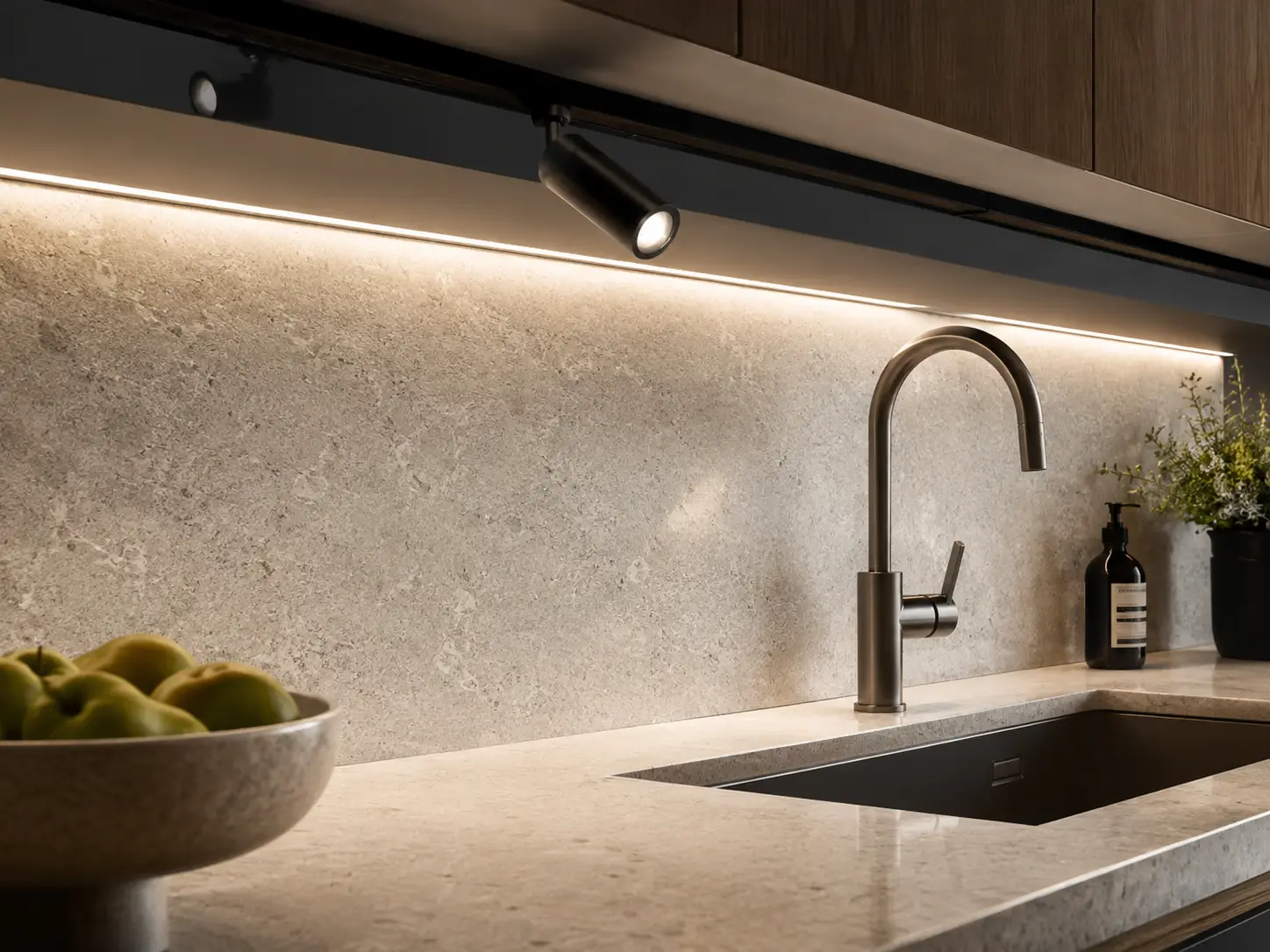
For a counter below wall cabinets, a strip can follow the cabinet run and an adjustable module can cover a defined work point. Choose through distribution, wiring, mounting surface, and controls. Record these details before requesting a model.
Accent Light for Cabinets and Toe Kicks
LED strips can follow toe kicks, shelves, cabinet interiors, and other linear details. Sampo lists self-adhesive, embedded, and surface-mounted formats. The strip and profile determine the installation method.
Sampo lists 12 V, 24 V, and 36 V low-voltage strips, plus 110 V and 220 V formats. Specify voltage, driver, controller, run length, and mounting surface together.
How Do You Match LED Fixtures to Each Kitchen Zone?
Ceiling: Downlights or Magnetic Track Lighting
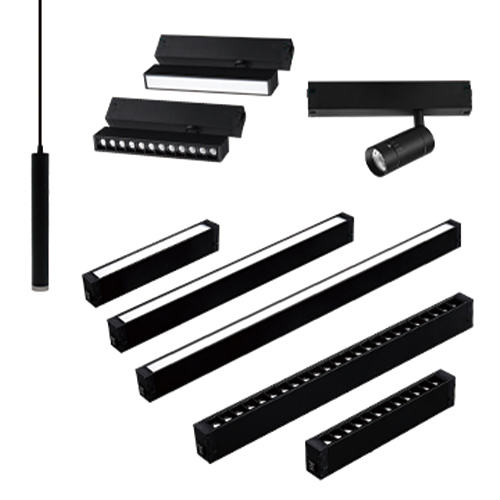
Downlights suit a fixed ceiling plan. Magnetic track systems accept movable modules for adjustable aiming within the compatible system. Sampo’s 48V magnetic track lighting systems cover residential and commercial applications.
The M26 ultra-thin magnetic series uses a 26 mm body, 6 mm slot, 48 V operation, Ra90+ color rendering, a flicker-free source, modular fixtures, and brightness and color-temperature adjustment. Check the ultra-thin magnetic track system by model for wattage, lumens, beam angle, driver, and controls.
Counters and Cabinets: LED Strip Lighting
Strip lights support continuous runs along counters and cabinet details. Sampo lists single-color, two-color, RGB, neon, and smart formats across a family range of 2700-6500 K. Correlated color temperature, or CCT, describes white-light appearance in kelvins.
Confirm strip voltage, PCB width, driver, controller, profile, run requirement, and mounting method. IP ratings vary by product and installation condition. Sink-adjacent and cleaning-exposed locations need a project-specific IP review.
Island and Sink Areas: Directional and Decorative Light
A directional module can aim at an island or sink. A decorative pendant may serve a separate visual role. Record both jobs when both fixtures appear.
Sampo’s magnetic track family includes movable spotlight, floodlight, grille, and other modules. It also lists app and voice control for dimming and color adjustment. Confirm the module, driver, controller, and mounting detail together.
Which Specifications Matter for LED Kitchen Lighting?
Color Temperature and CRI
CCT identifies white-light color appearance. Sampo’s strip family spans 2700-6500 K across different products. Confirm each model and use an approved sample or specification.
Color rendering index, or CRI, describes color rendering against a reference. Sampo’s M26, 4.5 mm series, and broader magnetic track family list Ra90+. Confirm current model data for the lighting schedule.
Glare, Flicker, and Beam Control
Glare review covers the source, optic, aiming direction, and viewing position. The broader Sampo magnetic track series lists anti-glare design. M26 and the 4.5 mm series list flicker-free sources. These features apply to their documented family configurations.
Request model-level beam angle and lumen output for track lights and downlights. The drawing should show fixture position and target surface.
Voltage, Drivers, Dimming, and Smart Controls
Sampo’s M26 and 4.5 mm magnetic systems use 48 V. Its strip portfolio includes 12 V, 24 V, and 36 V low-voltage options plus 110 V and 220 V formats.
The driver and controller must match the product. Sampo materials list DALI, 0-10 V, 1-10 V, Tuya, panel, infrared, and RF controls for applicable strips. DALI is a digital lighting protocol; 0-10 V and 1-10 V use analog control signals. Put the confirmed protocol and components on the quotation and wiring plan.
Mounting Method and Installation Documents
Installation descriptions include recessed and surface-mounted magnetic tracks, plus embedded, surface-mounted, and self-adhesive strip formats. The 4.5 mm ultra-narrow magnetic track system also lists dual magnetic and mechanical retention.
Confirm dimensions, cutouts, connectors, power feed, driver location, and access requirements in the model drawing. Record ceiling, cabinet, and finish constraints in the project brief.
LED Kitchen Lighting Buying Checklist
-
Mark each kitchen zone and its lighting job.
-
Record positions, target surfaces, mounting conditions, CCT, CRI, beam direction, and glare control.
-
Match voltage, driver, dimmer, controller, and wiring method.
-
Confirm the strip profile, PCB width, run detail, and applicable IP rating.
-
Request model-level watts, lumens, beam angle, dimensions, drawings, and destination-market certification scope.
-
Put sample, packaging, warranty, and production terms in the written order documents.
Conclusion: Choose LED Kitchen Lighting as a System
LED kitchen lighting assigns one job to each fixture and connects every fixture to a compatible electrical plan. Use downlights or track modules for ceilings, strips for counters and linear details, and directional modules for defined work areas. Confirm the final specifications at model level.
About Foshan Sampo Lighting & Electric Co., Ltd.
Foshan Sampo Lighting & Electric Co., Ltd. supplies LED track lights, tracks, downlights, parts, and accessories. Its profile covers R&D, OEM, ODM, sales, and after-sales service. Product families include magnetic systems, movable modules, and LED strips.
Contact Sampo Lighting with the kitchen plan, fixture positions, mounting method, voltage, target CCT and CRI, controls, destination market, and certification requirements. These inputs support model selection.
FAQ
Q1: What type of LED light is best for a kitchen?
A: Choose by kitchen zone and lighting job. Downlights or magnetic track modules can serve ceilings, while strips can serve counters, cabinets, and linear accents. Confirm output, beam, voltage, driver, controls, and mounting details by model.
Q2: Are LED strips suitable for under-cabinet kitchen lighting?
A: Yes, when the strip, driver, mounting method, and installation condition match the cabinet run. Sampo lists self-adhesive, embedded, and surface-mounted formats, with 12 V, 24 V, 36 V, 110 V, and 220 V options across different products. Confirm IP rating, PCB width, profile, controller, and permitted run by product.
Q3: What color temperature options are available for LED kitchen lighting?
A: Sampo’s strip-light materials list a 2700-6500 K family range, plus single-color, two-color, RGB, neon, and smart formats. Each product carries its own range and controls. Confirm the model and sample before approving a project CCT.
Q4: Can kitchen track lighting support dimming and smart controls?
A: Applicable Sampo magnetic track families list brightness adjustment, color adjustment, and app or voice control. Compatibility depends on the fixture, driver, controller, and system. Put these components on one quotation and wiring plan.
Q5: What specifications should you confirm before ordering LED kitchen lights?
A: Confirm the model, wattage, lumens, beam angle, CCT, CRI, voltage, driver, controller, mounting method, dimensions, IP requirement, certification scope, and installation drawing. Add the destination market and site conditions. Put warranty, sample, packaging, and production terms in the written order because they vary by product and order.


