

Best LED Lights for Home: How to Choose the Best LED Downlights
The best LED downlights aren’t always the brightest ones. They aren’t just the priciest ones either. You don’t need a huge list of specs. Instead, you just want lights that fit your ceiling and your room. They need to match how you live every day. They must work with your home’s wiring too.
That sounds pretty simple, right? But in real life, things get tricky. Lots of people start by picking the watts or the trim color. Then they turn them on. Suddenly, the light feels too sharp. Or maybe the dimmer switches flicker. Sometimes, the new light just doesn’t fit the old hole in the ceiling.
So, try a better way. Make four simple choices first. Think about what your room actually needs. Look at what your ceiling can hold. Decide what kind of light feels nice. Finally, figure out how you want to turn them on and off.
Why Are LED Downlights Useful in a Home?
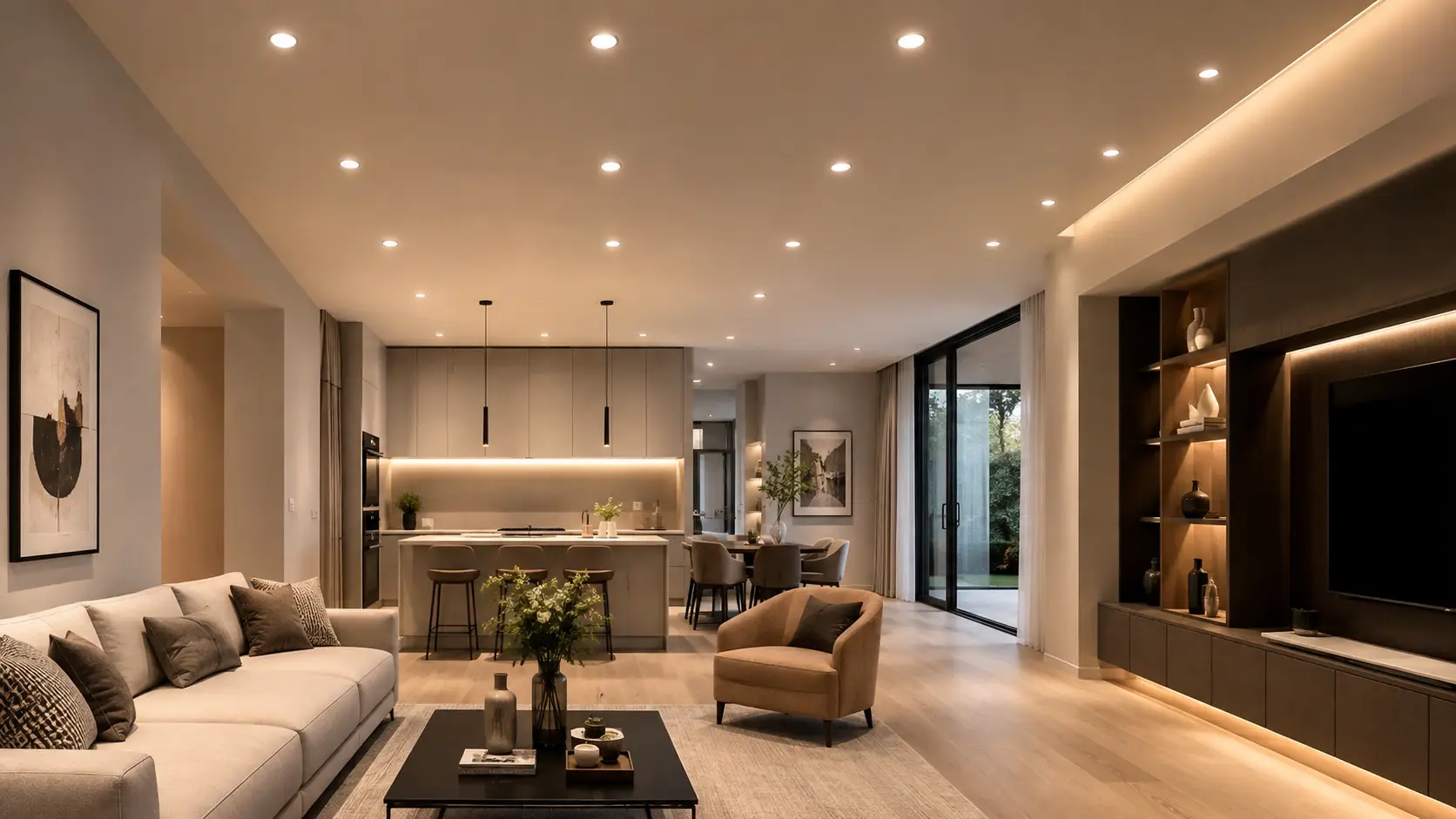
Downlights keep the bulb up high, right by the ceiling. This keeps your walls and floors looking clean and empty. These lights can light up a whole room. They are great for lighting up a kitchen counter. You can even use them to show off a nice painting.
But be careful. Just stuffing a ceiling full of downlights does not mean you have a good plan.
Think in Lighting Layers
Most homes use three layers of light:
- Ambient lighting gives you basic, all-around light.
- Task lighting helps you see well when you cook, read, get dressed, or clean.
- Accent lighting is used to make things look cool, like art, shelves, plants, or neat walls.
Downlights usually handle that basic, all-around layer. If you can move or tilt them, they work for task or accent lighting too.
But you might still want table lamps, wall lights, or track lights. A living room with only ceiling lights can feel a bit boring. It looks flat. If you put a floor lamp next to the sofa, the room feels cozier. It gets much better at night. It is a tiny change, but you will really notice it.
Integrated LED or Replaceable Lamp?
An integrated LED downlight puts everything in one piece. It holds the LED source, the lenses, the driver, and the cooler together. Because of this, it is small and neat. It points the light right where you want it.
Then there are downlights with a replaceable lamp. These use a separate bulb, like a spotlight bulb. If the bulb dies, you just swap it out. You don’t have to throw away the whole fixture. But there is a catch. The brightness, the light beam, and how well it dims might change if you buy a different brand of bulb later.
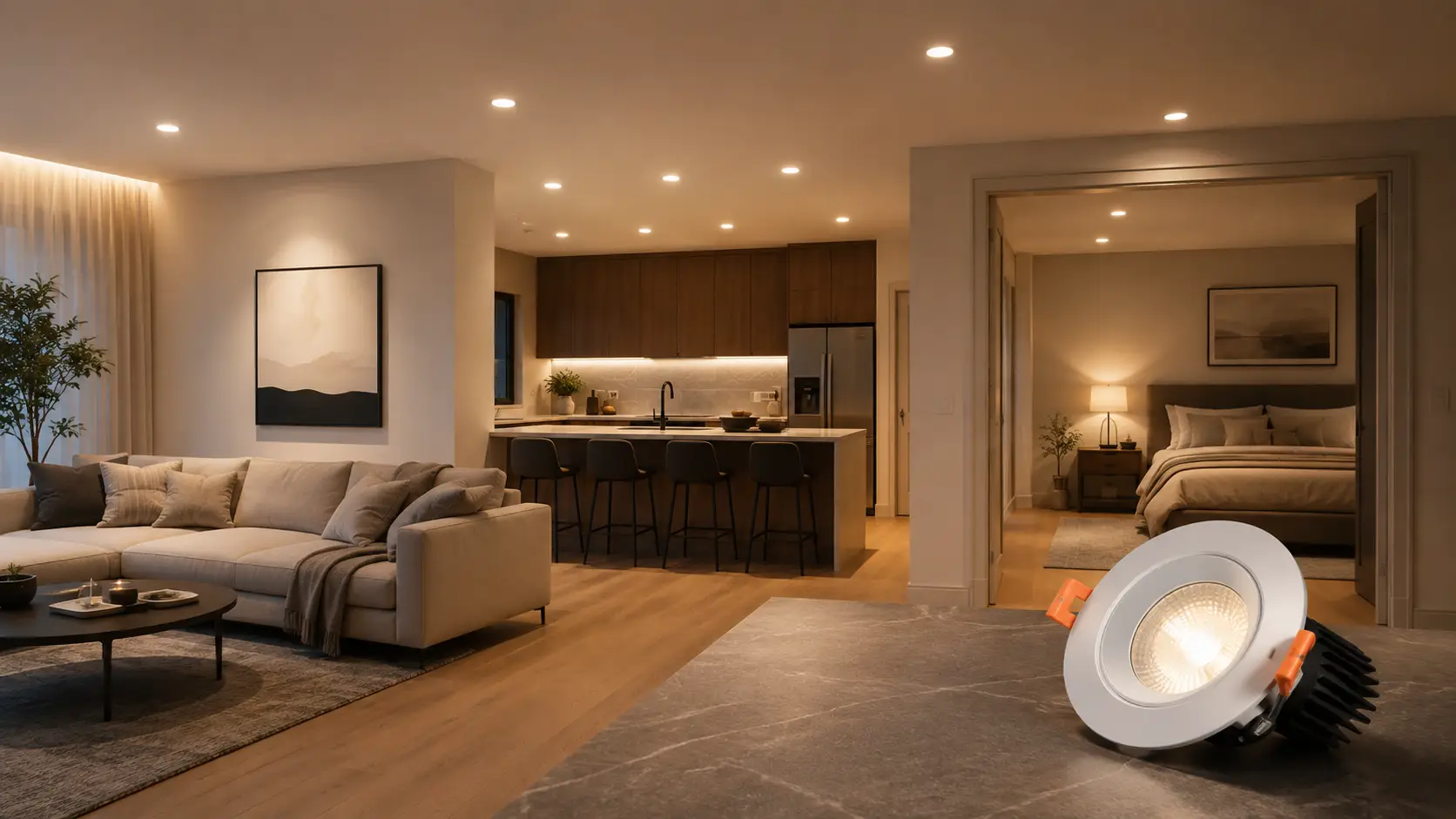
People looking at small, all-in-one fixtures should check out round COB LED downlights. These use Chip on Board technology. This just means a bunch of little LED chips are packed closely together on one board.
Which Type of LED Downlight Fits Your Ceiling?
It is super easy to just pick the prettiest one first. But wait! You must look at how your ceiling is built. Your ceiling decides what you can actually install.
Recessed Downlights
Recessed LED downlights tuck right into a hole in the ceiling. They are great for drop ceilings. They work anywhere with enough empty space up high. You need room for the light, the driver, the wires, and some air to keep it cool.
If you are taking out an old light, measure the hole itself. Do not just measure the shiny ring you see on the outside. Two lights might look the exact same size on the outside. But they might need totally different holes.
Also check a few things:
- How thick the ceiling is.
- How deep the empty space goes.
- How big the driver is.
- If there is fluff or insulation near the hole.
- If you can reach it easily later to fix it.
Just a tiny bit of space can mess up the spring clips. They might not grab on tightly.
Surface-Mounted Downlights
Surface-mounted models just stick flat onto the bottom of the ceiling. These are great for concrete ceilings. They also help if your ceiling gap is too shallow. Sometimes, cutting a big hole is just a bad idea.
These stay out in the open where you can see them. Because of that, their size and color really matter. In lots of homes, this is totally fine. A nice round tube light can look like part of your room’s style.
Fixed or Adjustable?
Fixed downlights just shine straight down. They are awesome for hallways and bedrooms. They give good, basic light.
Adjustable downlights let you aim the beam. You can tilt it at a wall, a kitchen island, a closet, or a painting. You want these when you need light on something that isn’t directly below the hole.
But don’t waste your money on adjustable lights for every single spot. Just put them where aiming the light actually helps you.
Which LED Downlights Work Best in Each Room?
|
Room |
Main Lighting Need |
Useful Features |
|
Living Room |
Easy, moving ambient light |
Warm CCT, dimming, low glare |
|
Kitchen |
Very clear work counters |
Good CRI, smart beam spots |
|
Bedroom |
Cozy, nice evening light |
Warm CCT, smooth dimming |
|
Bathroom |
Safe from water, real colors |
Right IP rating, good CRI |
|
Hallway |
Safe walking around |
Wide light spread, easy switch |
|
Wardrobe |
Seeing true shirt colors |
Good CRI, placing it forward |
All your lights do not need to be exactly the same. You can keep the outer rings looking identical. This makes the house look neat. But the brightness, beam, and color can change in every room.
What Should You Check Before Replacing Existing Downlights?
Start by measuring stuff. Write down the hole size, the outside ring size, and the empty depth. Note the voltage, your dimmer type, and how much space is left for the driver.
Then check the real-world conditions. Is pink fluff touching the old light? Does the spot get wet? Can you reach the driver later if it breaks?
Buy just one sample before buying fifty. Look at it in the sun. Look at it at night. Play with the dimmer. Sit in your favorite chair. Check if the bulb hurts your eyes.
A light might pass every test on paper. But it can still feel terrible in your room. Buying one sample fixes that problem fast.
For more information about drivers, beam control, color quality, and installation conditions, review this guide to commercial LED downlight planning.
What Common Home Lighting Mistakes Should You Avoid?
A perfect, even grid of lights is rarely a good idea. Instead, plan around your couches, counters, mirrors, and walking paths.
Don’t buy a light just because of the watts. Try not to put narrow beams too far apart. Don’t think you need the exact same color in every single room.
Only using ceiling lights is a big mistake. Ceiling lights are fine for seeing where you are walking. But adding smaller, local lights makes a house much cozier and more fun to live in.
How Can Sampo Lighting Support Home Lighting Projects?
Foshan Sampo Lighting & Electric Co., Ltd. goes by the name Sampo Lighting. They make great LED downlights, track lights, magnetic track systems, spotlights, and other parts. They help out with making new products, OEM, ODM, selling, and fixing things after you buy. They do this for homes and big businesses.
Their gear mixes fixed downlights for basic room light with adjustable fixtures for your kitchen islands, eating spots, and art walls. If buyers need special things, they can chat about the shape, color, lenses, and drivers. They can also talk about switches, stickers, and boxes.
The company’s OEM and ODM lighting skills are perfect for sellers and big house projects. Homeowners or project buyers can ask for an LED downlight recommendation. Just tell them your ceiling kind, hole size, voltage, and room type. Tell them your favorite color temperature, dimmer type, and how many you need.
FAQ
Q1: What Are the Best LED Downlights for a Home?
A: The absolute best ones fit your ceiling perfectly. They must match what the room does. They need the right beam, color temperature, and CRI. They must work with your dimmer and follow local safety rules.
Q2: What Color Temperature Is Best for Home Downlights?
A: Around 2700K to 3000K is usually wonderful for living rooms and bedrooms. Kitchens and bathrooms might do better with 3000K to 4000K. It just depends on how the room looks.
Q3: How Many LED Downlights Does a Room Need?
A: That total number depends on the room size and ceiling height. It changes based on lumen brightness, beam angle, and wall colors. Furniture and sunshine matter too.
Q4: Should Home LED Downlights Be Dimmable?
A: Yes, dimming is super helpful in bedrooms, living rooms, and eating areas. You use these rooms for lots of different things. But you must make sure the driver and dimmer play nice together.
Q5: How Can You Replace Downlights Without Changing the Ceiling?
A: You must match the exact hole size and the outside ring width. Match the empty space depth, voltage, and driver room. Check the IP or insulation rules too. Always test one single light before you buy a whole bunch.


