

How to Pick the Best LED Downlights for Your Space
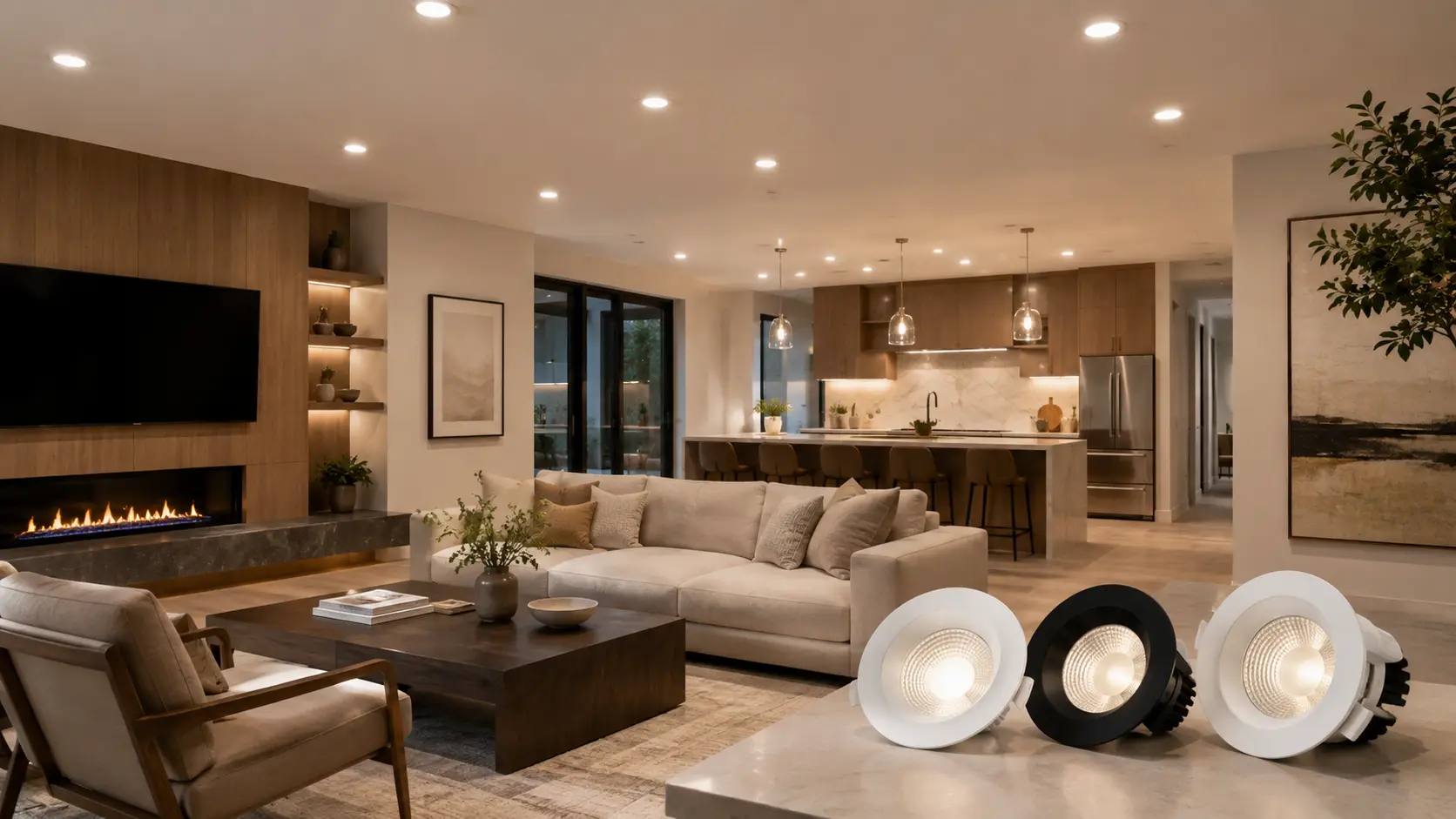
The best LED downlights are not simply the brightest models or those with the highest wattage. A suitable fixture must fit your ceiling, direct light where it is needed, reproduce colors accurately, and work with the local electrical system.
For a home, that may mean warm, low-glare light with smooth dimming. For retail or wholesale projects, driver compatibility and batch consistency may matter just as much. Use three checks: ceiling fit, light quality, and electrical compatibility.
What Makes an LED Downlight the Best Choice?
A downlight directs light from the ceiling. It may sit inside the ceiling, attach to its surface, or use an adjustable head.
Recessed, Surface-Mounted, or Adjustable?
Recessed downlights create a clean ceiling line but need a suitable cutout and enough space for the fixture and driver. Surface-mounted models suit concrete or shallow ceilings.
Adjustable downlights aim light toward artwork, worktops, or merchandise. Fixed models suit general lighting in bedrooms, corridors, and living areas.
How Do You Match a Downlight to Your Ceiling?
Check installation conditions before color temperature or trim style. A fixture that does not fit the opening or depth is not a practical purchase.
Measure the Cutout and Installation Depth
For an existing opening, record the cutout diameter rather than the visible trim. Check ceiling thickness, cavity depth, driver space, and nearby obstacles.
For new construction, confirm fixture dimensions before openings are cut and keep the driver accessible for service.
Check Moisture, Insulation, and Local Rules
IP rating describes protection against solids and water. A bathroom may need a different rating from a dry bedroom, depending on fixture position and local code.
IC rating indicates whether a recessed fixture may contact insulation. Fire-rating and electrical approval requirements vary by market, so confirm them with product documentation and a qualified installer.
How Much Light Do You Need?
Plan light around activities and surfaces. A regular ceiling grid can still leave a worktop dark or place glare above a sofa.
Compare Lumens, Not Just Watts
Watts measure electrical input. Lumens measure visible light output. Lumens per watt indicate luminous efficacy, which helps compare efficiency.
Required output changes with room size, ceiling height, beam angle, surface colors, and fixture count. ENERGY STAR evaluates output, distribution, efficacy, color quality, dimming, and thermal performance rather than wattage alone. (ENERGY STAR)
Choose the Beam Angle for the Task
A narrow beam concentrates light on artwork or focused tasks. A wider beam covers more area and usually works better for ambient lighting.
Narrow beams in a low ceiling can create bright pools and dark gaps. Wide beams may waste light on accent tasks.
What Color Temperature and CRI Should You Choose?
Color temperature describes whether white light appears warm or cool and is measured in kelvin. CRI, or Color Rendering Index, describes how faithfully a light source shows object colors.
Match Color Temperature to the Room
Warm white around 2700K to 3000K suits bedrooms, living rooms, restaurants, and lounges. Neutral white around 3500K to 4000K often works in kitchens, bathrooms, offices, and retail.
These are practical ranges, not fixed rules. Daylight, finishes, and personal preference change how the same light appears.
Use Higher CRI Where Color Matters
CRI 80 is a common interior baseline, while CRI 90 or above gives stronger color fidelity for clothing, food, makeup, and artwork. The U.S. Department of Energy notes that CRI does not fully describe saturated red performance, so project buyers may also request R9 or TM-30 data. (The Department of Energy’s Energy.gov)
How Do You Reduce Glare and Flicker?
Glare often comes from an exposed light source, shallow optics, poor placement, or excessive output near the normal line of sight.
Look for Controlled Optics
Deep-recessed sources, reflectors, baffles, and honeycomb accessories can reduce direct view of the LED and shape the beam.
Sampo Lighting’s guide to round COB LED downlights discusses compact COB, or Chip on Board, sources and beam control. Check angle and output by model. (Sampo Lights)
Match the Driver to the Dimmer
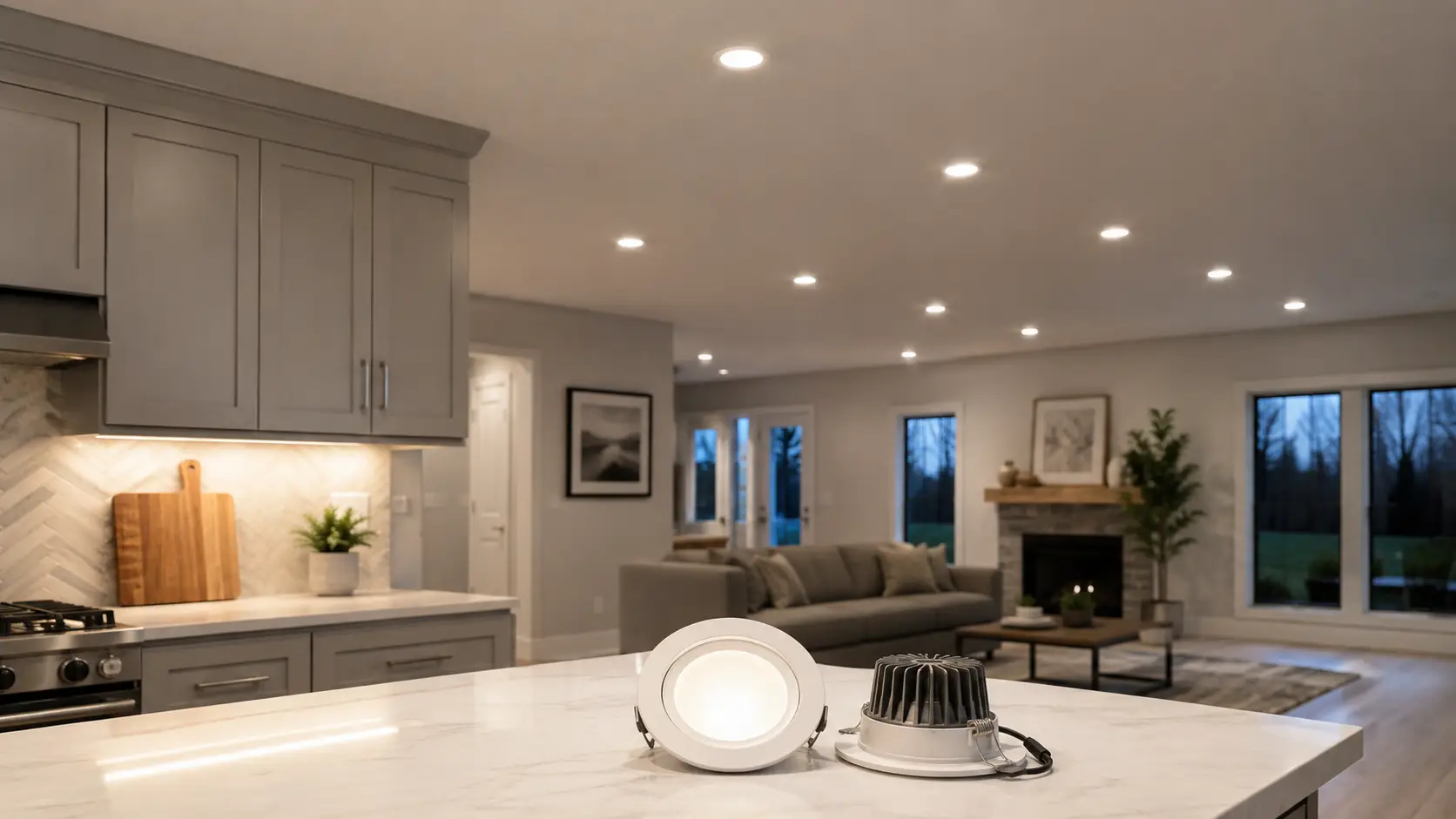
A dimmable label does not mean the fixture works with every control. Incompatible drivers and dimmers can cause flicker, buzzing, shutoff, or a narrow dimming range.
Test one fixture with the planned control before installing a full circuit. ENERGY STAR criteria also require dimmable downlights to disclose dimming ranges and known control limitations. (ENERGY STAR)
Which LED Downlight Fits Each Room?
| Space | Main Priority | Useful Features |
|---|---|---|
| Living Room | Visual comfort | Warm CCT, dimming, low glare |
| Kitchen | Task visibility | Good CRI, suitable beam coverage |
| Bedroom | Relaxed light | Warm CCT, smooth dimming |
| Bathroom | Moisture suitability | Correct IP rating, good CRI |
| Retail | Product presentation | High CRI, controlled beams |
| Office | Working comfort | Low glare, consistent output |
For offices, retail, and hospitality, commercial LED downlight planning covers output, color temperature, CRI, installation, dimming, and low-glare design. (Sampo Lights)
What Should B2B Buyers Check Before Ordering?
Confirm voltage, frequency, driver, lumen output, CCT tolerance, CRI, beam angle, dimming protocol, cutout, depth, finish, and test reports.
Approve a sample in the actual ceiling or a mock-up. Check color consistency, camera flicker, dimming, surface finish, glare, driver noise, and heat.
For OEM or ODM work, define the housing, trim finish, optics, driver, logo, label, and packaging. The company’s OEM and ODM lighting capabilities cover LED downlights, track lights, lighting tracks, and related parts for residential and commercial systems. (Sampo Lights)
Which Are the Best LED Downlights for Your Project?
Choose recessed models for a clean finish when ceiling space allows. Use surface-mounted fittings where cutting is impractical. Adjustable optics suit accent lighting; wider fixed beams suit general coverage.
The best LED downlights match the cutout, room task, beam distribution, CCT, CRI, glare requirement, driver, dimmer, and local safety rules. A cheaper fixture that flickers or produces the wrong beam can become expensive after installation.
How Can Sampo Lighting Support LED Downlight Projects?
Foshan Sampo Lighting & Electric Co., Ltd. develops and supplies LED downlights, LED track lights, lighting tracks, magnetic lighting systems, and related components under the Sampo Lighting name. Its work covers research and development, OEM, ODM, sales, and after-sales service for residential and commercial applications. (Sampo Lights)
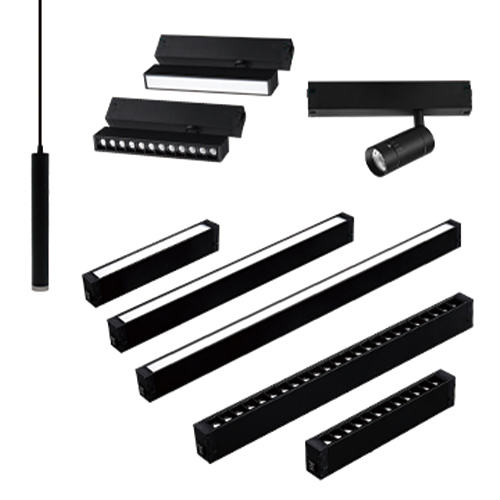
The range suits projects that combine general downlighting with adjustable spotlights or track-based accent lighting. Home buyers can discuss fixture type and room use, while distributors and contractors can define drivers, optics, finishes, branding, and packaging. Use the LED downlight sample request to provide the ceiling type, cutout, voltage, CCT, CRI, beam angle, dimming method, quantity, and destination.
FAQ
Q1: How Do You Choose the Best LED Downlights?
A: Match the fixture to the ceiling, room task, lumens, beam angle, CCT, CRI, dimmer, and local installation rules.
Q2: How Many Lumens Should an LED Downlight Have?
A: There is no universal figure. Room size, ceiling height, beam angle, surface colors, and fixture count affect the required output.
Q3: What Color Temperature Is Best for LED Downlights?
A: Warm white around 2700K to 3000K suits relaxed rooms. Neutral white around 3500K to 4000K often suits kitchens, offices, and retail.
Q4: Why Do LED Downlights Flicker When Dimmed?
A: Flicker often comes from an incompatible driver and dimmer, poor control settings, or an unstable electrical supply.
Q5: What Should You Provide for an OEM LED Downlight Order?
A: Provide voltage, lumen target, CCT, CRI, beam angle, cutout, dimensions, driver, dimming method, finish, target market, quantity, and packaging needs.


