

LED Light Fixtures Home: A Practical Guide to Residential Applications
When a housing developer searches for led light fixtures home, the task is a project decision. You need fixtures that suit each room, connect to planned controls, meet the environment and remain serviceable across many units. This guide compares fixture types, technical data and supplier support before a residential batch order.
What Should B2B Buyers Know About LED Light Fixtures Home?
Residential lighting works as a system. The fixture, LED source, driver, mounting method and control circuit must match the drawing detail.
Define the Fixture, Light Source and Installation Method
Start with the role: recessed or surface-mounted downlight, flush mount, pendant, wall light, track head or linear fixture. Record cut-out, mounting depth, junction-box position and service access. Integrated LED combines source and fitting; replaceable-lamp fixtures separate lamp and housing, creating different replacement plans.
Separate Integrated LED from Replaceable-Lamp Fixtures
Integrated LED products support compact designs and a defined optical package. Replaceable-lamp products support a familiar spare-parts path. Compare driver location, thermal path, service procedure and complete-fitting replacement cost. Request photometric files and installation drawings.
Set the Project Brief Before Comparing Suppliers
Write room count, ceiling type, supply voltage, control protocol, target light level, finish, environmental rating, delivery phases and acceptance documents. This brief gives suppliers the same scope and exposes extra drivers, trims, connectors or installation labor.
How Do You Match LED Fixtures to Each Room?
Room use sets the lighting layers and specification priorities. A repeatable schedule supports design, procurement and replacement.
Living Room and Foyer: Layered Ambient and Accent Light
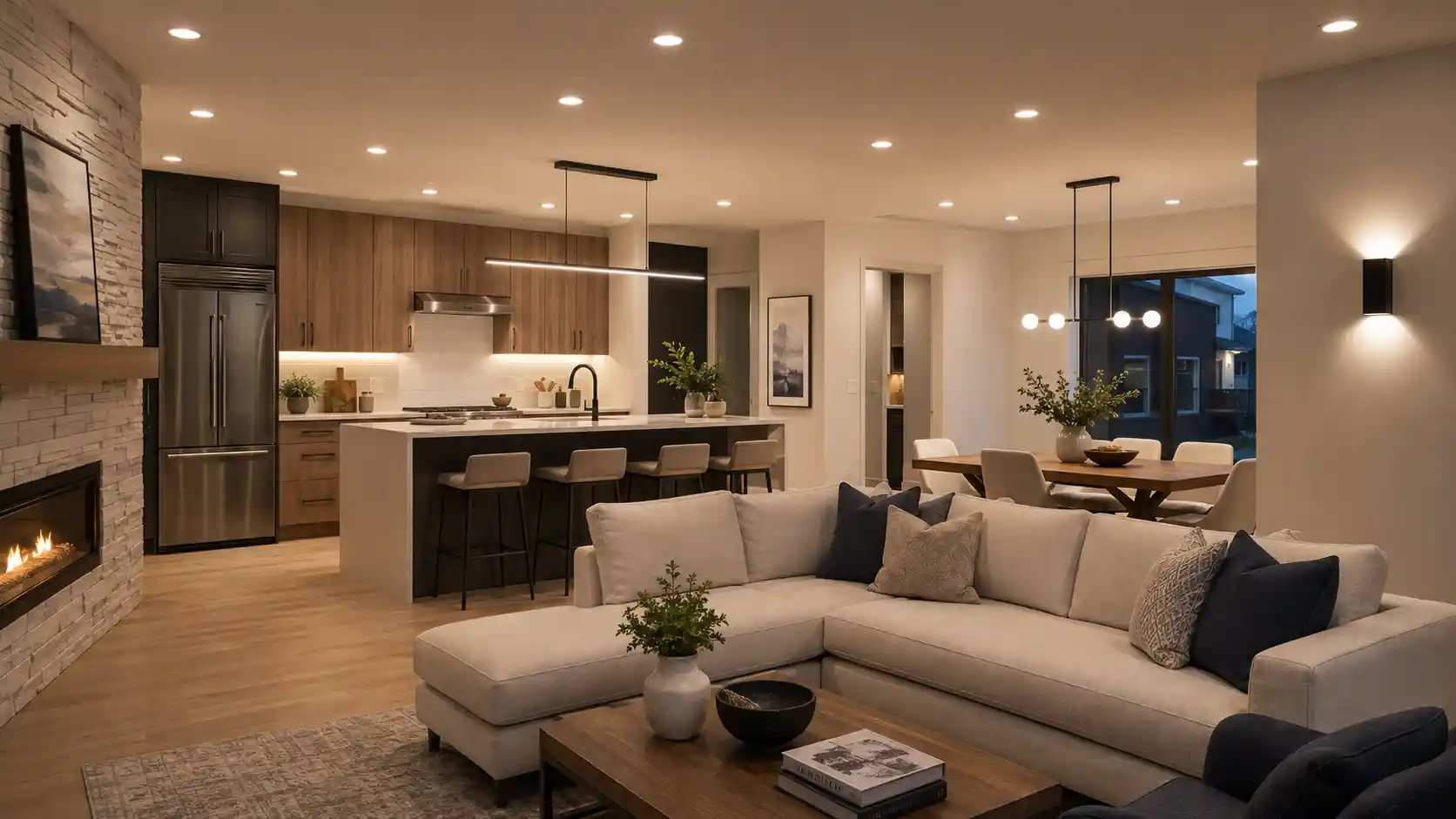
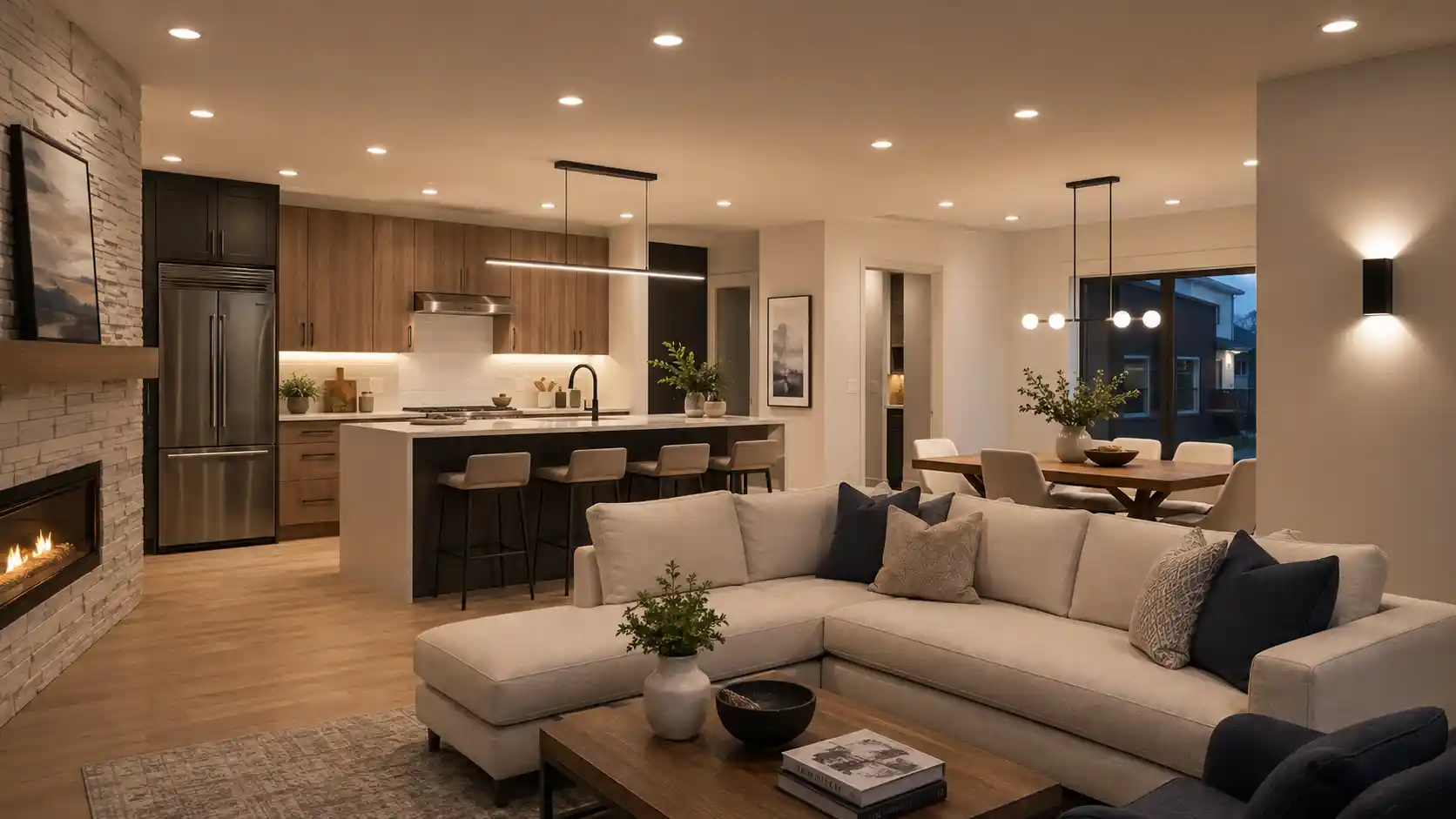
Use ambient, task and accent layers for movement, reading, circulation and artwork. Recessed fixtures suit a ceiling grid; adjustable track heads suit changing displays. Review glare, beam angle, dimming range and driver location.
Kitchen and Dining: Task Light, Glare and Cleaning
Counters need clear task light at the work surface. Dining areas need a comfortable beam and controlled reflections. Specify color consistency, shielding, cleanable surfaces and a layout that keeps the work surface clear. Coordinate pendants, under-cabinet light and ceiling fixtures in one scene.
Bedroom and Home Office: Comfort, Control and Color
Bedrooms benefit from low-glare ambient and reading light. Home offices need vertical light on faces and shelves. Check dimmer compatibility, flicker information, driver noise and switch or sensor positions before the ceiling closes.
Bathroom and Outdoor Areas: Moisture and Safety Ratings
Wet and damp locations require the rating stated in the project code and fixture documentation. Review IP marking, sealing, driver location, corrosion resistance and cleaning access. Outdoor entrances need a beam and shield for steps, doors and paths with controlled spill.
Which Technical Specs Matter in Residential Projects?
Spec sheets turn a design preference into a purchasable item. Compare values from the same test method and keep model, driver and optic together.
Lumens, Wattage and Delivered Efficacy
Lumens describe output; watts describe electrical input. Use delivered lumens from the complete fixture. Record efficacy, power factor, input voltage and current for energy planning. A driver change can alter output, dimming and heat, so approve the complete assembly.
Color Temperature, CRI and Beam Distribution
Color temperature shapes visual tone. CRI describes surface appearance. Beam angle controls spread, overlap and accent intensity. Ask for CCT tolerance, CRI data, beam files and batch consistency. Living rooms and task-focused kitchens can use different settings in one standard.
Dimming, Smart Controls and Driver Compatibility
Match the driver to the chosen dimmer, DALI or other control system. Confirm minimum dimming level, start-up behavior, wiring and fixtures per circuit. Record the protocol and pairing method in the handover file.
IP Rating, Thermal Design and Maintenance Access
IP rating addresses protection from solids and water under stated test conditions. Thermal design affects LED and driver life. Check heat-sink clearance, insulation contact, ambient temperature and cleaning or replacement access.
How Should You Compare Fixture Types for a Housing Project?
Compare installation detail and future room use. Price sits beside labor, controls, replacement and visual consistency.
Recessed and Surface-Mounted Downlights
Recessed fittings require a suitable ceiling void and cut-out. Surface-mounted fittings suit shallow voids or structures that limit cutting. Use this commercial LED downlight buying guide when comparing trim size, glare, junction-box access, driver position and installation time.
Flush Mount Ceiling Fixtures
Flush mounts cover a ceiling junction box and distribute light broadly. They suit bedrooms, corridors and utility rooms with low-profile requirements. Review diameter, height, diffuser cleaning, replacement steps and ceiling-edge shadows.
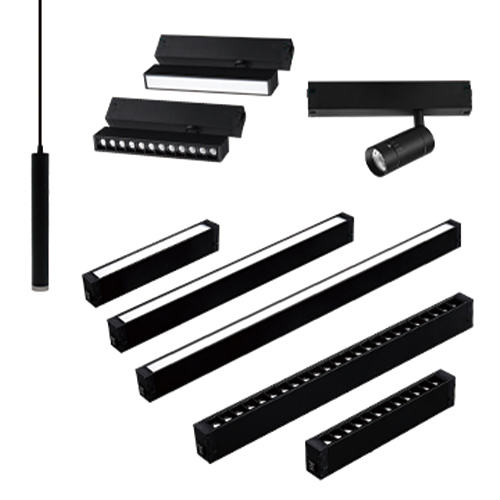
Track, Magnetic Track and Adjustable Spotlights
Track systems support movable heads and layout changes. Magnetic systems add a rail-and-module interface that must match voltage, polarity, connectors and driver capacity. A semi-flexible magnetic track system can serve curved layouts; confirm rail path, module mix and substrate.
What Should You Check Before Ordering in Volume?
The quotation stage converts a design into a controlled supply package. Request evidence in the same format from every shortlisted supplier.
Samples, Photometric Data and Specification Sheets
Request a production sample, IES or LDT file, dimensional drawing, wiring diagram, driver data and installation instructions. Check the sample with the planned finish and control system. Record CCT, CRI, beam, finish, connector and label details.
Electrical Compatibility, Packaging and Installation Labor
Confirm input voltage, frequency, driver location, cable length, terminal type and circuit quantity. Review carton protection, labeling, batch separation and spare-unit packaging. Multi-unit projects need a clear installation sequence and site-ready packing list.
Warranty, Spare Parts, Lead Time and Quality Records
Write the warranty start point, remedy process, spare availability, inspection points and lead time into the purchase order. Ask how color consistency, electrical safety and functional tests are recorded.
How Can You Build a Repeatable Residential Lighting Standard?
A standard reduces design drift across buildings while leaving room-specific flexibility. Build it as a schedule for design, procurement, installation and service teams.
Create a Room-by-Room Fixture Schedule
List room, fixture code, mounting method, quantity, lumen target, CCT, CRI, beam, dimming, IP rating, finish, driver and control group. Add a drawing reference and approved sample photograph.
Approve a Mock-Up Before the Full Batch
Install representative rooms or ceiling bays. Check glare, shadow, color, beam overlap, dimming, access and trim appearance. Capture readings and comments, then freeze the revision before production.
Record Replacement and Maintenance Requirements
Give the owner a fixture list, driver details, control settings, spare recommendations, cleaning method and replacement procedure. Sampo’s ultra-slim 4.5mm magnetic track rail page identifies DC48V, IP20, a two-year warranty and box quantities for single and double rails. Keep model details with the schedule.
About Sampo Lighting
Foshan Sampo Lighting & Electric Co., Ltd. was founded in 2014 in Foshan. The company describes R&D, OEM, ODM, sales and after-sales service for LED track lights, tracks, downlights and related parts. Its About page lists an industrial zone of around 29,800 square meters, professional engineers and more than 200 technicians. Sampo also presents consulting from space measurement and light-effect simulation through lamp selection. Send the room schedule, drawings, controls and quantities through the residential lighting product range.
FAQ
Q1: How Do You Choose LED Light Fixtures for a Home Project?
A: Match each fixture to room task, mounting detail, light distribution, controls, environment rating, maintenance access and schedule.
Q2: Are Integrated LED Fixtures Suitable for Residential Developments?
A: They suit projects needing a compact fitting and defined optical package. Compare driver access, thermal design, service steps and replacement cost.
Q3: Which LED Specs Should a B2B Buyer Compare?
A: Compare delivered lumens, watts, efficacy, CCT, CRI, beam angle, voltage, driver compatibility, dimming, IP rating and dimensions.
Q4: What IP Rating Does Each Residential Area Need?
A: Use the rating required by the project code and the fixture’s stated environment. Bathrooms and outdoor areas need documented sealing.
Q5: Should Buyers Request LED Fixture Samples Before a Bulk Order?
A: Review a production sample with the planned ceiling, finish and control system, then approve the specification before the batch.


