

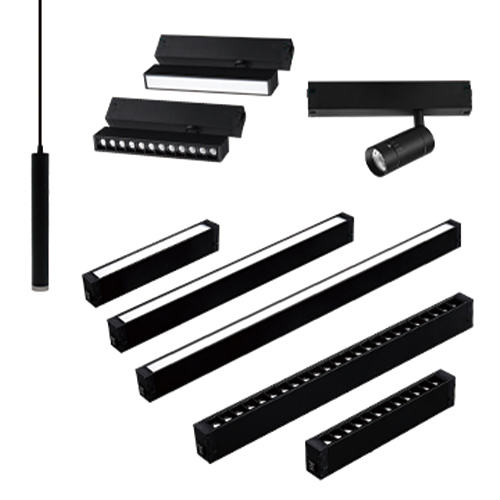
Best Magnetic Track Lighting for Museums and Galleries: A Complete Guide
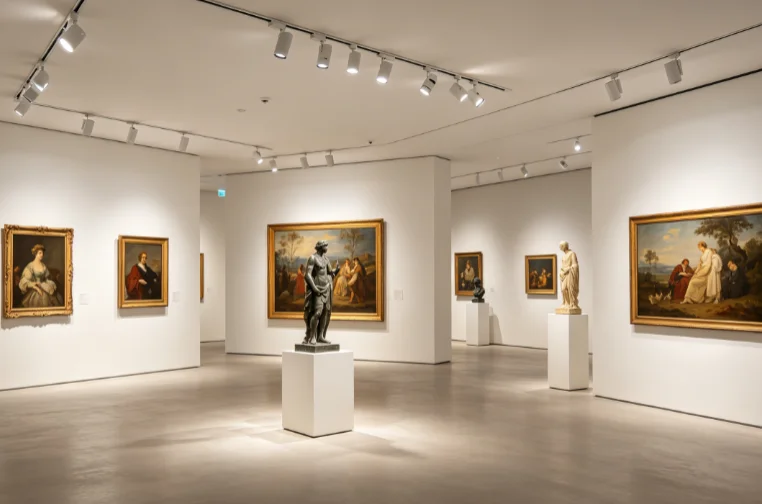
Museums and galleries are more than collections of art on display. Lights in museums and galleries also affect how visitors experience what is on display. A well designed lighting system for a museum or gallery can make even the smallest objects appear to be the main focus of attention, whilst a poor lighting system can fail to bring even the greatest painting to life. Modern museum lighting design frequently uses Magnetic Track Lighting. This form of lighting is highly flexible, clean in appearance and very simple to move when required for display purposes.
Sampo Lighting is a manufacturer of lighting systems for buildings and exhibitions. They produce a range of products including LED track lighting, modular lighting systems and magnetic rail lighting which are suitable for use in museums, galleries and other cultural spaces. In many construction projects the lighting is required to be altered frequently without the need for time consuming alterations to the ceiling above.
In a gallery for example where works of art are frequently changed it may be necessary to move the position of a light from time to time. A magnetic system such as Sampo’s makes this task easy as the fixtures can be slid into place and locked in a fraction of a time, thus enabling exhibition work to be carried out in an efficient and tidy manner.
What Is Magnetic Track Lighting For Museums And Galleries?
Magnetic Track Lighting are light fixtures that are attached to a magnetic rail. Magnetic Track Lighting is a modular lighting system which can be easily extended by adding or removing single lights or whole track parts at any time, without any need for tools.
How Does Magnetic Track Lighting Work In Exhibition Spaces?
Rail based systems carry power in the rail. Once a light module has been mounted on the rail it automatically connects and will turn on. So you can use for example a track spotlight, wall washer lighting or accent lighting using LED modules all on one rail. For museum applications this makes for fast change between exhibitions.
Why Magnetic Track Lighting Fits Museum Lighting Design?
Museum lighting needs to be balanced between showing artwork and protecting it. Also, the space needs to be calm and not too bright or too dark.
Why Do Galleries Prefer Flexible Lighting For Exhibitions?
Galleries choose flexible systems for several reasons. The exhibitions in galleries change frequently. While one painting is hanging on a wall another is already in storage. In between a sculpture is set up in the middle of the room. Then there is the problem of shadows and uneven brightness caused by the fixed lighting. With Magnetic Track Lighting from Basic Lighting you can move the light head fast and easily in any direction. No tools are required for changing the direction of the lighting. So in practice gallery lighting ideas are more feasible than just plans for exhibitions.
What Lighting Requirements Do Museums And Galleries Need?
Many works of art are sensitive to light. Too much light can damage them, while too little light can fail to reveal all of their details. As a result, the museum places quite strict requirements on the lighting.
What Role Does CRI Play In Museum Lighting Requirements?
CRI stands for color rendering index and indicates how colors are rendered by a light source. For art lighting it is important to use high quality CRI LED lighting. If the CRI is too low a red painted area will look lifeless and may even appear to be of a different color. By using high CRI lighting colors are rendered closely to how they would look in the day. Also the color temperature of a light source can give a different feeling to a room. Warm lighting can for example give old wooden objects a weathered appearance, and make them appear softer. Neutral lighting on the other hand is best for viewing of photos and modern art, as it will present the colors most accurately. Small changes in the color temperature can give a totally different feeling to a space.
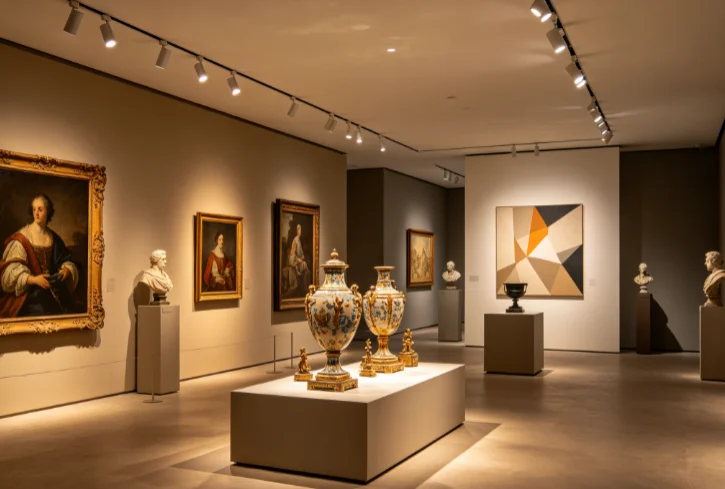
Which Fixtures Work Best In Exhibition Lighting?
When showing different artworks one style of lighting is not enough.
What Types Of Fixtures Are Used In Magnetic Track Lighting Systems?
In painting and wall displays it is common to use a Track spotlight to highlight a special point in the room. Wall washer lighting can be used for very large wall surfaces in order to avoid black spots in the room. Small objects like jewelry, artifacts or glass are highlighted by LED accent lighting. As in reality, the best result is achieved by combining different types of lighting fixtures.
How Do You Plan A Magnetic Track Lighting Layout?
When designing a lighting plan for a space, one needs to consider more than just where to place the lights. The lighting plan can also affect how people will move through the space.
What Should You Consider When Designing A Track Lighting Layout?
The good design of an exhibition is basically determined by the traffic flow through it. One guides the viewer step by step. The track lines in a ceiling guided system have to follow not only the shape of the ceiling but also the single display zones. Often a lot of space is reserved in the design for later modifications without having to set up a completely new system. For these reasons a cross track layout is very often chosen. This also allows a flexible design of the lighting layout of the exhibition and later changes in the exhibition lighting design.
FAQ
Q1: What Makes Magnetic Track Lighting Suitable For Museums?
A: Magnetic Track Lighting is flexible, easy to move and can be readjusted instantly without any re-wiring to suit any exhibition quickly.
Q2: Magnetic Track Lighting for Art Lighting?
A: Yes. Magnetic Track Lighting is often used for art lighting. It is very easy to direct the beam of light precisely where needed. Also Magnetic Track Lighting works very well with high CRI LED light.
Q3: What Is The Best Lighting Type For Gallery Lighting Design?
A: A mix of track spotlight, wall washer lighting, and LED accent lighting is best to create a balanced gallery lighting design.
Q4: Is LED Track Lighting Energy Efficient For Museums?
A: Yes. LED track lighting is energy efficient because it uses less energy than traditional lighting fixtures. It also produces less heat, which is better for protecting works of art that will be on display for long periods of time.
Q5: How Often Should Museum Lighting Layout Be Changed?
A: Depending on the exhibition cycle and items on display – for most museums that change exhibitions every few months, they can change the lighting over every time they change the display. In some instances even Magnetic Track Lighting can be reconfigured as items are moved.


