

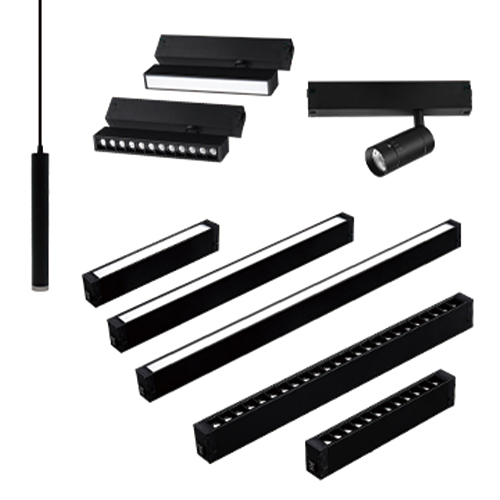
Commercial Magnetic Track Lighting RFQ Checklist for Quotation
A commercial magnetic track lighting quotation becomes useful when every supplier receives the same project information. A product link and a fixture count rarely define the complete system. The quotation also depends on the ceiling, rail layout, operating voltage, driver, control method, light modules, documents, and delivery requirements.
This RFQ checklist helps procurement teams, lighting designers, contractors, and distributors prepare a clear request for quotation. It focuses on ultra-thin magnetic track lighting projects, where small differences in rail profile, connector design, and ceiling detail can affect the final installation.
Why Does a Commercial Magnetic Track Lighting RFQ Need More Than a Product Link?
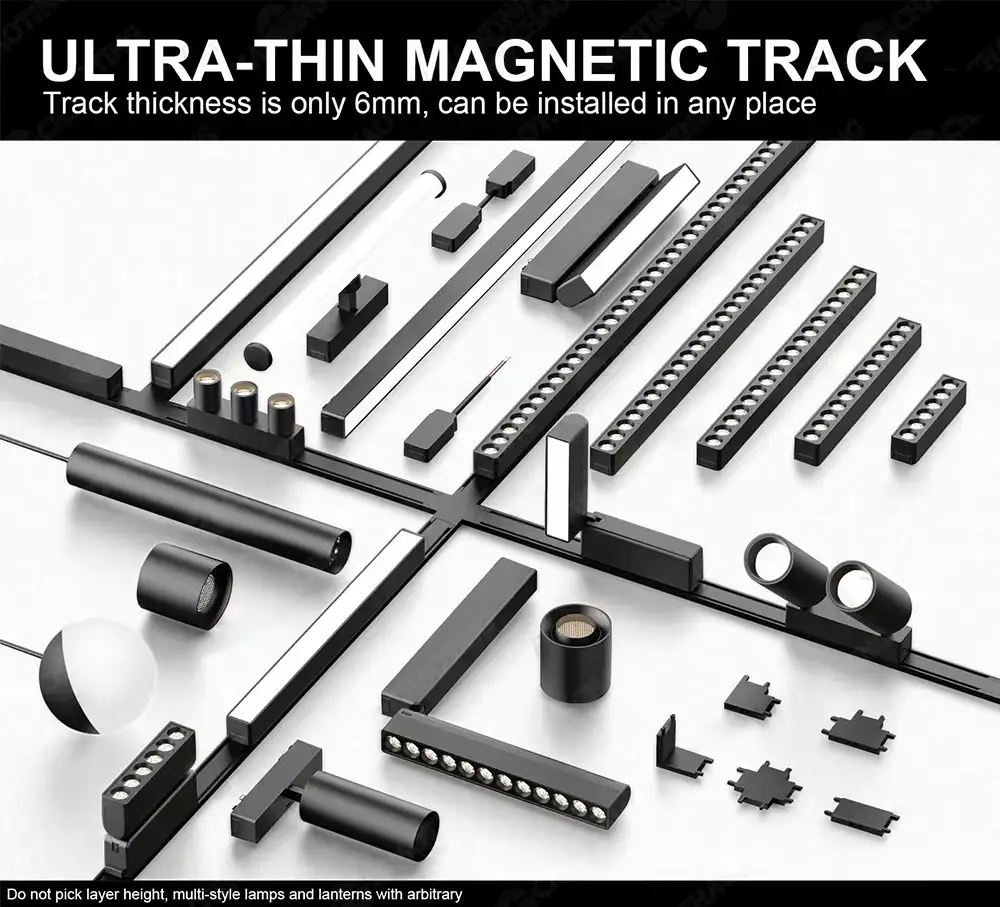
An ultra-thin magnetic track light system is a group of related components. The rail carries power and supports the modules. The driver sets the operating conditions. Connectors determine the layout, while controls determine how the system is dimmed or grouped. A quotation should identify each item and show how the parts work together.
Cover the Full System
Ask for a complete bill of materials that includes:
- Track rails
- Power feeds
- Straight and corner connectors
- End caps
- Drivers
- Magnetic light modules
- Mounting hardware
- Control devices
- Suspension parts where required
The bill of materials should use exact product codes. Generic descriptions can hide differences in width, height, voltage, conductor layout, or adapter design.
Make Supplier Responses Comparable
Send the same drawings, fixture schedule, electrical requirements, document list, and commercial terms to every supplier. Each supplier can then price the same scope. You can compare the technical response, exclusions, lead time, and warranty on an equal basis.
What Project Information Should You Send Before Requesting a Quote?
Begin with the project conditions that influence the system architecture. The manufacturer needs enough information to recommend a rail profile, driver arrangement, module mix, and installation method.
Project and Market Details
State the following items in the first section of the RFQ:
- Project country and delivery city
- Application, such as retail, hotel, office, gallery, residence, or showroom
- Number of rooms, stores, or sites
- Estimated rail length and module quantity
- Target delivery date
- Required production or installation milestones
- Destination-market approval and document requirements
Local electrical rules and import requirements can affect the proposed driver, labeling, test reports, and packaging. Give the supplier the destination market before a technical offer is prepared.
Ceiling and Installation Conditions
Describe the ceiling substrate and construction stage. Useful details include:
- Concrete, gypsum board, timber, metal structure, or finished ceiling
- Surface-mounted, recessed, or suspended installation
- Available ceiling depth
- Access above the ceiling
- Power-entry location
- Driver location and access panel
- Areas where cutting or drilling is restricted
- New construction, renovation, or completed interior
These conditions guide the rail selection. A surface rail can suit a finished or concrete ceiling, while a recessed rail needs coordinated openings and finishing work. A suspended rail needs verified fixing points and a defined finished height.
Drawings and Layout Information
Attach a reflected ceiling plan, marked-up floor plan, or dimensioned sketch. Show:
- Rail paths and finished lengths
- Straight runs and corners
- Intersections and end points
- Power-feed points
- Driver positions
- Control zones
- Fixture positions or target areas
- Suspension points and heights
Mark the drawing revision and the date. This creates a reference when a layout changes during coordination.
Which Technical Fields Should the RFQ Include?
The technical section should separate rail, electrical, optical, control, and documentation requirements. This format helps suppliers identify missing information before they issue a price.
Rail and Mounting Specification
Request these rail fields:
- Product series and part number
- Width and height
- Standard rail lengths
- Finish and color
- Conductor count and interface
- Surface, recessed, or suspended profile
- Cutting and joining method
- Corner and intersection options
- End caps and power feeds
- Suspension hardware
- Carton quantity and packing method
Sampo Lighting’s M26 surface-mounted magnetic track rail page lists a 26 mm width, 6 mm height, black and white finishes, and 1 m, 1.5 m, 2 m, and 3 m rail lengths. Use the exact product page or drawing for the final specification. Review the M26 surface-mounted rail when preparing a rail schedule.
Electrical and Driver Specification
List the building supply and the track operating voltage as separate fields. Then ask the supplier to confirm:
- Driver input range
- Track output voltage
- Rated driver power
- Total connected load
- Permitted load per feed
- Maximum run length
- Feed-point arrangement
- Cable size and routing
- Driver ventilation and service access
- Dimming or control protocol
The 48V magnetic track light system section of the Sampo website shows a product family with surface and recessed rails, spotlights, grille lights, and flood modules. The quotation should still identify the exact rail, driver, feed, and module combination for the project.
Light Module Schedule
Prepare a line-by-line schedule for every module type. Include:
- Module category: spotlight, linear, grille, flood, or pendant
- Model and quantity
- Wattage and lumen output
- Color temperature
- CRI
- Beam angle
- Aiming or rotation range
- Finish
- Dimming capability
- Control group
Describe the lighting task for each zone. Linear and flood modules can support general illumination. Spotlights can focus on merchandise, artwork, signs, or architectural details. Pendant modules can serve counters, tables, and reception areas. The task description helps the supplier recommend a suitable distribution.
Document and Compliance Requirements
State the documents required with the quotation and shipment:
- Product data sheets
- Dimensioned drawings
- Wiring diagrams
- Driver specifications
- Installation instructions
- IES or LDT photometric files
- Test reports
- Destination-market compliance documents
- Packaging and labeling information
- Warranty terms
Ask the supplier to identify the model covered by each document. A generic certificate or drawing may refer to a different series.
How Should You Compare Supplier Quotations?
Use a comparison sheet that separates technical scope from commercial scope. The lowest unit price may omit drivers, connectors, controls, or documents that another supplier included.
Compare the Bill of Materials
Check rail lengths, corner pieces, feeds, end caps, drivers, luminaires, mounting parts, controls, and spares. Confirm that the quantity of each part matches the drawing. Check whether the proposed driver count matches the number of electrical zones.
Check Inclusions and Exclusions
Ask each supplier to state whether the price includes:
- Drivers and power supplies
- Feed connectors
- Corner connectors
- End caps
- Mounting hardware
- Control equipment
- Sample units
- Test reports
- Export packaging
- Spare modules
Record substitutions and deviations in a separate column. This gives the project team a clear decision record.
Compare Commercial Terms
Review MOQ, sample cost, sample lead time, mass-production lead time, payment terms, packaging, warranty, spare-part availability, and after-sales support. For multi-site programs, request the production schedule and batch-consistency process.
What Should You Request for Sample Approval?
Samples should represent the proposed production configuration. A single lamp powered on a desk cannot confirm a complete project system.
Test Mechanical and Electrical Fit
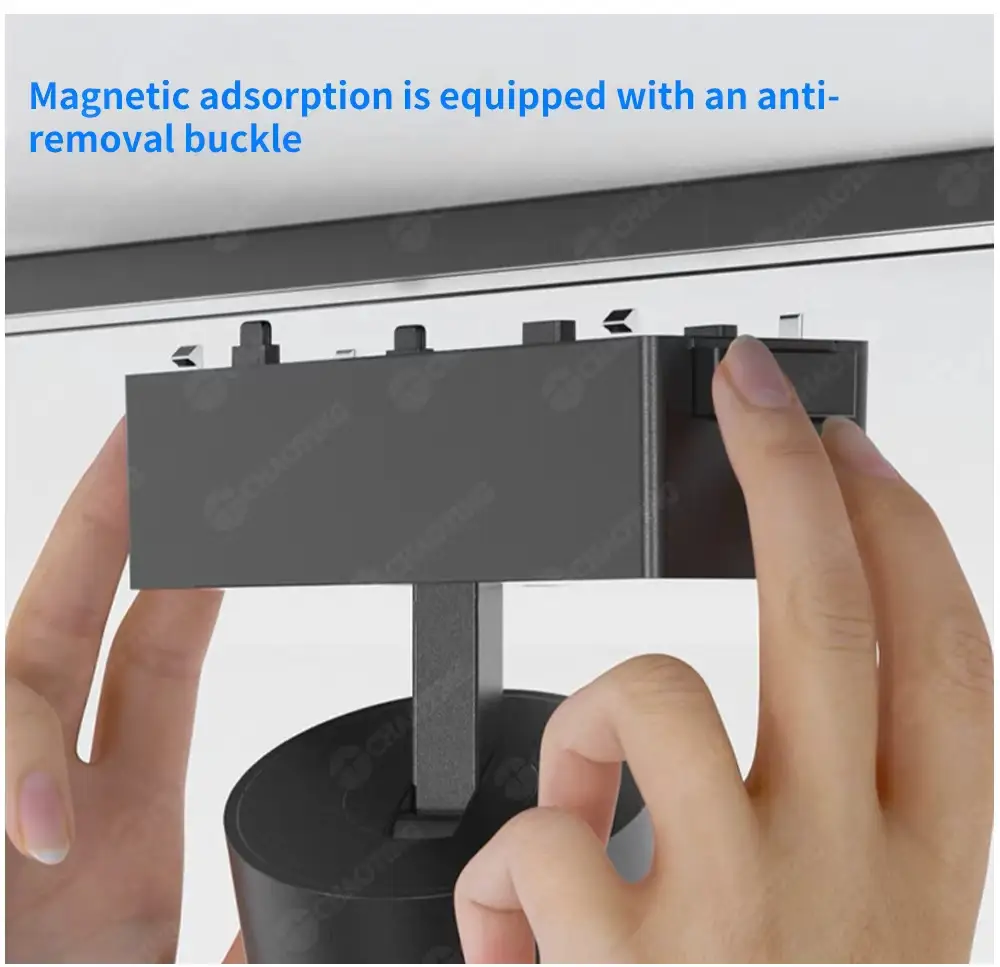
Check the rail finish, joint alignment, module engagement, magnetic retention, mechanical locking, contact stability, and removal process. Power the planned driver and control combination. Test startup, full-load operation, dimming range, group response, visible flicker, heat, and recovery after a power interruption.
Run a Pilot Installation
A small installation can confirm ceiling openings, fixing points, feed locations, driver access, suspension height, and light distribution. Photograph the approved condition and record the sample model numbers. Use the approved sample as the reference for the production inspection.
Define the Approval Gate
State who approves the sample, which tests must pass, and the date for production release. Any change to rail dimensions, module codes, drivers, controls, finish, or packaging should receive written approval before production.
Copy-and-Paste RFQ Template
Use the following fields in an email or procurement document:
|
RFQ Field |
Required Information |
|
Project location |
Country, city, delivery address |
|
Application |
Retail, hotel, office, residence, gallery, showroom |
|
Ceiling condition |
Concrete, gypsum, timber, finished ceiling |
|
Mounting method |
Surface, recessed, suspended |
|
Rail layout |
Lengths, corners, feeds, intersections, zones |
|
Track voltage |
Required operating voltage |
|
Light modules |
Type, quantity, wattage, CCT, CRI, beam angle |
|
Driver |
Output, quantity, location, access |
|
Controls |
Switching, group dimming, DALI, Zigbee, or other |
|
Documents |
Datasheet, drawing, wiring diagram, photometric file |
|
Commercial terms |
MOQ, lead time, packaging, warranty |
|
Sample approval |
Tests, sample quantity, approval date |
Attach the layout and fixture schedule when you submit a project quotation request. Ask the supplier to return a marked-up drawing and a complete bill of materials.
How Can Sampo Lighting Support the RFQ Process?
Foshan Sampo Lighting & Electric Co., Ltd. was founded in 2014. Its website lists research and development, OEM, ODM, sales, and after-sales service for LED track lights, lighting tracks, downlights, and related parts and accessories. The product range includes ultra-thin, ultra-narrow, 48V, 220V, and semi-flexible magnetic track systems. Buyers can submit project drawings, ceiling details, fixture schedules, control requirements, quantities, and delivery dates for a coordinated quotation.
FAQ
Q1: What Should Be Included in a Magnetic Track Lighting RFQ?
A: Include project location, application, ceiling condition, mounting method, rail layout, operating voltage, driver details, light modules, controls, required documents, commercial terms, and sample requirements.
Q2: What Drawings Does a Lighting Manufacturer Need for Quotation?
A: Send a reflected ceiling plan, marked-up floor plan, or dimensioned sketch showing rail lengths, corners, feeds, driver positions, control zones, fixture locations, suspension points, and ceiling restrictions.
Q3: How Should You Specify Drivers and Controls for Magnetic Track Lighting?
A: State the building supply, track voltage, connected load, number of feeds, driver location, dimming method, control protocol, and required scenes or zones. Ask the supplier to confirm compatibility for the exact part numbers.
Q4: Should You Request Samples Before Placing a Bulk Order?
A: Yes. Use production-representative samples to check mechanical fit, rail joints, finish, driver behavior, dimming, flicker, heat, and light distribution. Approve the sample codes before mass production.
Q5: How Can You Compare Magnetic Track Lighting Quotations from Different Suppliers?
A: Compare the complete bill of materials, included and excluded items, technical documents, sample results, MOQ, lead time, packaging, warranty, spare parts, and after-sales terms. Keep the same project requirements for every supplier.


