

Ultra-Thin vs Ultra-Narrow Magnetic Track Lighting: Which System Fits Your Project?
In commercial lighting projects, magnetic track lighting is usually decided together with the ceiling structure, wiring plan, display layout, and final interior style. The product may look simple in a catalog, but the wrong track type can affect installation depth, lamp position, maintenance work, and even how clean the ceiling looks after completion. Ultra-thin magnetic track lighting and ultra-narrow magnetic track lighting are often compared because both are used in modern spaces with a slim visual style. Still, they are not the same system. One solves the problem of track height. The other solves the problem of visible width.
What Is Ultra-Thin Magnetic Track Lighting?

Ultra-thin magnetic track lighting is designed for projects where the lighting system needs to stay low and neat against the ceiling. In many renovation jobs, there is not much space above the ceiling board. Some sites have air-conditioning ducts, fire pipes, concrete beams, or shallow ceiling layers. A thick recessed rail may look suitable on the drawing, but it can become difficult during installation.
This is where an ultra-thin magnetic track light system has practical value. The slimmer rail profile helps reduce the pressure on ceiling depth while still allowing different magnetic lighting modules to be arranged along the same track. For offices, hotel corridors, apartment interiors, retail stores, and compact commercial rooms, this type of system keeps the lighting layout clean without making the ceiling look heavy.
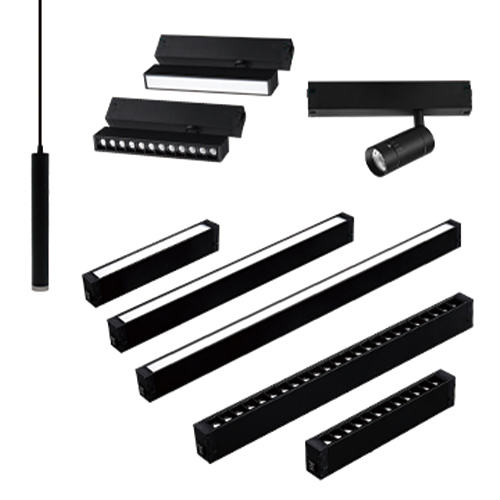
The system can usually work with several lamp types, depending on the selected product series and project voltage. Magnetic spotlights are used for accent lighting. Linear lights are useful for continuous visual lines. Grille lights help reduce glare in working areas. Flood lights cover wider zones. For B2B buyers searching for 48V magnetic track lighting, surface mounted magnetic track rail, or recessed magnetic track lighting system, ultra-thin products are often connected with easier layout planning and a more restrained ceiling profile.
Sampo Lighting lists Ultra-thin Magnetic Track Light System products as part of its magnetic lighting range, along with related 48V magnetic track lighting, DC48V lighting modules, recessed track rails, and surface mounted track rails. This product structure is helpful for projects that need lamps, rails, connectors, drivers, and accessories from one matching system.
What Is Ultra-Narrow Magnetic Track Lighting?

Ultra-narrow magnetic track lighting has a different purpose. It is not mainly selected because the rail is low in height. It is selected because the visible rail line is narrow. This detail matters a lot in spaces where the lighting should support the display rather than become part of the display.
In jewelry store lighting, boutique retail lighting, gallery lighting, display cabinet lighting, and luxury residential interiors, the track line must often stay quiet. A wide rail can look too strong beside glass shelves, dark panels, metal frames, or small product counters. It may also break the refined look that the designer is trying to keep.
An ultra-narrow magnetic track light for retail display gives the space a more delicate lighting line. It can be used for product shelves, cabinets, narrow corridors, show windows, and compact exhibition areas. When the product itself is small, reflective, or high-value, the lighting fixture should not compete for attention. The narrow rail helps maintain a cleaner visual balance while still allowing focused light placement.
For this reason, ultra-narrow magnetic track lighting is often a better choice when the project needs precision, small fixture scale, and a discreet architectural line.
Key Differences Between Ultra-Thin and Ultra-Narrow Magnetic Track Lighting
The two systems should not be selected only by product photos. A photo may show the lamp body clearly, but it does not show ceiling depth, installation gap, wiring condition, rail visibility, or the way light reflects inside the final space. Project buyers need to compare the actual use case before placing a wholesale order.
|
Comparison Factor |
Ultra-Thin Magnetic Track Lighting |
Ultra-Narrow Magnetic Track Lighting |
|
Main design focus |
Lower rail height and lighter ceiling profile |
Smaller visible rail width |
|
Best project fit |
Offices, hotels, apartments, retail stores, commercial renovation |
Jewelry shops, galleries, cabinets, boutiques, premium display areas |
|
Visual result |
Clean, slim, practical for wider ceiling layouts |
Discreet, refined, close to hidden lighting |
|
Main installation concern |
Ceiling depth, rail height, module matching |
Visible line, fixture size, display accuracy |
|
Common lamp use |
Spotlights, flood lights, grille lights, linear lights |
Mini spotlights, linear lights, focused display lighting |
|
Buyer focus |
System flexibility and installation convenience |
Fine appearance and precise light placement |
The selection rule is fairly direct. Ultra-thin magnetic track lighting is usually better when the ceiling structure needs a flatter system. Ultra-narrow magnetic track lighting is usually better when the visible track line needs to be as small as possible.
Which System Fits Commercial Spaces Better?
Retail Stores and Showrooms
Retail stores need flexible lighting because displays change often. A clothing store may move shelves every season. A showroom may change product walls several times a year. In these spaces, ultra-thin magnetic track lighting can support a practical commercial track lighting layout because different lamp modules can be added, moved, or replaced along the same rail.
For larger showroom projects, a 48V magnetic track lighting system is often considered when the design calls for clean ceiling lines and flexible lamp placement. Before ordering, the buyer should check rail length, connector arrangement, driver matching, lamp module size, and whether the full system can support repeated project installation.
Jewelry Shops and Display Cabinets
Jewelry shops, watch counters, cosmetic shelves, glass cabinets, and high-end display zones need a smaller lighting presence. The rail should stay in the background. Ultra-narrow magnetic track lighting is usually the stronger option in this case because it keeps the visible structure slim while supporting more focused lighting.
For display cabinet lighting, small details matter. Beam angle, color temperature, color rendering, fixture size, track width, and installation gap should be confirmed before production or bulk ordering. A rail that looks acceptable in an open ceiling may look too wide inside a cabinet or near glass.
Offices, Hotels, and Residential Projects
Office and hotel projects usually care about comfort, order, and later maintenance. Ultra-thin magnetic track lighting often fits meeting rooms, reception zones, corridors, guest rooms, and apartment interiors. It keeps the ceiling simple and still allows a mix of ambient lighting, wall lighting, task lighting, and accent lighting.
In hotel projects with many repeated rooms, a matching magnetic track light system can also make later maintenance easier. When rails, modules, drivers, and connectors belong to the same product system, replacement work is usually more straightforward.
What Should Buyers Check Before Ordering?
The first check should always be the ceiling condition. Some projects are better suited for surface mounted magnetic track rail because the ceiling cannot be opened deeply. Some projects need a recessed magnetic track lighting system because the design requires a more integrated ceiling appearance. In higher commercial spaces or open offices, suspended magnetic track lighting may also be considered.
Voltage should be confirmed early. Sampo Lighting lists both 220V magnetic track light system and 48V magnetic track light system categories. A 48V magnetic track lighting system is commonly discussed in modern commercial interiors because it supports flexible magnetic modules, but the final choice still depends on project drawings, electrical requirements, and local installation rules.
Buyers should also review lamp module compatibility, rail length, driver matching, connector type, dimming method, package protection, warranty terms, OEM/ODM support, and delivery stability. For wholesalers, distributors, and contractors, one sample order is not enough to judge a system. The product must also be practical for repeat projects and bulk purchasing.
Why Work with a Magnetic Track Lighting Manufacturer?
A magnetic track lighting project is not only a lamp purchase. Rails, drivers, connectors, lighting modules, accessories, packing methods, and installation details need to fit together. A manufacturer with full product categories can make project selection more efficient and reduce mismatch during bulk orders.
Foshan Sampo Lighting & Electric Co., Ltd. was founded in 2014 in Foshan, Guangdong. The company focuses on LED track lights, LED lighting tracks, LED downlights, and related lighting parts and accessories. Its business covers research and development, OEM, ODM, sales, and after-sales service. Company information also mentions an industrial zone of about 29,800 square meters and more than 200 experienced technicians. For B2B customers comparing a led track lighting supplier, these details are useful when evaluating long-term supply, customized project support, and commercial lighting cooperation.
Conclusion
Ultra-thin magnetic track lighting and ultra-narrow magnetic track lighting are made for different project conditions. Ultra-thin systems are more suitable when the ceiling needs a slimmer structure, broader lamp compatibility, and easier layout planning. Ultra-narrow systems are more suitable when the visible track line must remain small, especially in jewelry shops, display cabinets, galleries, boutiques, and refined retail interiors. For commercial buyers, the better choice depends on ceiling depth, visual target, voltage system, lamp module type, installation method, and supplier support.
FAQs
Q1: Is ultra-thin magnetic track lighting good for low ceilings?
A: Yes. Ultra-thin magnetic track lighting is suitable for many low-ceiling projects because the slim rail profile helps reduce ceiling bulk and keeps the lighting system cleaner in appearance.
Q2: Where is ultra-narrow magnetic track lighting commonly used?
A: Ultra-narrow magnetic track lighting is commonly used in jewelry stores, display cabinets, galleries, boutique retail spaces, and interiors where the visible track line needs to stay very small.
Q3: How should buyers choose between surface mounted and recessed magnetic track lighting?
A: The choice depends on ceiling structure and design requirements. Surface mounted magnetic track rail is often easier for renovation projects, while a recessed magnetic track lighting system gives a cleaner built-in ceiling effect.
Q4: Is 48V magnetic track lighting suitable for commercial projects?
A: 48V magnetic track lighting is suitable for many commercial interiors because it supports flexible magnetic lighting modules and a clean track layout. The final selection should match the electrical plan and installation conditions.
Q5: What should wholesale buyers check before ordering a magnetic track light system?
A: Wholesale buyers should check voltage, rail type, lighting module compatibility, track length, connectors, drivers, packaging, warranty, OEM/ODM support, and supplier experience with commercial lighting projects.


