

How Many Track Lights Do You Need? Spacing and Beam Angle Guide
Track light spacing should be settled before a commercial lighting order moves into production or bulk delivery. In real projects, the number of track lights is rarely decided by room size alone. Ceiling height, beam angle, fixture output, wall color, product display material, track length, and the use of the space all affect the final layout. A retail store may need stronger light on shelves and product walls, while an office usually needs softer and more even illumination. For hotels, showrooms, galleries, and renovation projects, a proper track lighting layout helps reduce dark areas, glare complaints, and later site changes.
Why Track Light Quantity Is Not Only About Room Size
The question of how many track lights a project needs usually comes up early, but the answer depends on the job of the light. A 30-square-meter office and a 30-square-meter showroom may look similar on paper, yet the lighting demand can be quite different. One space may need comfort for daily work. The other may need stronger product focus and more flexible aiming.
In commercial track lighting, every fixture should serve a clear purpose. Some track lights are used to highlight merchandise. Some are aimed at walls. Some guide people through corridors. Others fill the darker space between shelves, counters, or display zones. When the same fixture and the same beam angle are used across the whole area, the result can feel uneven. Some spots become flat, and some become too bright.
For wholesale buyers, this point matters before the order quantity is confirmed. Once a batch of fixtures, track rails, drivers, and connectors arrives on site, changing the layout means extra time, extra labor, and sometimes extra cost.
How to Estimate How Many Track Lights Are Needed
A practical estimate starts with the target brightness of the space, then checks whether the selected fixture output can meet that demand. This method does not replace a full lighting plan, but it helps buyers avoid ordering by guesswork.
|
Project Area |
Main Lighting Goal |
Layout Consideration |
|
Retail store |
Product visibility and flexible display changes |
More accent lights near shelves and feature walls |
|
Showroom |
Product focus with general floor brightness |
Mixed beam angles for walls, floor zones, and display areas |
|
Office |
Comfortable working light |
Softer distribution with glare control |
|
Hotel corridor |
Safe movement and clean ceiling rhythm |
Regular spacing along the walking path |
|
Gallery or display area |
Focused accent lighting |
Narrower beam angles with careful aiming |
After the first estimate, the layout should still be adjusted according to ceiling height, track lighting beam angle, fixture wattage, and the surface being lit. Dark walls, high ceilings, deep shelves, and matte products usually need closer spacing or higher output. Bright walls and reflective materials may need softer beam control to avoid glare.
Track Light Spacing Guide for Commercial Spaces
A single fixed spacing number does not work for every project. In most commercial spaces, the better approach is to let light beams overlap slightly, so the floor, wall, counter, or shelf does not show obvious dark gaps. Track light spacing should also change when the beam angle becomes narrower or when the ceiling is higher.
Retail Stores and Product Shelves
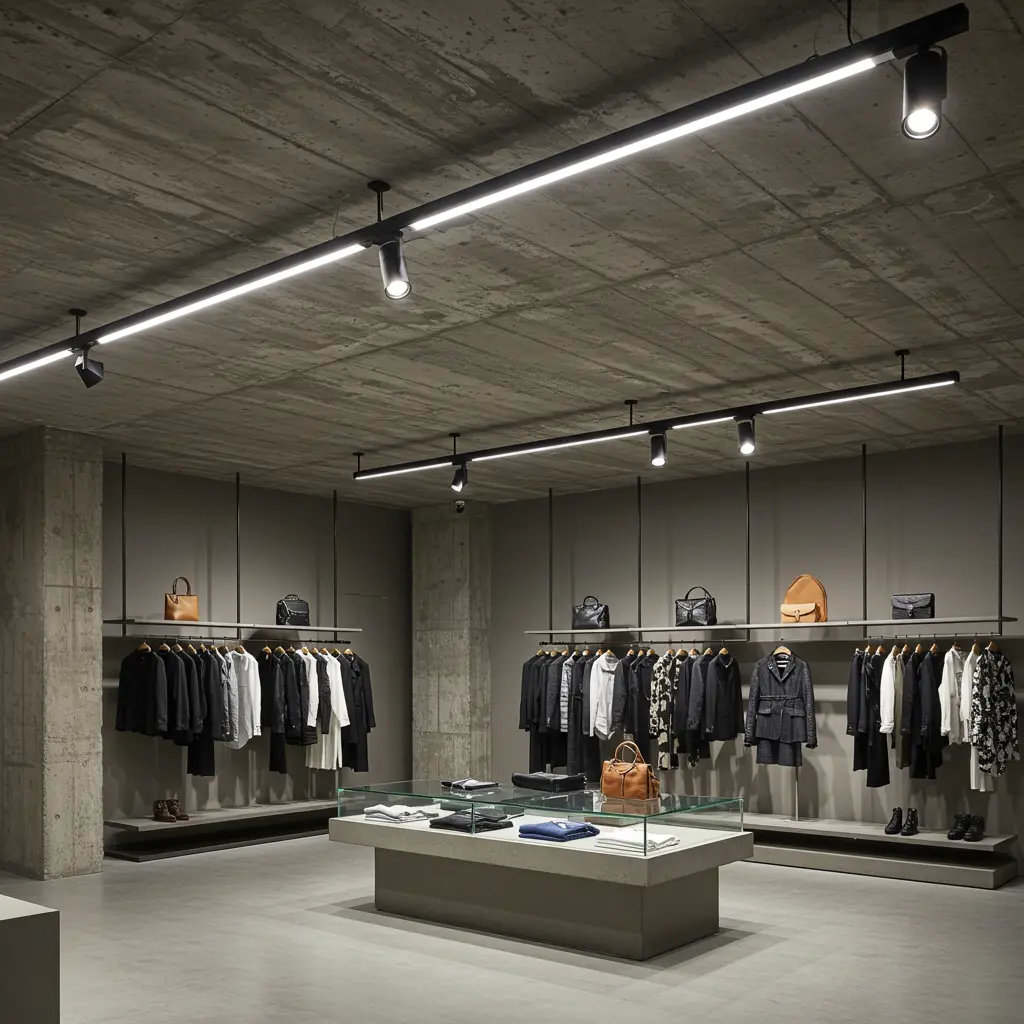
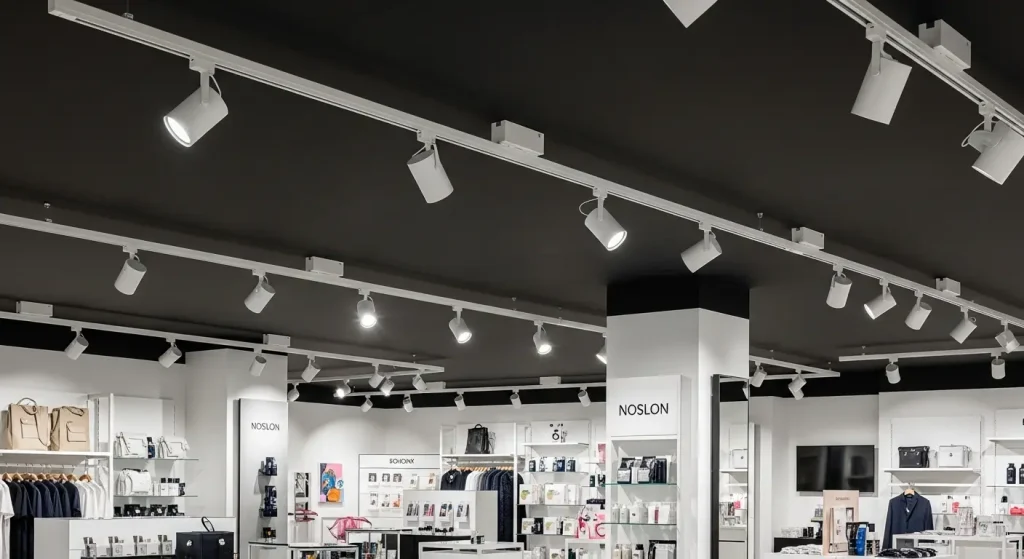
Track lighting for retail store projects needs flexibility because product displays change often. Clothing rails, wall shelves, promotional tables, and window displays may move during different sales seasons. The track light spacing should allow fixtures to be aimed again without leaving dark areas between products. If the lights are too far apart, shelves may look patchy. If they are too close, the ceiling can look crowded and the merchandise may appear overlit.
Offices and Meeting Rooms
Office track lighting should avoid direct glare on staff, visitors, and meeting tables. The spacing should support steady brightness across desks, circulation areas, and presentation zones. Medium beam angles are often more practical than very narrow beams in offices because they soften contrast and make the room feel more balanced.
Hotels and Corridors
Hotel corridor track lighting needs a steady rhythm. The spacing should follow the walking path, while the beam direction should avoid strong light at eye level. Surface mounted track lighting can be useful when the ceiling structure is shallow. Recessed track lighting may be selected when the design requires a cleaner built-in appearance.
How Beam Angle Changes Track Lighting Layout
Track lighting beam angle directly affects the number of fixtures required. A narrow beam angle creates a tighter and stronger spot. It works well for accent lighting, jewelry counters, display walls, galleries, and premium retail shelves. The drawback is clear. If narrow-beam fixtures are placed too far apart, dark spots can appear quickly.
A medium beam angle is often used in commercial track lighting because it suits mixed-use areas. It can cover retail aisles, showrooms, office corners, reception areas, and general product zones without making the contrast too sharp.
A wide beam angle spreads light over a larger area. It is suitable for open spaces, corridors, and basic illumination, but it may not give enough intensity for detailed product display. Many commercial projects therefore combine narrow, medium, and wide beams within the same track lighting layout.
Common Layout Mistakes to Avoid Before Ordering
One common mistake is spacing track lights too far apart while using narrow-beam fixtures. This usually creates uneven shelves, dark product corners, and weak wall displays. Another common problem is using wide-beam fixtures everywhere. The space may look bright, but featured products can lose depth and focus.
Glare is another issue that appears often in retail stores, hotels, and offices. Fixtures should be aimed at shelves, walls, counters, or walking zones rather than directly toward customer sightlines. The position of the track rail also needs attention. If the rail is too far from a display wall, the light may hit the floor instead of the product surface.
A second mistake happens when the track system is chosen before checking the ceiling. Some sites are more suitable for surface mounted track lighting because the ceiling cannot be cut deeply. Other projects need recessed track lighting to match a cleaner architectural finish. Late changes at this stage can affect installation time and accessory matching.
What Buyers Should Confirm Before Bulk Orders
Commercial buyers should treat track lights as one complete system. Track rails, lighting modules, drivers, connectors, voltage, dimming method, and installation accessories need to match the same layout. Ordering fixtures alone without checking the full system can create problems during installation.
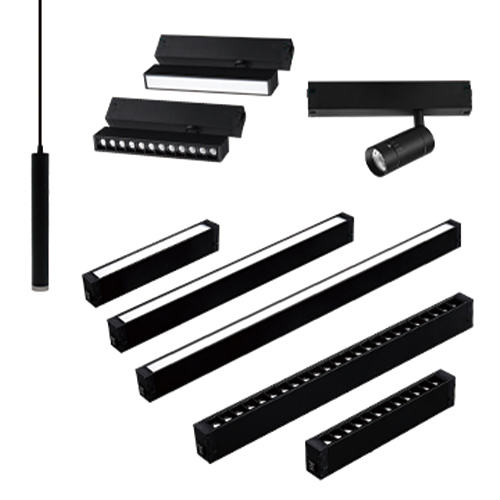
Sampo Lighting offers product categories such as 220V Magnetic Track Light System, 48V Magnetic Track Light System, Semi-flexible Magnetic Track Light System, Ultra-narrow Magnetic Track Light System, and Ultra-thin Magnetic Track Light System. These categories allow project buyers to compare magnetic track lighting, 48V magnetic track lighting, surface mounted rails, recessed rails, and compatible lighting modules for different commercial spaces.
Foshan Sampo Lighting & Electric Co., Ltd. was founded in 2014 in Foshan, Guangdong. The company focuses on LED track lights, LED lighting tracks, LED downlights, and related lighting parts and accessories. Its business covers research and development, OEM, ODM, sales, and after-sales service. With an industrial zone of about 29,800 square meters and more than 200 experienced technicians, Sampo Lighting supports commercial and residential lighting system applications for distributors, contractors, and project buyers.
Conclusion
The number of track lights needed depends on space use, fixture output, beam angle, ceiling height, and track light spacing. Retail stores, showrooms, offices, hotels, and display areas all require different layouts. Before a bulk order is placed, buyers should confirm the track type, voltage system, fixture module, beam angle, driver matching, and installation method. A well-matched magnetic track lighting system helps the project install more smoothly and keeps the final lighting effect more consistent.
FAQs
Q1: How far apart should track lights be?
A: Track lights should be spaced according to ceiling height, beam angle, lumen output, and the target surface. In commercial spaces, the light beams usually need slight overlap to reduce dark spots.
Q2: How many track lights do I need for a retail store?
A: The number depends on store size, display walls, product shelves, fixture lumens, and beam angle. Retail stores often need more accent lights near key merchandise areas.
Q3: What beam angle is best for track lighting?
A: A narrow beam angle is suitable for accent lighting, a medium beam angle works for general commercial areas, and a wide beam angle is better for broader illumination.
Q4: Is 48V magnetic track lighting good for commercial projects?
A: 48V magnetic track lighting is suitable for many modern commercial projects because it supports flexible magnetic modules and clean track layouts. The final choice should match the electrical plan.
Q5: Should buyers choose recessed or surface mounted track lighting?
A: Recessed track lighting gives a cleaner built-in ceiling look, while surface mounted track lighting is often easier for renovation projects or ceilings with limited depth.


