

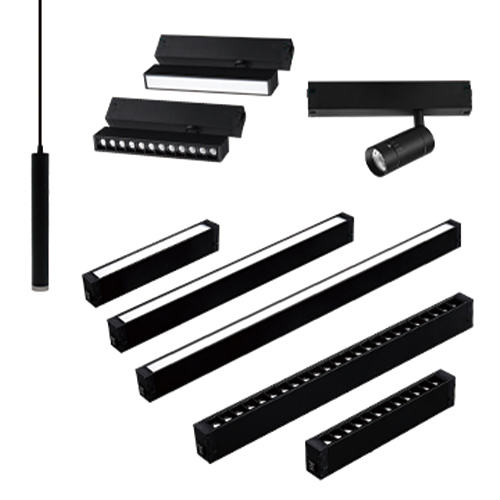
Recessed vs Surface Mounted vs Suspended Magnetic Track Lighting: How to Choose the Right System for Commercial Projects
In commercial lighting projects, teams regularly weigh recessed vs surface mounted vs suspended magnetic track lighting to match specific ceiling conditions, timelines, and long-term needs in retail stores, offices, hotels, and exhibition spaces. Each method operates within 48V low-voltage frameworks that allow easy luminaire repositioning, yet the installation approach determines visual results, coordination demands, and adaptability once the space opens for business.
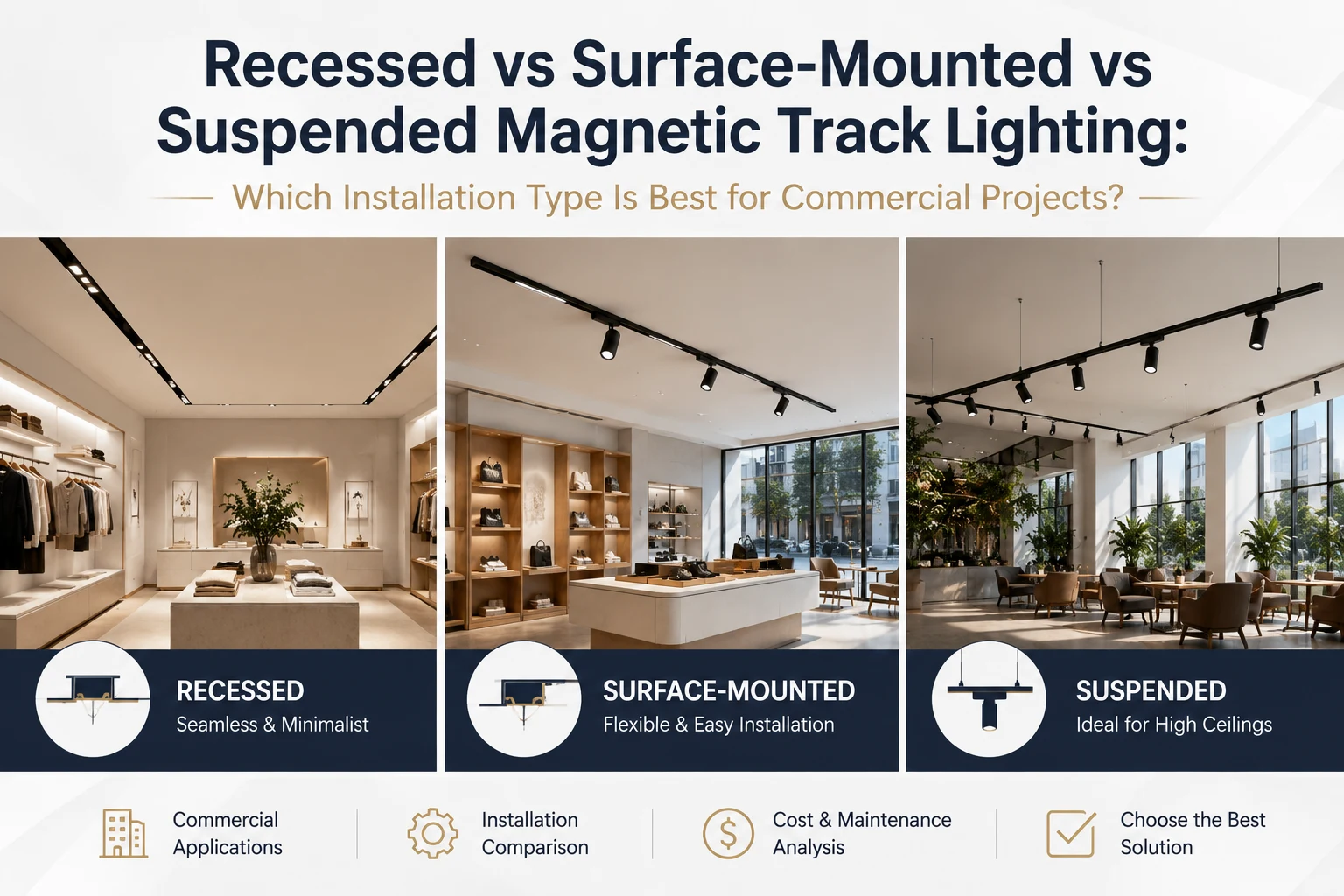
Understanding the Three Magnetic Track Lighting Installation Types
Recessed magnetic track lighting sits inside the ceiling plane to keep the surface clean and uninterrupted. This approach fits projects where architectural lines must stay minimal and the lighting hardware should not draw attention.
Surface mounted magnetic track lighting attaches straight onto the finished ceiling. It needs little structural work and suits situations where speed matters or where existing conditions limit depth.
Suspended magnetic track lighting hangs from cables or rods, letting crews adjust height and create distinct zones. It handles tall voids or open areas where light needs to reach activity levels without major ceiling changes.
All three share the same modular 48V magnetic platform, so the real differences come down to how each one interacts with the building structure and project schedule.
Recessed vs Surface Mounted vs Suspended Magnetic Track Lighting – Detailed Comparison
A side-by-side view highlights the practical trade-offs that matter during bidding and construction.
|
Aspect |
Recessed Magnetic Track Lighting |
Surface Mounted Magnetic Track Lighting |
Suspended Magnetic Track Lighting |
|
Ceiling Requirements |
Needs plenum depth and early coordination with ceiling trades |
Works on concrete, drywall, or finished surfaces with minimal depth |
Performs in high or open structures; no plenum depth required |
|
Installation Timing & Complexity |
Best in new construction; involves cutting and finishing work |
Fastest option; often finished in a day or over a weekend |
Moderate; requires secure points and careful leveling |
|
Aesthetic Impact |
Highest integration; track disappears into the ceiling |
Visible but low-profile with ultra-slim rails that reduce visual weight |
Creates strong linear elements that help define space zones |
|
Cost Level |
Higher upfront from structural work and finishing |
Lowest initial cost; economical for phased or budget-tight work |
Intermediate; suspension hardware adds expense but supports later changes |
|
Flexibility & Repositioning |
Strong once installed; modules slide and lock magnetically |
Very high; direct access makes frequent moves simple |
Highest; height and position shift easily without ceiling work |
|
Maintenance Access |
More involved; access points need planning |
Straightforward; track stays exposed for quick service |
Excellent; system can lower for changes and cleaning |
|
Best Suited Commercial Scenarios |
New-build luxury retail, high-end offices, galleries, minimalist showrooms |
Office renovations, retail upgrades, fast-track commercial fit-outs |
Hotel lobbies, large exhibition halls, showrooms with high ceilings, open-plan workspaces |
The table shows recessed systems reward projects that can invest in coordination for a seamless look. Surface mounted options win when speed and lower upfront spend drive decisions. Suspended setups deliver the most flexibility where volume and zoning matter most.
How to Choose the Right Type for Your Commercial Project – Scenario-Based Guide
Project conditions usually point to the clearest path.
New construction and high-end minimalist commercial spaces gain from recessed magnetic track lighting. A superslim recessed magnetic track rail integrates into drywall ceilings with modest clearance, then finishes flush after plaster and paint. Early talks with ceiling contractors keep alignment and power routing on track. This method serves premium retail flagships and executive offices where the infrastructure should stay invisible while still allowing module moves for changing displays or task zones.
Renovation projects and concrete ceilings favor surface mounted magnetic track lighting. An ultra-slim surface mounted magnetic track rail fixes directly with basic hardware and accepts spot, flood, and grid luminaires. Retail clothing stores and showroom upgrades often finish over a weekend, keeping the ceiling plane light visually. Procurement groups appreciate the lower labor input and fast functionality when rolling out across multiple sites.
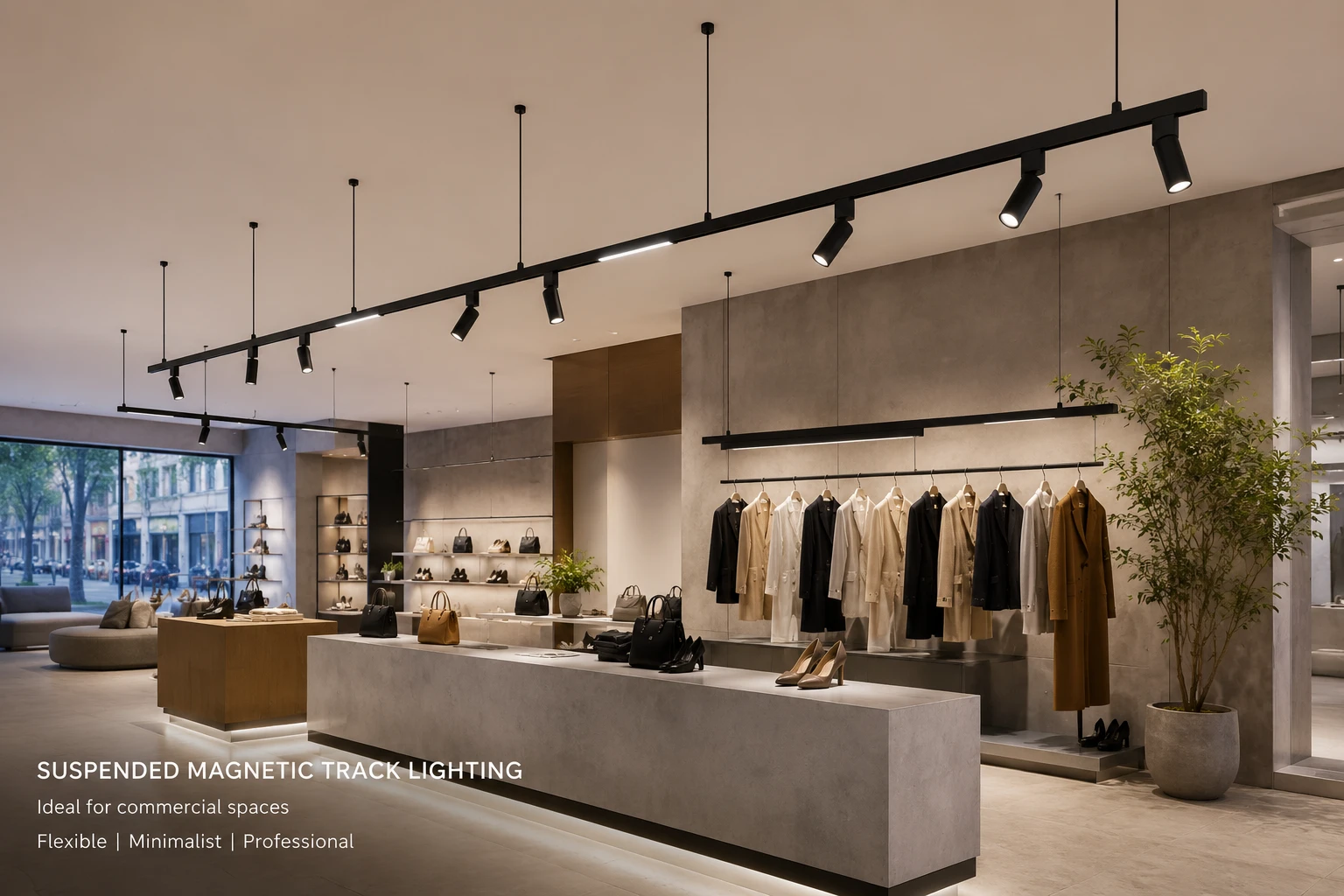
High-ceiling and open commercial areas benefit from suspended magnetic track lighting. Systems that support slim magnetic pendant lights and track belt configurations bring illumination down to working height and create rhythmic zones. Hotel lobbies, exhibition halls, and large showrooms use the adjustability to adapt layouts for events or seasonal changes without touching the ceiling structure. Height control also improves comfort by cutting harsh contrast between tall voids and occupied areas.
Key Factors to Consider When Selecting Magnetic Track Lighting for Commercial Projects
Ceiling type and available plenum space form the starting filter. Shallow conditions steer teams toward surface mounted or suspended solutions, while generous depth opens the door to recessed options for cleaner integration.
Project timelines shape outcomes in direct ways. New builds absorb the longer coordination that recessed work requires, whereas tight renovation schedules point to surface mounted systems that cut downtime and keep operations running.
Budget reviews need to cover both initial spend and total ownership costs. Surface mounted approaches lower the first outlay, yet all three methods benefit from 48V magnetic technology that trims energy use through efficient LEDs and reduces later expenses through simple reconfiguration.
Lighting design goals guide module choice and layout density. Retail settings often need adjustable accent for merchandise highlights, while open offices lean toward even ambient coverage with occasional task support. Magnetic platforms let crews fine-tune after installation in ways fixed systems cannot.
Future-proofing and maintenance needs favor modular 48V platforms. Spaces expected to evolve gain from tracks that accept new luminaires or smart components without full replacement. Maintenance crews value accessible designs that shorten service calls.
Integration with building systems, including smart controls and fire provisions, finishes the review. Professional manufacturers supply drivers and interfaces that keep projects code-compliant across every installation type.
Installation Best Practices and Common Mistakes to Avoid
Accurate site measurements and early power planning set the foundation for success. Recessed work calls for precise slot cutting so finishing trades can achieve flush results without gaps. Surface mounted tracks need secure fixings at proper intervals to avoid long-term sag on non-structural ceilings. Suspended systems require verified suspension point strength and level alignment to prevent uneven appearance or operational issues.
Common missteps include underestimating driver placement, which can force exposed conduit later. Another frequent issue is picking incompatible modules that exceed track load ratings. Proper end caps, connectors, and strain relief on cable entries prevent intermittent faults over time. In commercial settings, following local electrical codes and coordinating with other trades remains essential for safety and warranty coverage.
Cost Comparison and ROI Analysis for Commercial Applications
Upfront costs track installation complexity. Recessed work usually carries higher labor and finishing expenses because of ceiling integration. Surface mounted systems offer the most economical entry for many renovation budgets. Suspended configurations fall in between yet deliver strong long-term value through adaptability in spaces that change often.
Return on investment improves across all three when 48V magnetic track technology is in place. Facilities see energy reductions from efficient LED modules and lower maintenance from simplified lamp changes. Projects that expect layout shifts gain extra savings because modules move without new wiring or ceiling work. Procurement teams running multi-site programs often find consistent quality and customization options from established manufacturers support predictable budgeting and performance across locations.
Professional Magnetic Track Lighting Solutions from Foshan Sampo Lighting & Electric Co., Ltd.
Foshan Sampo Lighting & Electric Co., Ltd. started in 2014 in Foshan within the Guangdong-Hong Kong-Macau Greater Bay Area. The operation covers about 29,800 square meters and employs more than 200 technicians plus a dedicated engineering and R&D team. The company specializes in OEM and ODM production of LED track lighting, with particular strength in 48V magnetic track systems for commercial use. Every component passes 23 quality checks, connections hold 0.1 mm tolerance, and products carry CE, UL, and RoHS certifications. Exports serve more than 30 countries. In-house certified lighting designers help with space measurement, photometric work, and product selection. Offerings that address the three installation types include the superslim recessed magnetic track rail for clean new-build ceilings, the ultra-slim surface mounted magnetic track rail for fast retail and office upgrades, and suspended magnetic systems that support pendant and flexible belt configurations for high-volume spaces.
For detailed specifications and project support, visit the products page.
Conclusion
The most effective choice among recessed, surface mounted, and suspended magnetic track lighting depends on the constraints and goals of each commercial project. New construction with adequate plenum depth gains clean integration from recessed systems. Renovations and fast-track fit-outs benefit from the speed and economy of surface mounted rails. High-ceiling or open-plan environments leverage the zoning and adjustability of suspended configurations. By evaluating ceiling conditions, timelines, budgets, flexibility needs, and long-term maintenance requirements, professional teams arrive at solutions that enhance immediate performance while supporting future adaptability. Manufacturers with proven OEM and ODM capabilities and rigorous quality processes provide reliable partners for consistent results across multiple sites.
Frequently Asked Questions
Q1: What differences matter most between recessed and surface mounted magnetic track lighting for commercial renovation projects?
A: Recessed magnetic track lighting requires ceiling integration to deliver a hidden finish that suits finished minimalist spaces, though it needs more upfront coordination with other trades. Surface mounted magnetic track lighting attaches directly with minimal preparation, enabling faster installation and easier access for adjustments in existing offices or retail environments where downtime must stay limited.
Q2: How does suspended magnetic track lighting benefit high ceiling commercial spaces such as hotel lobbies or exhibition halls?
A: Suspended magnetic track lighting lets crews adjust height to bring light sources closer to activity levels, improving uniformity and cutting glare from tall voids. Configurations that mix spot, flood, and pendant modules along one element create flexible zoning without extensive ceiling alterations, which helps when layouts change for events or seasonal displays.
Q3: Which magnetic track lighting installation type works best for quick office or retail renovation timelines?
A: Surface mounted magnetic track lighting typically fits time-sensitive renovations best. Its straightforward fixing process and ultra-slim profiles minimize disruption while keeping full repositioning capability for changing layouts or merchandise displays.
Q4: What maintenance considerations apply when comparing recessed, surface mounted, and suspended magnetic track lighting systems?
A: Surface mounted and suspended systems generally provide easier ongoing access because tracks stay exposed or can lower for lamp changes and cleaning. Recessed installations require advance planning for access points yet deliver lasting visual benefits in spaces where frequent reconfiguration is not expected. All three benefit from modular 48V designs that simplify component replacement compared with traditional fixed systems.
Q5: How do 48V magnetic track systems support long-term flexibility in commercial lighting projects?
A: 48V magnetic track systems allow luminaires to be added, removed, or repositioned along the rail without new wiring or structural changes. This modularity accommodates evolving retail displays, office layouts, or exhibition requirements while maintaining consistent power delivery and control integration across recessed, surface mounted, or suspended installations.


