

Semi-Flexible Magnetic Track Lighting: Where Is It Suitable?
Semi-flexible magnetic track lighting is designed for layouts that need a more adaptable route than a straight rail can provide. It can follow selected curves, changing directions, or architectural lines when the rail, mounting method, power feed, and fixtures are specified as one system.
The term “semi-flexible” describes a defined product capability. Each selected product has an approved shaping range, support method, fixture compatibility, and installation instructions. Confirm those details before finalizing the ceiling design or display layout.
What Is Semi-Flexible Magnetic Track Lighting?
A semi-flexible magnetic track system combines a shaped rail with magnetic light modules and the electrical components needed to power them. The rail can be arranged along a planned route that may include a curve or a transition between different directions. Fixtures can then be positioned along the track when the selected system supports that adjustment.
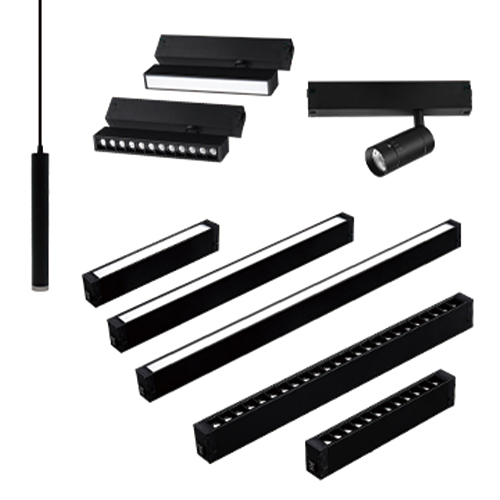
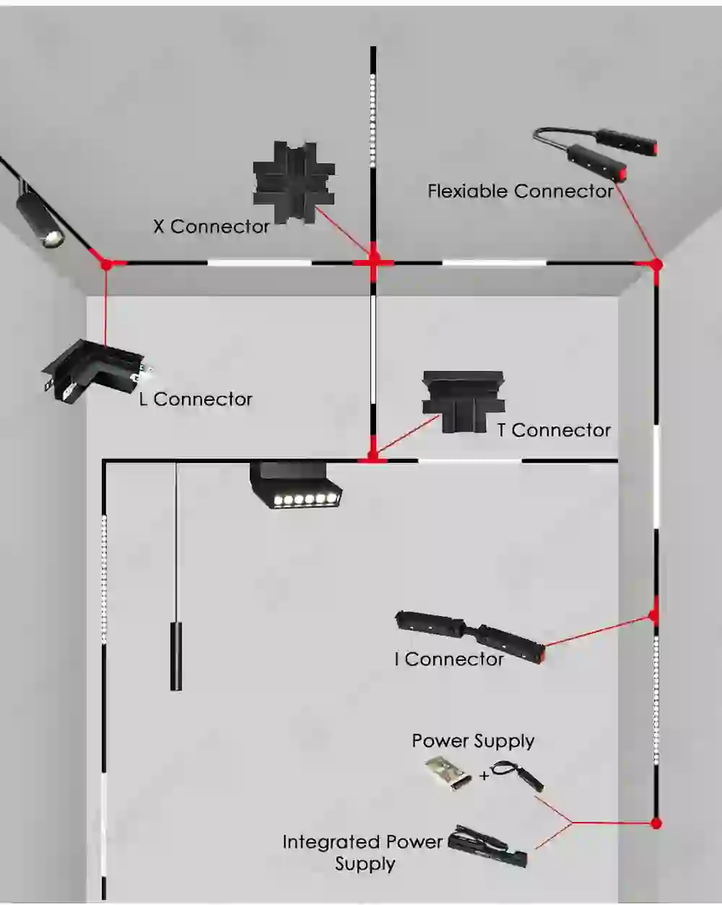
The complete system may include rails, power feeds, drivers, connectors, end caps, mounting parts, and spot, flood, linear, grille, or pendant fixtures. Each component must match the rail and electrical configuration. A connector that fits the rail physically still requires an electrical compatibility check.
Before choosing this type of lighting, request the technical drawing for the specific rail. Confirm the permitted shaping range, minimum curve or transition requirement, support spacing, installation direction, and power-feed options. These details determine whether the rail can follow the intended route safely and accurately.
Where Is Semi-Flexible Magnetic Track Lighting Suitable?
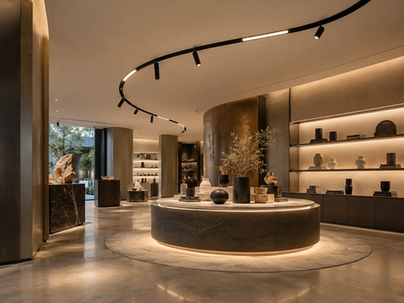
Semi-flexible magnetic track lighting is most useful when the lighting path needs to follow a curved architectural or display feature. It gives a designer more control over the relationship between the rail and the interior layout.
Typical applications include:
- Curved retail display walls and product shelving
- Rounded counters, reception desks, and service areas
- Showrooms with circular or organic display zones
- Hotel, restaurant, and hospitality interiors with curved details
- Residential feature ceilings and living areas with non-linear layouts
- Exhibition areas where the lighting route follows a designed visitor path
- Small architectural zones that need several fixture positions along one adaptable line
In a retail store, the track may follow a curved display wall so adjustable spotlights remain close to the products. In a reception area, the rail can echo the curve of a desk or branded architectural element. In a showroom, the lighting line can guide attention around a group of products.
The layout still needs a lighting calculation or fixture study. A curved rail does not automatically produce even illumination. Check fixture spacing, beam angle, aiming direction, glare, and shadowing along the complete route.
Review the semi-flexible magnetic track light system when the project requires an adaptable rail route. Use the product information for the selected configuration to confirm its installation limits.
What Ceiling and Layout Conditions Should Be Checked?
The ceiling and supporting structure determine how the rail can be installed. Semi-flexible track lighting may be considered for recessed, surface-mounted, or suspended layouts, depending on the selected product and accessories.
For a recessed installation, confirm the ceiling depth, opening detail, rail dimensions, finishing tolerance, and access for the driver and power feed. The curve must be formed accurately inside the prepared channel. A small error in the opening can change the final line of the rail.
For surface mounting, check the ceiling material, fixing points, anchor type, rail support spacing, and cable entry. The ceiling must hold the rail securely along the full route. Curved sections need consistent support so the rail keeps its intended shape after fixtures are installed.
For suspended mounting, confirm the suspension points, hanging height, rail weight, power cable route, and level adjustment. A curved suspended rail should remain stable and level at every section. The finished height also affects glare, beam coverage, cleaning access, and the position of nearby equipment.
Coordinate the lighting route with ducts, sprinklers, signs, doors, shelving, and emergency equipment. Mark the actual curve and transition points on the reflected ceiling plan before ordering materials.
What Are the Practical Benefits of a Semi-Flexible System?
The main benefit is layout freedom. The rail can support a planned curve or changing route that would require several straight sections in a conventional layout. This can help the lighting line follow a wall, counter, display island, or architectural feature.
A continuous visual route can also make the ceiling design easier to read. When the rail follows the geometry of a space, the lighting system becomes part of the interior plan and connects the fixtures to the architectural form.
Magnetic fixtures can support later focusing when the selected rail and modules allow repositioning. This is useful in retail and showroom spaces where displays change. The project still needs a fixture schedule that identifies the initial positions, wattage, beam angles, and control zones.
Semi-flexible systems can also help coordinate several lighting functions along one route. A project may combine spotlights for displays, linear modules for general illumination, and other compatible fixtures for task or accent lighting. The supplier should confirm the electrical and mechanical compatibility of every module.
These benefits apply within the product’s approved design range. The rail should not be forced into a tighter curve, unsupported shape, or mounting arrangement that the technical documentation does not allow.
When Is a Rigid Magnetic Track System a Better Fit?
A rigid magnetic track system suits long straight runs, rectangular rooms, regular ceiling grids, and projects with repeated standard sections. It can provide a predictable geometry for corridors, offices, and simple retail layouts.
Rigid rails also fit projects where the required route has no curve and the installation team wants a repeatable assembly method. A semi-flexible system adds value when the architectural route needs adaptation. A rigid system may be the practical choice when the layout is straight or when the required curve falls outside the semi-flexible rail’s approved limits.
Compare the two options using the actual drawing. Check rail length, joints, power feeds, support points, fixture positions, maintenance access, and installation labor. The choice should follow the project geometry and technical requirements.
How Should You Plan a Semi-Flexible Magnetic Track Layout?
Start by marking the architectural line or display route. Show the wall, counter, shelving, furniture, and other elements that the rail needs to follow. Identify every curve, transition, end point, and power-feed location.
Next, confirm the rail capability with the supplier. Ask for the technical drawing and installation instructions for the selected model. Confirm the shaping range, support spacing, mounting direction, connection method, and compatible fixtures.
Then select the installation format. Decide whether the rail will be recessed, surface-mounted, or suspended. Show the ceiling detail, fixing points, suspension height, and cable route on the project drawing.
Complete the fixture schedule after the rail route is defined. List fixture type, quantity, wattage, beam angle, CCT, CRI, control zone, and intended aiming direction. Check whether the fixture positions provide enough coverage along the curve.
Finally, prepare the bill of materials. Include rails, drivers, power feeds, connectors, end caps, suspension parts, recessed components, control devices, and spare items. Review the full list before production or installation.
The Products page can help buyers review the wider magnetic track range when a project includes both curved and straight lighting zones. A semi-flexible route may need to connect with other product families, so each transition should be checked separately.
What Should Be Included in a Semi-Flexible Magnetic Track Lighting RFQ?
Send the supplier enough information to evaluate the route and the complete system:
- Room drawings, ceiling plans, elevations, and dimensions
- Curve locations, transition points, and required rail path
- Ceiling type and preferred installation method
- Rail length, joints, power-feed positions, and end points
- Input voltage and track or driver voltage
- Fixture types, quantities, wattage, beam angle, CCT, and CRI
- Dimming, sensor, or smart-control requirements
- Drivers, power feeds, connectors, end caps, and mounting accessories
- Finish, color, sample, packaging, and quantity requirements
- Destination market, compliance documents, and delivery schedule
Sampo Lighting’s published product categories include semi-flexible, 220V, 48V, ultra-thin, and ultra-narrow magnetic track systems. Buyers can compare the 220V magnetic track light system and 48V magnetic track light system when a project includes different rail or driver requirements.
For a coordinated quotation, provide the layout, fixture schedule, voltage, control requirements, quantities, and delivery details through the project contact page. This allows the selected rail and modules to be reviewed together with the installation conditions.
Common Mistakes to Avoid
The first mistake is treating “semi-flexible” as unlimited flexibility. Confirm the approved shaping range and support requirements for the exact product.
The second is drawing the curve before checking the ceiling. The rail route must fit the ceiling structure, opening detail, fixing points, or suspension arrangement.
Another common issue is leaving power and maintenance planning until the end. Mark drivers, power feeds, connectors, and access points before the ceiling is closed.
Check voltage compatibility across the building supply, driver, rail, power feed, and fixtures. Also review how beam angles and fixture spacing change along the curved route.
Complete a final alignment, circuit, fixture, dimming, and control test. Record the rail type, driver location, control method, and replacement fixture information for maintenance.
FAQ
Q1: What is semi-flexible magnetic track lighting used for?
It is used for curved display walls, rounded counters, organic interior layouts, feature ceilings, showrooms, hospitality spaces, and other routes that need an adaptable lighting line.
Q2: Can semi-flexible magnetic track lighting follow a curved wall?
It can follow a curved wall when the selected rail supports the required shape and the mounting, support, power-feed, and fixture arrangement are approved for that route.
Q3: Can a semi-flexible magnetic rail be bent to any shape?
No fixed assumption should be made. The permitted shaping range is product-specific. Confirm the technical drawing and installation instructions before finalizing the design.
Q4: Is semi-flexible magnetic track lighting suitable for retail stores?
It can suit retail stores when the rail follows display walls, counters, or product islands. The fixture schedule must address beam coverage, aiming, glare, power, and future display changes.
Q5: What information does a supplier need for a quotation?
Provide the drawings, curve requirements, ceiling detail, installation method, voltage, fixture schedule, controls, accessories, quantities, destination market, and delivery requirements.


