

LED Downlight Buyer’s Guide
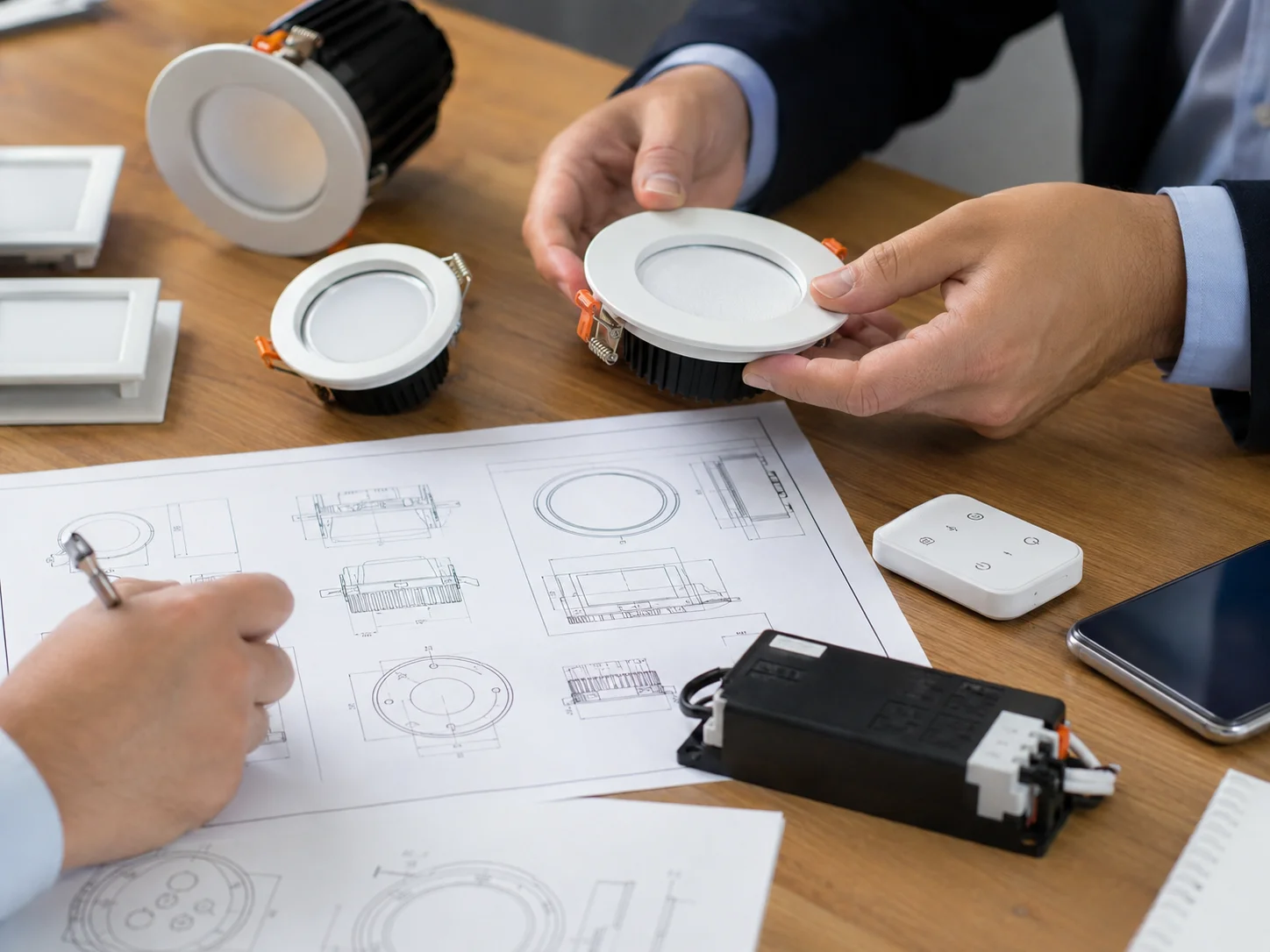
Buying LED downlights for a business project is not like picking a few lamps for a house. You might be a distributor, importer, contractor, lighting brand, or project buyer. If so, you have to think about many things. These include product matching, safe certifications, driver quality, and shipping times. You also need to look at packing and how easy it is to get spare parts. The light fixture must look nice, of course. But looks are just one part of buying.
A good commercial LED downlight supplier will help you fit the right product to your project. They should set up tech papers, send out samples, and watch over big factory runs. This LED downlight buyer’s guide shows you what to check before you say yes to an order. You can also look at these commercial LED downlight buying factors while making your spec sheet.
What Should You Define Before Contacting a Supplier?
Clear needs lead to better price quotes. Maybe you only send out the watts and how many you want. If so, different LED downlight manufacturers might give you prices for totally different things. They might use different drivers, lenses, metal bodies, or light brightness. The cheapest price rarely means you get the same quality.
Start with the Project Application
Tell your supplier exactly where you will put the downlights. Offices, hotels, retail stores, food places, flats, and showrooms all need different lights.
Retail jobs usually care a lot about real colors and beam shapes. Hotels might care more about low glare and smooth dimming. They also want parts to be around for a long time. Office jobs just need steady normal light. They want less eye strain and strong drivers that work all day.
You must also share the ceiling height and what the ceiling is made of. Tell them the cutout size, how to set it up, run times, the final country, and how many you plan to buy.
Prepare a Commercial Specification Sheet
A good LED downlight specification sheet must list:
-
Wattage and lumen output
-
Color temperature
-
Color rendering index
-
Beam angle
-
Cutout diameter
-
Recess depth
-
Trim color and finish
-
Input voltage and frequency
-
Driver type
-
Dimming or control requirements
-
Required certification
-
Packaging and labeling details
This paper gives every factory the exact same rules for quoting a price. Plus, it makes checking the final goods much easier later on.
How Can You Compare LED Downlight Suppliers?
A pretty book of products does not show how a seller fixes factory problems. Before you pick an LED downlight factory, check how fast they answer technical questions. Look into how they make things, their paperwork, and their after-sales help.
Confirm Whether the Supplier Can Support Your Order Type
A trading firm might be best for a small mixed order. That is because they can pack up many different goods together. But a direct LED downlight manufacturer is better for big things. They can help more with OEM work, custom brand boxes, tech changes, and future orders.
Ask them what work they do inside their own plant. Ask what they pay others to do. You must know who does the lens design and picks the driver. Find out who puts it together, tests the lights, checks them, and packs them.
For a big wholesale LED downlight plan over many years, talking directly to engineers is great. It is often worth more than a tiny drop in price. Small tech issues pop up a lot after workers start putting the lights in ceilings.
Review Technical Documents Early
Ask every commercial lighting supplier for their product data sheets and light test reports. Also get guidebooks for setting them up, safe passing papers, warranty rules, and packing facts.
IES files are great for math on lighting plans. Good drawings help builders make sure the ceiling hole and space are right. Driver spec sheets show if the light will work with the chosen dimming setup.
Never wait until the ship leaves to ask for these files. Missing papers can stall project thumbs-ups. They can also stop boxes at customs or delay the final setup.
Which Specifications Affect Bulk Order Quality?
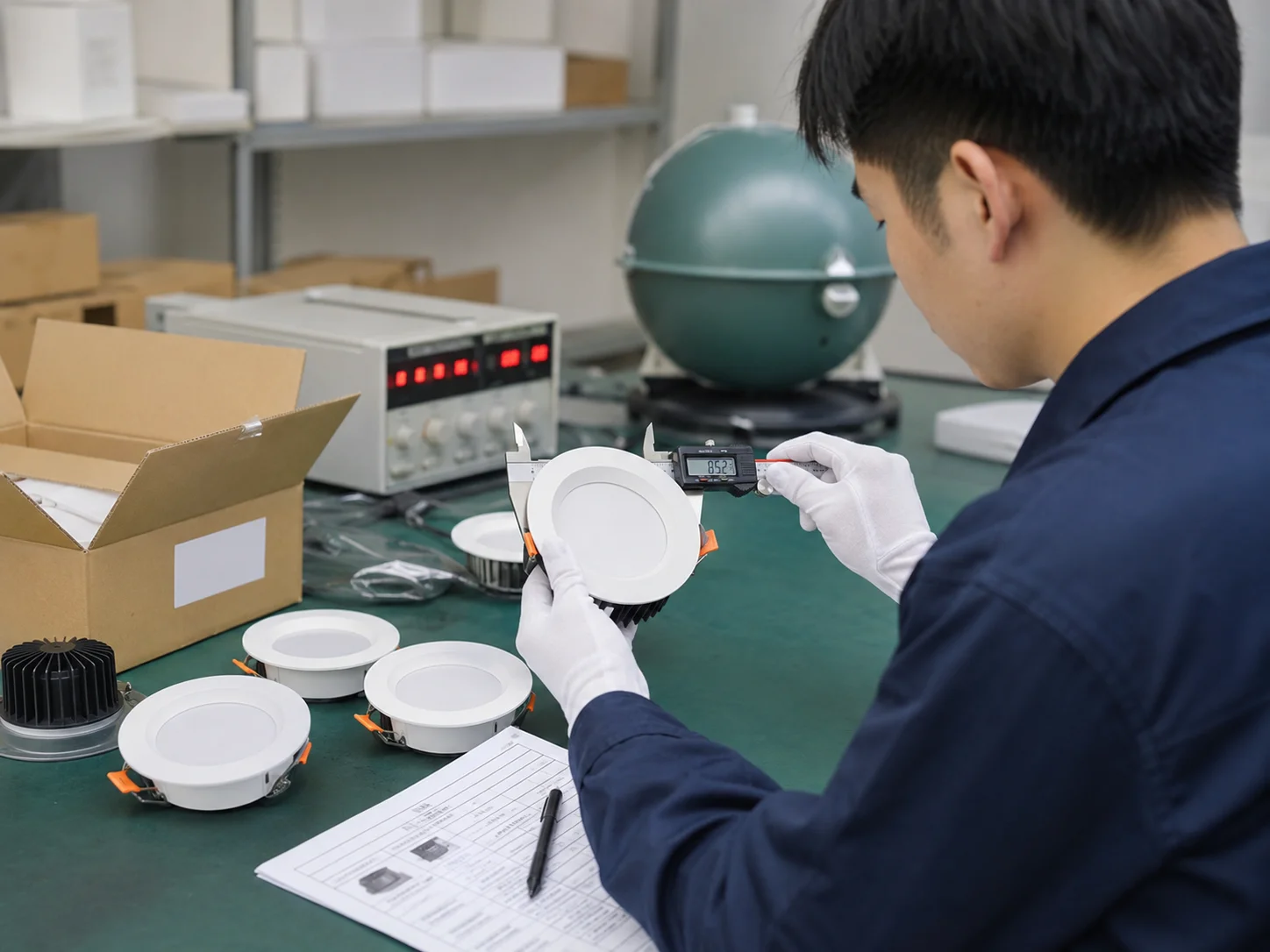
Two downlights can use the exact same watts but look totally different. For B2B buyers, one perfect sample is not the real goal. The big worry is if hundreds or thousands of lights will look exactly the same.
Check Light Output and Color Consistency
Always compare lumens, not just watts. Watts just show how much power the lamp drinks up. It does not tell you the amount of bright light that hits the room.
For stores, hotels, and big displays, high color rendering is vital. It makes stuff and fabrics look very real. You also must ask how the factory stops color drift between huge batches.
A slight color change might not look bad when you hold one piece in your hand. But if you put twenty downlights onto a clean white ceiling, tiny shifts are super easy to spot. This looks like a tiny detail on a page. Yet it always causes very awkward talks on the job site later.
Review the Driver and Thermal Design
The LED driver changes many things. It rules the light flicker, dimming speed, power flow, and how long the lamp lives. Ask the seller for the driver model and electrical specs. Get the power factor and see what dimmers it works with.
The metal case and heat sink mean a lot too. Bad heat flow can drop the light brightness. It can also kill parts fast. This is very true in tight ceilings with no wind.
When you look through a supplier’s lighting product range, check the whole lamp body. Do not just stare at the tiny LED chip or the shiny front ring.
Match the Beam Angle to the Layout
A tight, narrow beam can spotlight nice goods, art pieces, or front desks. A wider beam gives smooth light everywhere.
Ask for real light test data if the buy is for a big job. The exact same beam angle looks very different if the ceiling is taller or shorter. A test with one sample at the real ceiling height is so helpful. It is much smarter than just staring at the lamp resting on a desk in a showroom.
How Should You Handle Samples and Mass Production?
Saying yes to a sample must set a firm rule for the big order. It is not just a quick chance to see if the light flashes on.
Test Samples in the Real Project Setting
Try to place samples into the actual planned ceiling. Check the brightness, beam spread, raw glare, and true color. Look at the paint finish and how it fits the hole. Listen for driver buzzing, and see how it dims.
For shop lighting, test the downlight directly above real goods. For hotel lighting, look at the lamp during the bright day and dark night. For office spaces, hunt for bad screen glares and eye pains.
Keep the best sample as the golden sample. The seller and you must hold onto it. Use it to check the final look, size, brand stickers, and working power later.
Set a Clear Inspection Standard
Before the factory lines start running, agree on how to check things. Your list should cover:
-
Appearance and surface finish
-
Dimensions and cutout size
-
Input power
-
Light output
-
Color temperature
-
Dimming function
-
Driver noise
-
Label content
-
Carton protection
-
Accessory quantity
Ask if the LED downlight supplier tests raw bits coming in the door. Check if they watch the lines, do long aging tests, and do final checks.
For very big orders, a check before the boat leaves gives you more safety. It is much simpler to fix a wrong label or bad box inside the plant. It is very hard to fix after the cargo hits your own floor.
What Should You Confirm for OEM and Wholesale Orders?
OEM LED downlights are more than just slapping on a name. Brand stickers, brown boxes, user guides, spec sheets, and spare bits must all blend. They need to work perfectly as one single retail pack.
Define Customization Before Sample Approval
Make sure you lock down where the logo goes. Sort out the product tag, model number, barcode, and box marks. Pick the user manual language, paint feel, and box shape.
You should also split easy OEM changes apart from deep ODM building. Swapping a logo, a driver, light color, or a box can just use a normal lamp base. A totally new body, lens part, or frame takes fresh molds. It needs extra testing and takes a lot more time.
Using a trusted base always drops your money risk. Going for a totally custom build only makes sense if the fresh design beats everyone else in the market.
Discuss MOQ, Lead Time, and Repeat Orders
Ask about the lowest order size for standard models. Ask the limits for custom paint, private brand boxes, and fresh molds. These numbers might not be the same.
Find out the wait time for samples and the full run wait time. Check how fast they work during their busy season. A fair price quote must clearly state what parts come inside. It should list the drivers, wire plugs, mount bits, paper guides, and extra parts.
The chance to order exactly the same thing later is huge. Ask how many years the lamp model will stay alive. Check if future buys will have the exact same hole size, paint, driver, and color tone. Builders and sellers hate telling clients why a new lamp will not drop into an old hole.
How Do You Compare Total Cost Rather Than Unit Price?
The lowest LED downlight price tag is not always the best deal. Boat fees, packing, checks, placing them in, break rates, and swap jobs change the final math totally.
Calculate the Landed Cost
Look at the single price along with how many fit in a box. Look at the box size, total weight, ways to pay, mold costs, testing fees, and how it ships.
Tight packing can save cash on boat space. But it still needs heavy padding. A bent rim or crushed spring causes huge losses. Those losses are often way worse than the pennies saved by making the box tiny.
Consider Maintenance and Replacement Supply
In big hotels, offices, malls, and chain shops, swapping a bad downlight is hard. It costs man-hours, lift rentals, closed rooms, or patched ceilings. Solid drivers and easy-to-find spare parts can cut these nasty bills down.
Ask how they run their warranty claims. You have to know what proof they want. Find out if they have loose parts ready, and who pays the boat fee for them. A crystal clear help plan is a much stronger sign than a blurry promise of “good service.”
Why Does Supplier Capability Matter?
A bulk downlight order takes many steps. You pick items, read light data, look at samples, and plan custom boxes. You also check safe papers, track the floor work, and plan for spare parts. A seller with strong factory and tech teams makes these tasks flow much smoother.
Foshan Sampo Lighting & Electric Co., Ltd. builds and designs LED downlights, LED track lights, light rails, and extra parts. Their work covers new design tests, OEM, ODM, bulk sales, and post-sale care. Based on their formal company info, their plant sits on about 29,800 square meters. They have a smart pro team and over 200 trained tech workers.
These skills are super helpful for importers, sellers, builders, light brands, and big project buyers. They all need help fitting products to spaces, making fresh samples, and running private label boxes. They need giant production and steady future supplies. The real value is not just how huge the plant is. It is the raw power to tie tricky tech rules to fast line work and safe final delivery.
FAQ
Q1: What Information Should You Send to an LED Downlight Supplier?
A: Send the end use, number needed, watts, and lumen goal. Also send the color tone, CRI, beam shape, hole size, and voltage line. Tell them how you dim it, what paper proofs you need, and the ship drop spot.
Q2: Should You Buy LED Downlights Directly from a Manufacturer?
A: A direct maker is super helpful for OEM jobs, tech updates, custom boxes, batch tracking, and long-term deals. A trader is nice when you just need tiny amounts of lots of strange items.
Q3: Why Is Sample Testing Important Before a Bulk Order?
A: Testing samples lets you see the true light look, tone, and raw glare. You can check the size, driver power, dimming speed, and hole fit long before the big run starts.
Q4: What Is the Difference Between OEM and ODM LED Downlights?
A: OEM normally takes an alive product and adds your brand or small spec changes. ODM goes deeper. It can mean totally new metal bodies, lenses, wiring chips, or full frame shapes.
Q5: How Can You Reduce Risk When Ordering Wholesale LED Downlights?
A: Use a very detailed spec sheet. Say yes to a final golden sample. Check the main documents and agree on strict check rules. Also, lock down the box type, warranty, and spare part rules before the machines turn on.


