

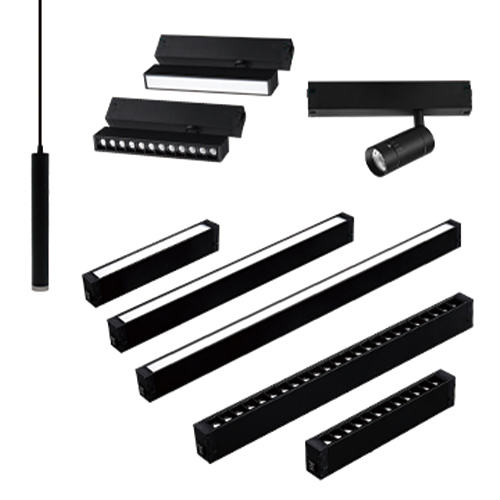
How Can LED Lights Be So Bright?
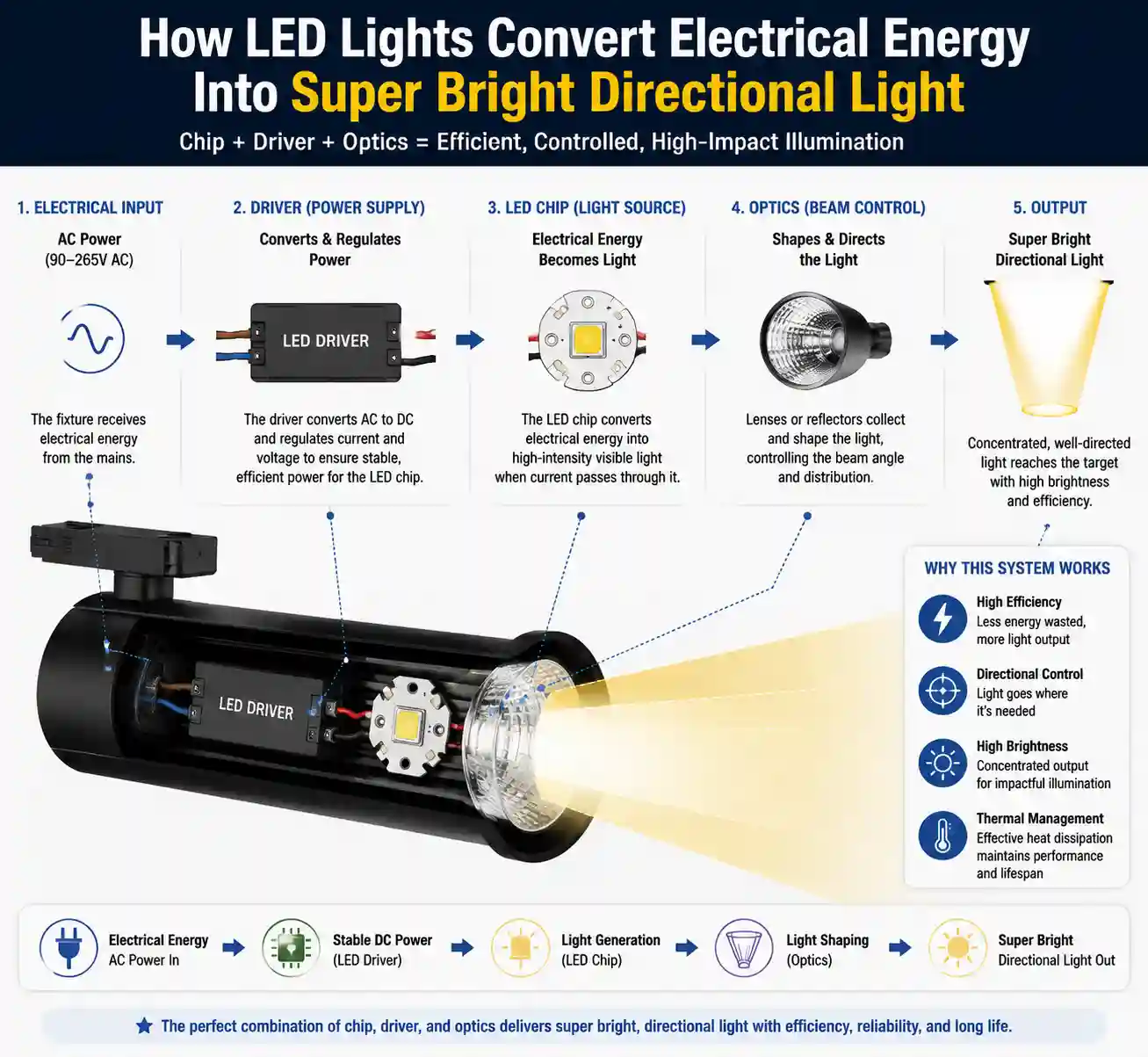
Super bright LED light comes from several parts working together. The chip produces light, the driver controls input, and optics direct output. Heat management and installation distance shape the result.
This guide explains LED brightness and the checks that matter before purchase.
What Makes a Super Bright LED Light So Bright?
Brightness is a system result. Source, driver, optics, and fixture body affect light reaching a surface.
LEDs Convert Electrical Energy Into Light
An LED uses a semiconductor chip to emit visible light when current passes through it. The driver supplies controlled electrical power to that chip. The fixture then shapes the light for its intended area.
High-voltage magnetic series list a 90-265V input range. The range also includes 48V magnetic systems. Confirm the architecture by model.
Directional Light Increases Perceived Brightness
LED fixtures often use a lens, reflector, or diffuser to manage the beam. Concentrated light can make a work surface look bright because more output reaches that area.
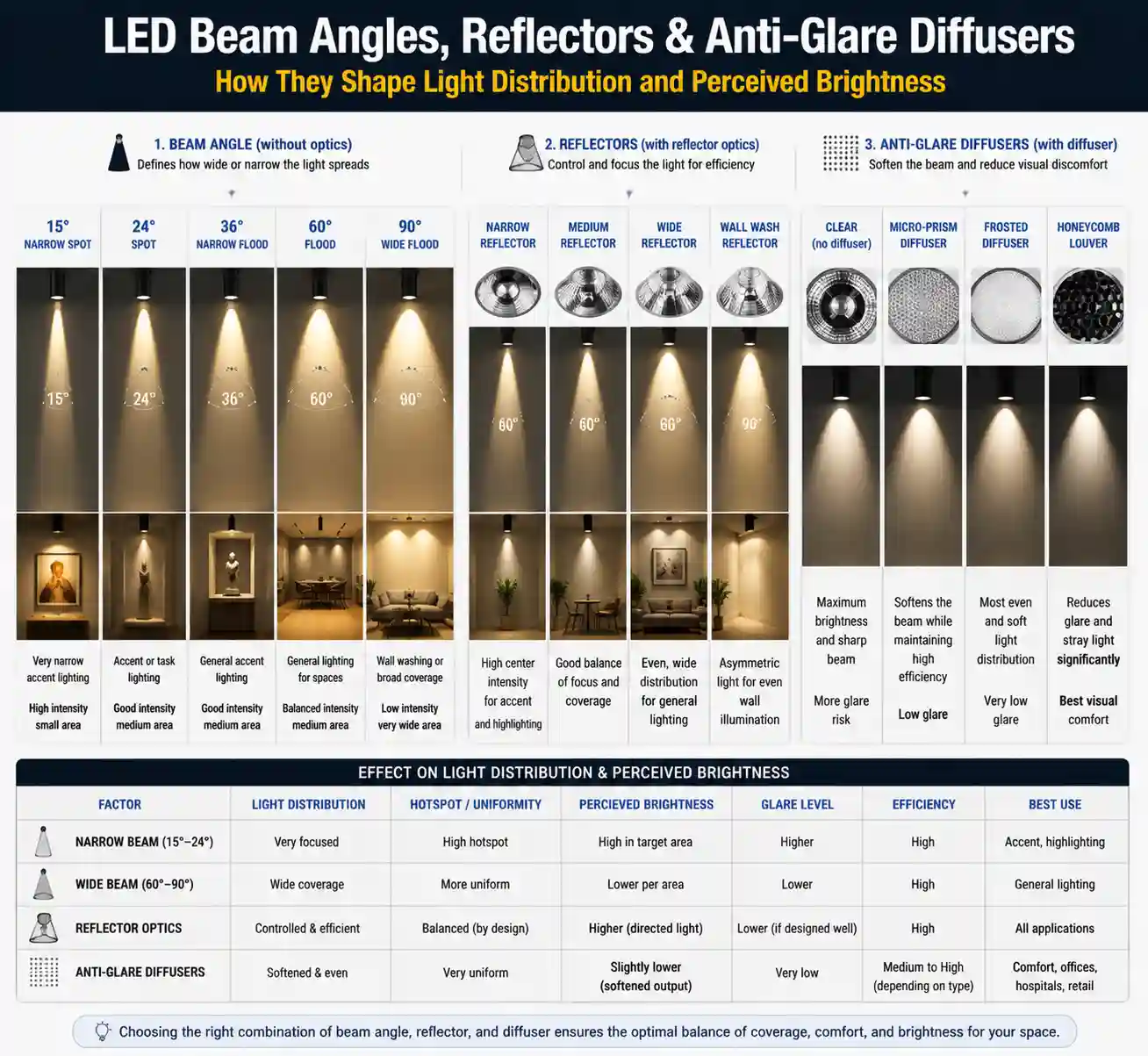
A narrow beam and a wide beam create different coverage. The right choice depends on mounting height, target area, and fixture position.
Drivers Control Current and Output
A driver regulates power for the LED and affects dimmer or smart-control compatibility.
Tuya, Wi-Fi, Bluetooth, and Zigbee functions appear only in supported configurations. The driver, control method, and fixture should be checked as one set.
Thermal Design Protects Light Performance
LED chips and drivers release heat during operation. The fixture body and installation conditions influence how that heat is managed.
The supplied information does not give one universal temperature or lifetime. Those details belong to the selected model.
Is LED Brightness the Same as Wattage?
No. Wattage describes electrical input. It does not describe the complete light output or how that output is distributed.
Wattage Measures Electrical Input
Two lamps can use similar power and produce different visual results. Chip selection, driver design, optics, and fixture efficiency all affect the result.
Treat wattage as one specification in the product sheet. A complete brightness review also needs output and distribution data.
Lumens Describe Light Output
Lumens describe the visible light output of a lamp or fixture. When a product sheet lists lumens, compare the value with the beam angle and installation distance.
Current materials do not provide one lumen value for all products. Request exact model data.
Optics Change How Bright the Light Looks
Optical parts decide where the light travels. A focused beam can highlight a display or task area. A diffuser spreads light across a broader zone.
Both can be useful. The decision follows the lighting task.
Which Factors Affect How Bright an LED Light Looks?
The same fixture can look different in two rooms. Surface color, mounting distance, beam shape, and viewing angle all influence perception.
Color Temperature
Color temperature describes whether light appears warm or cool. It changes the visual character of a room and can affect how bright the space feels.
The correct value depends on the application and the options listed for the model. Do not apply one color-temperature figure to every LED lamp.
Beam Angle and Light Distribution
Beam angle describes how widely light spreads from the fixture. A narrow distribution suits a focused target. A wider distribution covers more area.
Track heads, downlights, and magnetic modules should be aimed at the actual task or display zone. Beam angle and mounting height need to be reviewed together.
Diffuser and Glare Control
High output can create glare when the source is visible from the normal viewing position. A diffuser, anti-glare design, and suitable head angle can improve visual comfort.
Check the fixture from the intended user position. Product photos rarely show every reflection from a glossy desk, floor, or display case.
Room Surfaces, Height, and Distance
Bright finishes reflect more light, while glossy surfaces can create reflections. Distance changes beam coverage and light reaching the target. Mark mounting height and target surface before selecting fixture quantity.
What Product Features Can Support High-Brightness LED Lighting?
Several Sampo series include features related to directed or flexible light. Each description applies to the named series.
High-Voltage Magnetic Series
M25 is positioned mainly for residential lighting, and M35 is positioned mainly for commercial lighting. The product profile lists a 90-265V input range for these high-voltage series.
Supported configurations include flexible placement and intelligent control. Confirm rail, fixture, power head, and driver compatibility.
48V Magnetic Track Systems
The range includes 48V magnetic track formats for homes, commercial spaces, and outdoor events. See the 48V magnetic track lighting system for a related product category. Fixtures move along a compatible rail. Confirm input, driver, accessories, and installation conditions by model.
Ra90+ and Flicker-Free Series
The ultra-thin magnetic track system and ultra-narrow magnetic track system are described with Ra90+ color rendering. Several named series are also described as flicker-free, anti-glare, or adjustable.
These statements apply only to the named series.
T10 LED Tube
The T10 profile describes high luminous efficiency, low power consumption, gentle light, and no strobe light. It is designed as a direct replacement for traditional tube lamps.
Why Can Two LED Lights With the Same Wattage Look Different?
Different chips, drivers, optics, and installation positions change visual output. Reflectors, lenses, diffusers, and shades alter beam direction and coverage. Driver matching also affects dimming and control compatibility, while mounting height and room surfaces change perceived brightness. Compare exact models in the intended layout.
Is a Super Bright LED Light Always Better?
High output suits task and display lighting. Match brightness to the target surface and use dimming when the fixture and driver support it.
Where Are Bright LED Lights Commonly Used?
The application determines the required output, beam, mounting method, and documents.
Residential Spaces
Homes use bright LED light for kitchens, living rooms, studies, and display areas. M25 is positioned mainly for residential lighting.
Commercial Spaces
Commercial areas may use M35, track lights, or magnetic systems. Record circuit feeds, fixture quantities, driver data, and certification scope.
Outdoor Events
The 48V magnetic profile includes outdoor events. IP rating and installation conditions must be confirmed by model.
Replacement and Linear Lighting
T10 tubes and LED strips serve replacement and linear-lighting applications. Strip options include 220V, 110V, 12V, 24V, and 36V formats.
How to Choose a Super Bright LED Light?
Start with the lighting task, then compare the complete product configuration.
Define the Lighting Task
State whether the light is for a work surface, general area, display, reading corner, replacement, or outdoor event.
Compare Lumens and Beam Distribution
Review listed lumens, beam angle, fixture quantity, and mounting distance. Wattage alone does not describe the result.
Check Driver and Control Compatibility
Confirm input voltage, driver type, dimming method, and any Tuya, Wi-Fi, Bluetooth, or Zigbee requirement.
Review Glare and Color Rendering
Check anti-glare design and CRI/Ra data for the exact model. Ra90+ applies to the named product series described in the materials.
Confirm Destination-Market Documents
Finished products are described as having CE certificates. CE, UL, or SAA documents may apply to certain components. Request the scope for the ordered SKU.
Super Bright LED Light Buying Checklist
-
Lighting task and target area.
-
Fixture type, exact model, and listed lumen output.
-
Beam distribution, mounting height, and installation method.
-
Driver, input voltage, and control system.
-
Dimming, color-temperature, and CRI/Ra data.
-
Glare-control design and required accessories.
-
Destination-market certification.
-
Finish, packaging, logo, and OEM/ODM requirements.
How to Request a Bright LED Lighting Quote?
Send the supplier the project type, target area, mounting method, fixture quantity, model, voltage, controls, finish, packaging, and required documents. A ceiling plan helps match the beam, rail, driver, and accessories.
Sampo Lighting supplies LED track lights, LED lighting tracks, LED downlights, magnetic systems, and related accessories. Submit the model codes and project requirements through the lighting project contact page. The quotation should identify the fixture, driver, rail parts, controls, and certification scope.
FAQ
Q1: Why are LED lights so bright?
A: LED brightness comes from the chip, controlled driver, optical design, and fixture structure working together. Wattage alone does not explain the final output.
Q2: Does a higher-wattage LED light always look brighter?
A: No single wattage comparison can answer that. Lumens, beam angle, optics, driver, mounting distance, and room surfaces also affect the result.
Q3: What is the difference between lumens and watts?
A: Watts describe electrical input, while lumens describe visible light output. Use both with beam distribution and installation distance when reviewing a product sheet.
Q4: Can a super bright LED light cause glare?
A: Yes. Directly visible sources, narrow beams, reflective surfaces, and unsuitable mounting angles can create glare. Check anti-glare features and view the fixture from the normal user position.
Q5: What should buyers check before ordering a bright LED light?
A: Check the exact model, listed output, beam angle, driver, voltage, controls, CRI/Ra data, glare design, certification, and accessories. Track or magnetic systems also need a compatibility review across the rail, fixture, power head, and driver.


