

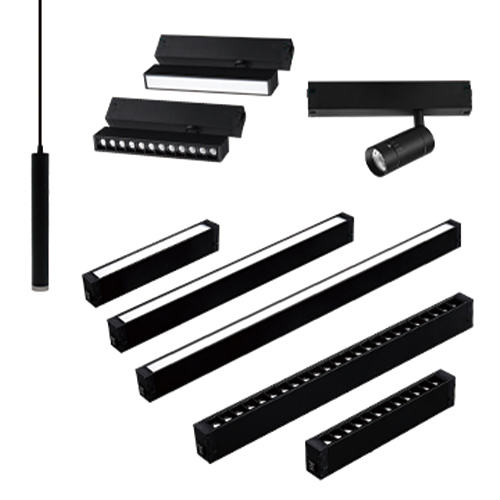
LED vs. HID: The Ultimate Commercial Lighting Retrofit Guide
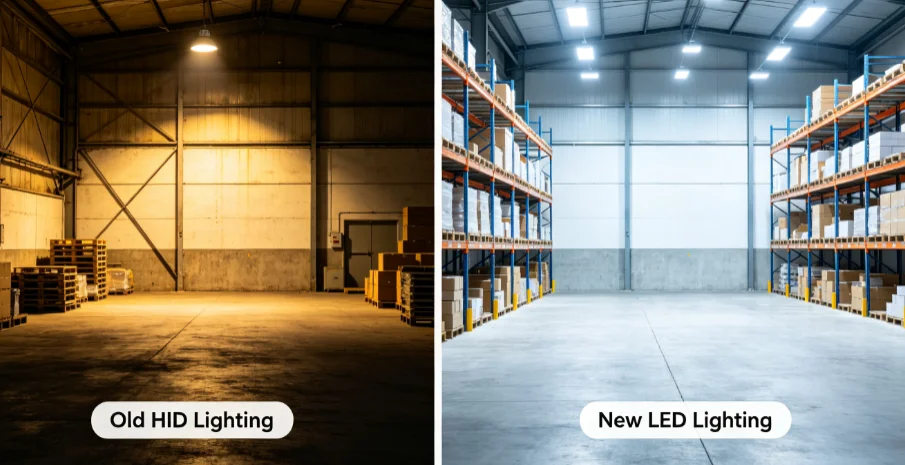
When it comes to commercial lighting retrofit projects, HID vs LED is a crucial decision. Although many older HID lighting systems are used in warehouses, factories, retail stores, hotels, parking areas and public buildings to name a few, they can still provide adequate light, often however at the cost of high energy bills, slow start-up times, poor light distribution and regular maintenance. When embarking on a HID to LED retrofit, the decision is not just that of a simple lighting change, it has far reaching implications for the cost, safety and continued operation of the project for contractors, wholesalers, facility managers and project buyers alike.
What Is HID Lighting?
How HID Lighting Works
HID lighting, or High Intensity Discharge lighting, uses an electric arc within a gas-filled lamp to produce light. Years ago, the most commonly used types of HID lighting included metal halide, high pressure sodium, and mercury vapor lighting. Such lighting is still commonly used for large spaces such as warehouses, factories, gyms, parking lots and other commercial spaces found outdoors.
HID Lighting has high light output for less space, but has the disadvantage of wasting a lot of energy. It requires a ballast, has a warm-up time, and has to be replaced from time to time. The light of an aging lamp decreases in brightness and can change in color, resulting in dark zones and poor visual comfort.
What Is LED Commercial Lighting?
Why LED Lighting Is Used in Retrofit Projects
LED commercial lighting is based on Light Emitting Diode technology. It is more efficient than HID commercial lighting in that less power is required to produce the same amount of light. They also switch on instantly, are controllable and have precise beam control.
LED fixtures in a commercial LED lighting retrofit can improve visibility in areas such as store aisles, merchandise display, loading docks, corridors and work zones. Retail stores, showrooms, offices, hotels and art galleries can all have products displayed off very well using high quality LED lights. Additionally, LED track lights and downlights offer flexible layout options creating modern impressions.
LED vs. HID: Key Differences for Commercial Lighting Retrofit
Energy Efficiency and Running Cost
Energy savings through retrofitting of LED vs HID is typically the reason for such planning in the first place. HID lighting can use more energy than required because a significant part of it is lost as heat or scattered light. On the other hand, LED lighting can deliver its light exactly where it is needed. Therefore, for applications where lighting is in use for long hours of the day, energy savings can be achieved by retrofitting to LED.
Lifespan and Maintenance Cost
LED vs HID maintenance cost is another major factor. HID systems often need lamp and ballast replacement. This becomes expensive when fixtures are mounted high above warehouse floors, parking areas, or sports halls. LED retrofit can reduce maintenance visits and downtime, especially in spaces where lift equipment is needed for every repair.
Brightness, Light Quality, and Control
Unlike wattage, which is a measure of how much power is used by a light, HID vs LED lighting comparisons should focus on the actual performance of the two. The parameters that really matter are lumen output, beam angle, color temperature, color rendering, glare control and mounting height. Additionally, LED lighting is far more compatible with a host of other devices, including motion sensors, dimming systems, scheduling and smart lighting controls.
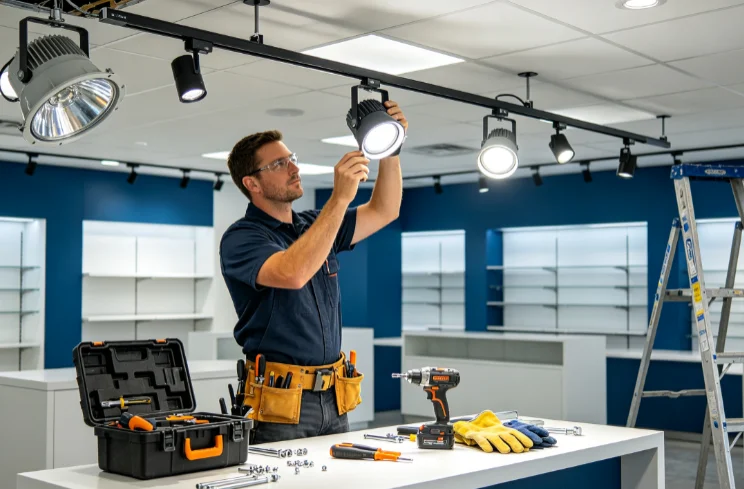
LED Retrofit Options for HID Replacement
Direct Replacement, Ballast Bypass, or Full Fixture Replacement
There are many HID replacement options available for a retrofit using LEDs. Some simple retrofit projects use Direct LED replacement for HID lamps. However, one must check for ballast compatibility and heat dissipation for such installation. Ballast bypass HID to LED retrofit removes the old ballast for increased reliability but typically requires work by an electrician.
Full fixture replacement is generally better than relamping if the HID fixture is damaged, poorly located, or not meets the intended lighting purposes for the new lighting system. For larger commercial lighting upgrade projects, a full lighting system design may be warranted. Review the proposed photometric layout, required lux, mounting height, beam distribution, spacing, and glare control before selecting individual fixtures.
How to Plan a Commercial Lighting Retrofit
Audit the Existing HID System
Your retrofit guide should start with a site audit. Gather data on fixture type, lamp wattage, quantity, hours of operation, ballast condition, wiring condition, mounting height, current light levels and any problem areas such as dark spots, glare, failed lamps, yellow lighting, or high-maintenance areas.
Choose the Right LED Fixture Type
The best HID replacement is determined by the application. A warehouse may use an LED high bay replacement for HID while a parking lot may use an LED parking lot lights retrofit. Retail stores, showrooms, offices, homes such as villas, and hotel interior areas use a variety of very clean and flexible lighting products such as LED track lights, LED lighting tracks, magnetic track light systems, and downlights.
About Foshan Sampo Lighting & Electric Co., Ltd.
A Professional LED Lighting Manufacturer for Project Buyers
Foshan Sampo Lighting is a Chinese manufacturer of LED Lighting solutions, established in 2014 in the city of Foshan. This is a major production hub in the Guangdong-Hong Kong-Macao Greater Bay Area. Foshan Sampo is specialized in the Research & Development, OEM and ODM of a wide assortment of LED Lighting products and solutions, such as LED Track Lights, LED Lighting Tracks, LED Downlights as well as many other models of lights and parts and accessories that can be used in combination with the afore-mentioned models of lighting. Official information provided on their website about their company, indicates that Sampo operates from an industrial zone of around 29,800 square meters, staffed by a team of engineers, as well as more than 200 experienced technicians.
Sampo Lighting presents 220V Magnetic Track Light System, 48V Magnetic Track Light System, Semi-flexible Magnetic Track Light System, Ultra-narrow Magnetic Track Light System, Ultra-thin Magnetic Track Light System and T10 Square Tube Light. These lines of product can be used for setting up a commercial and residential lighting system. Specially made for people who are planning to set up a lighting system for their retail, office, hotel, gallery, villa and modern interior projects.
Conclusion
Commercial LED lighting compared to HID lighting has more features than just brightness, including energy consumption, maintenance costs, light quality, controllability, safety and life cycle costs. Replacing HID lighting with LED lighting requires a proper planning process starting with an on-site analysis and concluding with a suitable LED lighting system. For wholesalers, electricians, project managers and buyers, the appropriate commercial lighting retrofits will result in lower future maintenance costs and optimal lighting.
FAQ
Q1:Is LED better than HID for commercial lighting?
A:LED typically trumps HID in most commercial lighting retrofit projects because it uses less energy, has immediate start up, supports lighting controls, and generally has less maintenance required.
Q2:How much energy can LED lights save compared with HID lights?
A:The energy savings between LED and HID products depend on several factors, including the watts of the existing fixture, the watts of the new LED product, the number of hours of operation per day, and the rate at which you are charged for electricity. Typically, facilities with long hours of daily lighting operation will see the greatest savings after retrofitting from HID to LED.
Q3:Can LED lights replace HID lights directly?
A:Some HID replacement LED lights can be used directly to replace HID lights, but not all of them. When choosing a replacement for your HID lights, it is important to check the ballast condition, voltage, socket size, heat, and fixture design.
Q4:What is the best LED replacement for HID high bay lights?
A:When choosing the best LED high bay to replace HID lighting, several factors need to be considered including mounting height, required lux, beam angle, warehouse layout, working hours and control requirements.
Q5:What should be checked before replacing HID with LED?
A:A commercial lighting retrofit checklist should include fixture wattage, voltage, ballast condition, wiring, mounting height, light level needs, color temperature, dimming requirements, and installation environment.


